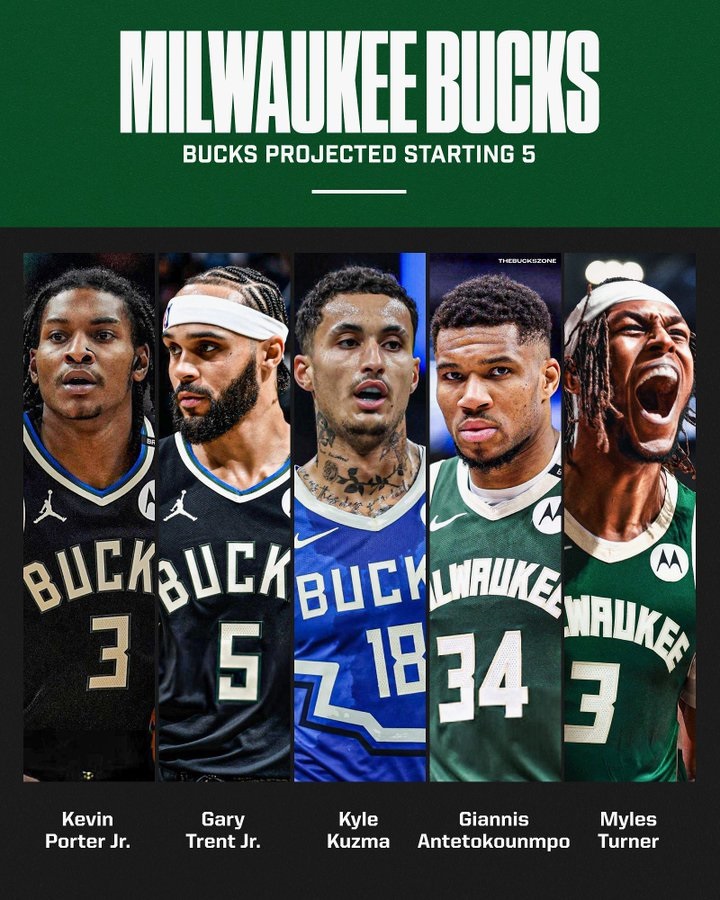
Tag: giannis

  • Giannis with 40 means nothing

    Giannis with 40 means nothing

    On paper, Giannis Antetokounmpo dropped another monster stat line—40 points, 14 rebounds, 9 assists, nearly a triple-double with 2 steals and 2 blocks to boot. He shot an absurd 70% from the field (14-20 FG) and was basically a walking highlight reel. Stats don’t tell the whole story. Last night at Rocket Mortgage FieldHouse, amid a shorthanded roster (no Kevin Porter Jr., Cole Anthony, or Kyle Kuzma), Giannis performance had some cracks that the Cavs exploited like a leaky defense in pickup ball.

    The Shooting Splits: Efficient, But Not Elite

    Giannis finished 14-of-20 from the field, which sounds like vintage Freak mode. But peel back the layers: That efficiency was built on paint dominance (think drives and putbacks), not the all-around threat we saw in his prime. He went 1-of-1 from deep—cool, but one attempt? In a game where Cleveland’s perimeter defense sagged off him just enough to dare a jumper, he didn’t test them. Last season, he averaged over 2 three-point attempts per game; here, it was a measly one. The Cavs packed the lane with Evan Mobley (23 points, 8 boards) and Jarrett Allen, forcing Giannis into that 11-of-16 free-throw line trip. Solid? Sure. But 69% from the stripe (11-16) isn’t closing territory—those five misses at the line were daggers in a five-point defeat.

    And don’t get me started on true shooting percentage. At 74%, it’s good, but in a high-volume night like this, you’d want north of 80% to drag a depleted Bucks squad over the finish line. Donovan Mitchell (24 points, including 10 in the clutch fourth) and Sam Merrill (17 off the bench, tying Giannis for game-high at halftime) feasted because Giannis couldn’t stretch the floor. He again had 0/2 from mid range, exactly like previous two games of the season. Pathetic and it’s killing his team.

    Rebounding: Volume Without Victory

    Fourteen boards? That’s Giannis being Giannis—aggressive, physical, snatching every loose ball like it’s his birthright. But here’s the rub: The Bucks got out-rebounded 51-44 overall, with Cleveland grabbing seven more on the offensive glass for second-chance points that proved fatal. Giannis had the volume, but where were the contested boards against Mobley, who boxed him out masterfully? Midway through the third, the Cavs led the rebound battle 30-17 while up by 16. Milwaukee clawed back to tie it late, but those early misses on the glass let Cleveland build a cushion Giannis spent the whole second half erasing… only for it to slip away.

    It’s like having the biggest hammer in the toolbox but forgetting the nails. The Bucks needed team rebounding to fuel transition buckets, but with Giannis logging heavy minutes (likely 38+), fatigue crept in.

    Playmaking: Assists Galore, But Turnovers Tell a Different Tale

    Nine dimes? Chef’s kiss. Giannis orchestrated like a maestro, finding cutters and kick-outs that kept Milwaukee in it during their third-quarter surge (they outscored Cleveland 34-24 to cut an 18-point deficit). But—and this is a big but—the Bucks coughed up 18 turnovers, leading to 24 Cleveland points. Giannis isn’t blameless here; in a game where ball-handling was thin without Porter and Anthony, he forced a few drives into traffic, resulting in live-ball turnovers that Mobley and Co. turned into fast breaks.

    Remember that stretch in the second quarter where the Cavs ballooned their lead to 11 at half? A handful of those came off Milwaukee’s sloppiness, with Giannis’s aggressive style (love it, but risky) contributing. Cleveland had 10 steals—Lonzo Ball snagged a couple off high screens—and turned them into easy buckets. Assists are flashy, but in a one-possession game, those extra possessions killed the Bucks.

    The Intangibles: Fatigue, Fouls, and Fourth-Quarter Fade

    Giannis was probable with a toe sprain coming in, and you could see it in the fourth: He carried the load, scoring 12 of Milwaukee’s final 20, but the Bucks went ice-cold around him. With the game tied at 98, Cleveland ripped off a 7-0 run—Hunter’s step-back, Ball’s dagger three, Mitchell’s mid-ranger—and Giannis couldn’t buy a bucket in the final two minutes. He split free throws with 1:01 left to make it 112-107, but by then, the legs were gone.

    Fouls, too: Giannis picked up his fourth late, limiting his aggression. And let’s be real—the Cavs were shorthanded too (no Darius Garland or Max Strus), yet their depth shone. Four guys in double figures (Mitchell, Mobley, Merrill, De’Andre Hunter at 17), while Milwaukee leaned hard on Giannis. Gary Trent Jr. added 19, but no one else cracked 15. It’s superstar isolation at its finest… and most frustrating.

    Averaging 36 points, 16 boards, and 7 assists on 68% shooting to start the season? But he is not helping the team. Look at the plus minus box. In a league where balanced rosters (shoutout to Cleveland’s committee approach) beat top-heavy ones, Giannis’ way of playing masked systemic issues: injuries, turnovers, poor rebounding team-wide, and a lack of spacing that let the Cavs collapse without fear.

    This loss stings because it was winnable—Bucks shot 50.6% to Cleveland’s 44.8%, but free throws (Cavs +8) and boards sealed it. Giannis was again non existent from mid range and terrible at free throws. Anyway you look at it, this is NOT a boxscore to be proud of.

  • KYLE KUZMA was second best player of the bucks last season??

    KYLE KUZMA was second best player of the bucks last season??

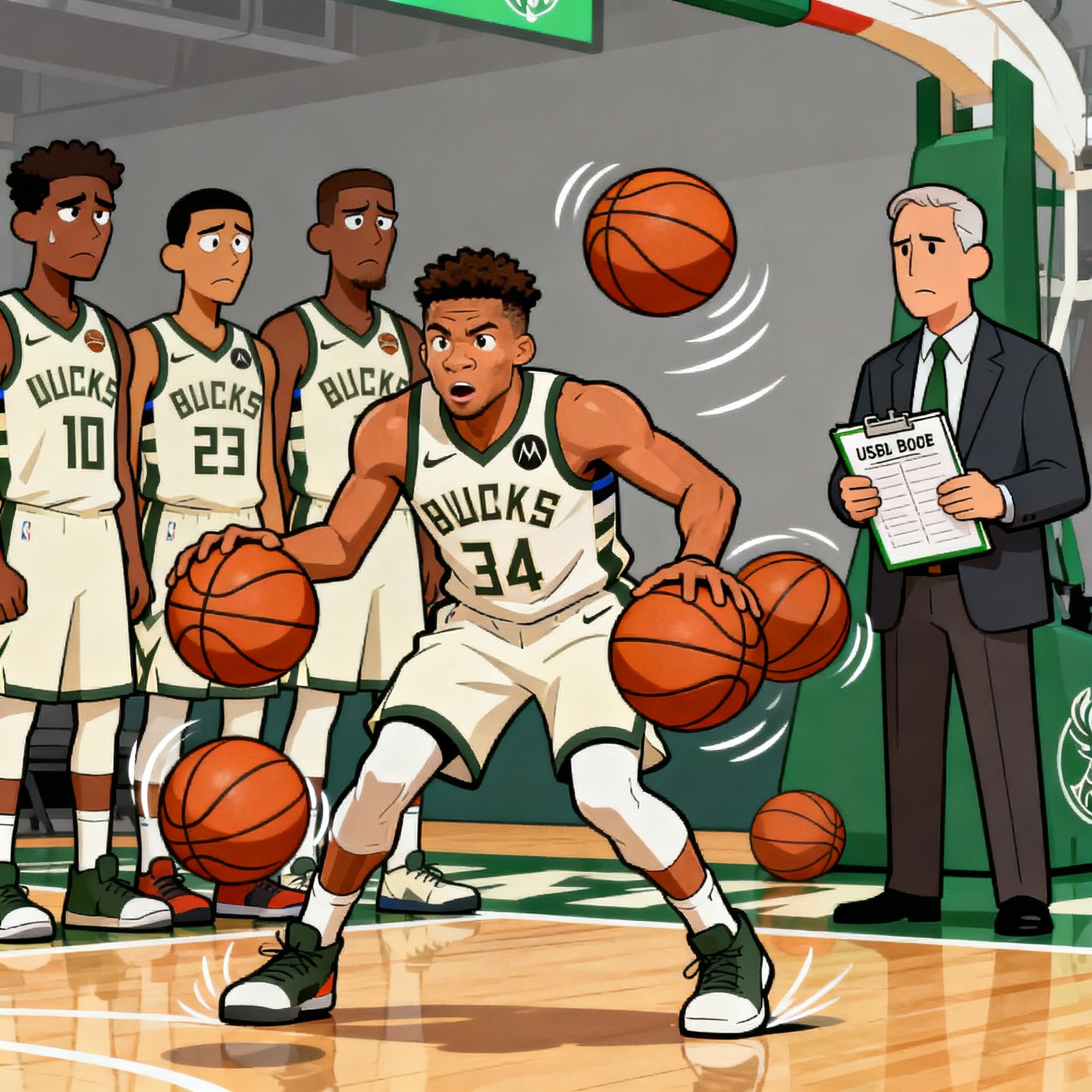
    So you have seen this chart before. It shows that Giannis, despite not being much good at dribbling, held the ball more than anyone. Despite his tendency for turnovers, he insists on bringing the ball down and then wasting time holding it.

    Some say this is on purpose. For sure it helps boost his stats. Opponents shoot. Everyone on the Bucks team clears out for Giannis to boost his rebound stats. Then Giannis brings down the ball looking for an easy dunk. He often gets locked up and then wastes more time because he has no skills to disentangle himself. When he does pass it is often too late to team mates that are covered defensively. Still, when we link the amount of time Bucks’ players had the ball to their points, this is the chart:

    Amazingly Giannis is 8th. Makes sense. Because even when he gets fouled, he converts free throws terribly. KPJ makes the most of what little time with the ball he is given.

    Giannis’ tendency to dominate the ball for the Milwaukee Bucks has sparked considerable debate and criticism, especially as his usage rate continues to rise each season. In the 2024-25 season, Giannis’s usage reached league-leading levels, with nearly 35% of the Bucks’ possessions ending with his actions, and this figure spiked even higher during periods when Damian Lillard was absent.​

    Downsides of Giannis’s Ball Dominance

    • Ball-stopping and predictability: When so many possessions flow through Giannis, opposing defenses can focus on collapsing the paint and crowding him, making the Bucks’ offense more predictable and easier to scheme against in crucial playoff moments. This “heliocentric” approach often slows ball movement and reduces chances for teammates to find rhythm and confidence in key stretches.​
    • Under-utilization of teammates: Despite talents like Lillard or Middleton, the offense has repeatedly struggled to maximize their skill sets because so many plays still funnel directly through Giannis. This creates a scenario where valuable offensive players become spot-up shooters or afterthoughts, rather than being integrated as dynamic threats.​ New players simply don’t touch the ball enough.
    • Sustainability and fatigue: The enormous responsibility placed on Giannis not only makes the Bucks vulnerable if he struggles or faces fatigue, but also risks injury or long-term wear as he is now in his 30s. Relying on one player to generate most of the offense makes the team less resilient in playoff series or against elite defenses.​

    Evidence of Problems

    • Usage rate trends: Giannis consistently leads the league or nears the top in usage rate, a classic trait of ball-dominant systems that have mixed playoff success. In clutch moments, the offense tends to stall or force Giannis into heavily contested shots, resulting in lower efficiency or turnovers.​
    • Playoff disappointments: Playoff exits in recent seasons have frequently included criticism of the Bucks’ inability to adapt offensively when Giannis is neutralized. Ball dominance discourages other creators from developing confidence, shown in stagnant offense late in games.​
    • Calls for diversified offense: Analysts, coaches, and even teammates have advocated for more diverse offensive sets by reducing Giannis’s workload and sharing playmaking responsibility, recognizing that a more balanced approach is essential to success at the highest levels of competition.​

    The narrative that Giannis “hogs” the ball is backed by the data and on-court impact: while the Bucks remain extremely reliant on his talents, this overreliance has financial and competitive costs, especially in the playoffs. For Milwaukee to reach its full potential, a clear shift toward more collaborative, multi-faceted offensive schemes is urgently needed.​

    What have we seen so far? Well the Bucks coaching team saw how Spanoulis used Giannis in the Olympics. But they can’t copy it. Why? Because Giannis has become hooked on getting his stat padding in every game and refuses to share the ball even now. If the Bucks’ marketing team was honest, this is what the graphic would look like after a game:

  • “I did it the right way” – how giannis threw his team under the bus

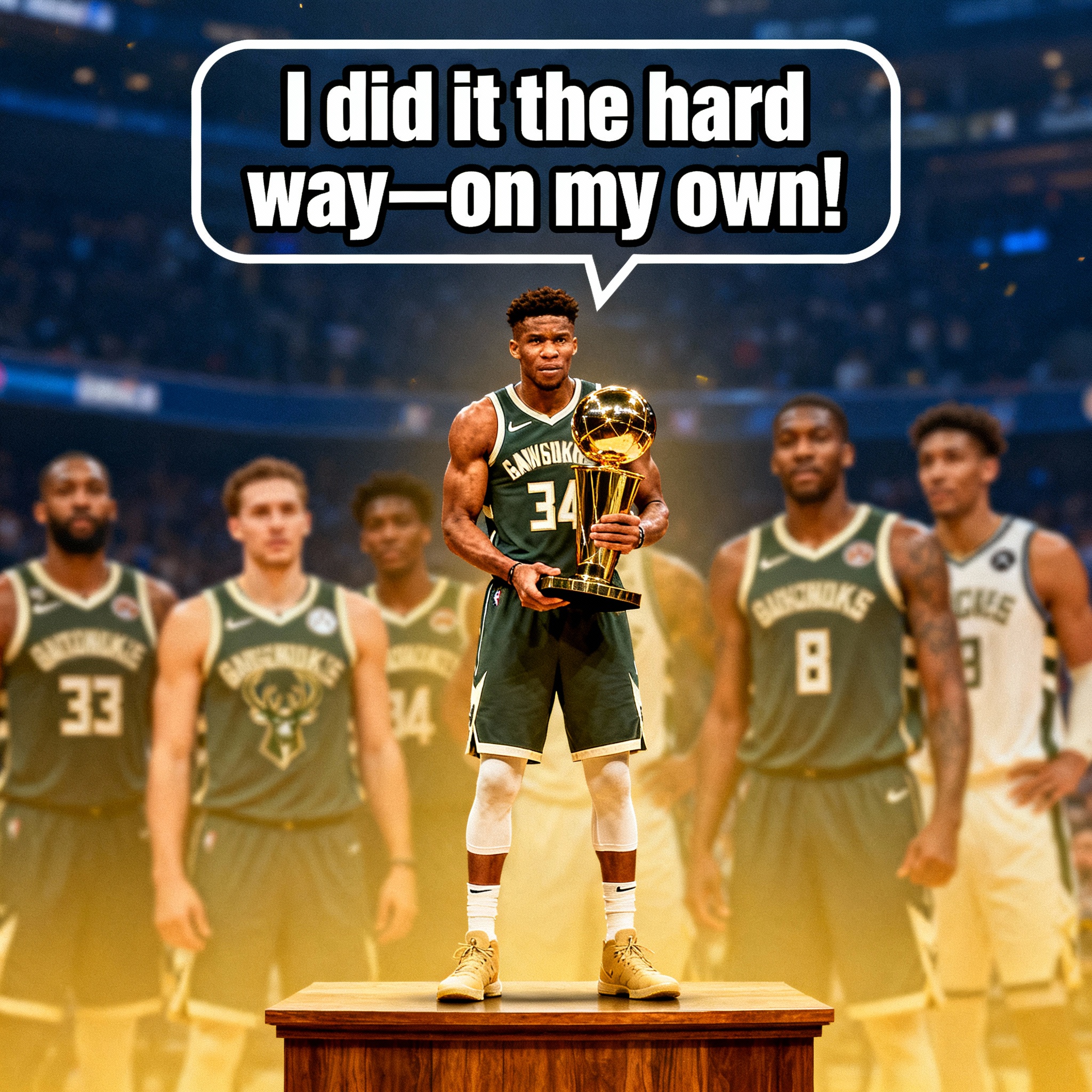
    “I did it the right way” – how giannis threw his team under the bus

    Giannis Antetokounmpo’s rhetoric about “winning the right way”—both in his immediate post-championship comments and in his conversation with Dwyane Wade at the All-Star Game—has often been presented as a humblebrag or a statement on competitive integrity. But peeling back the public applause, these statements reveal a deep undercurrent of individualism that, whether intentional or not, throws serious shade at the teammates and organization that propelled him to NBA stardom.

    ​””It’s easy to go somewhere and go win a championship with somebody else… It’s easy. I could go to a super team and just do my part and win a championship. But this is the hard way to do it and this is the way to do it and we did it.”

    Framing Himself as the Lone Hero

    By championing the idea that it’s “easy” to join a superteam and “do your part”—and contrasting that with his own “hard way” victory—Giannis drew a not-so-subtle line through the league: there are players who win with help, and there is Giannis, who does it solo. The implication is that his teammates were mere supporting characters, passengers in his one-man campaign, rather than vital components of a true championship team.​

    His words to Wade reinforced this narrative: by highlighting Wade as someone who won “the right way” in Miami, Giannis continues to prop up the myth of the self-made superstar, glossing over the critical roles played by everyone around him. It’s not just a swipe at the concept of superteams; it’s a backhanded insult to those who wore the same uniform and bled the same colors during Milwaukee’s title run.

    ​”I’m a huge, huge fan of you bro. The day after we won the championship I posted a picture of you on my story… Because you guys… You did it in Miami. You did it the right way. That’s how I want to do it.”

    The Impact on Team Chemistry

    What makes Giannis’s stance notably self-centered is the dismissiveness baked into the rhetoric. Khris Middleton’s clutch shooting, Jrue Holiday’s defense, and Brook Lopez’s presence in the paint—the foundation of the Bucks’ 2021 championship—are effectively relegated to footnotes in Giannis’s personal story.​

    By making such comments both publicly and in private conversation with icons like Wade, Giannis inadvertently puts himself at the center of the story, as if he alone triumphed against the odds. For a superstar whose brand often promotes humility and teamwork, this move is strikingly egotistical.

    Hypocrisy and Selective Memory

    Let’s not forget that even the “right way” championship teams—Wade’s 2006 Heat included—relied heavily on key contributions from both stars and role players. By heralding himself and Wade as paragons of solo achievement, Giannis ignores both NBA history and the realities of how teams win titles.

    His statements, when placed under a microscope, read less like inspiration and more like a subtle attempt to distance himself from those who helped raise the Larry O’Brien trophy alongside him.

    Giannis is a hypocrite

    Giannis Antetokounmpo’s constant need to frame his title as “harder,” “more authentic,” or “without help” only underlines how much the superstar mentality has eroded the team ethic in modern basketball. Instead of lifting his teammates up in victory, his words function as a subtle takedown—a way to make sure the spotlight, even after the final buzzer, never drifts far from his own shadow.

    ( It is similar to his ludicrous speech about how losing is no different to winning. )

  • 7 NBA Stars Dominating the First Two Games of 2025-26: Giannis? Nope!

    7 NBA Stars Dominating the First Two Games of 2025-26: Giannis? Nope!

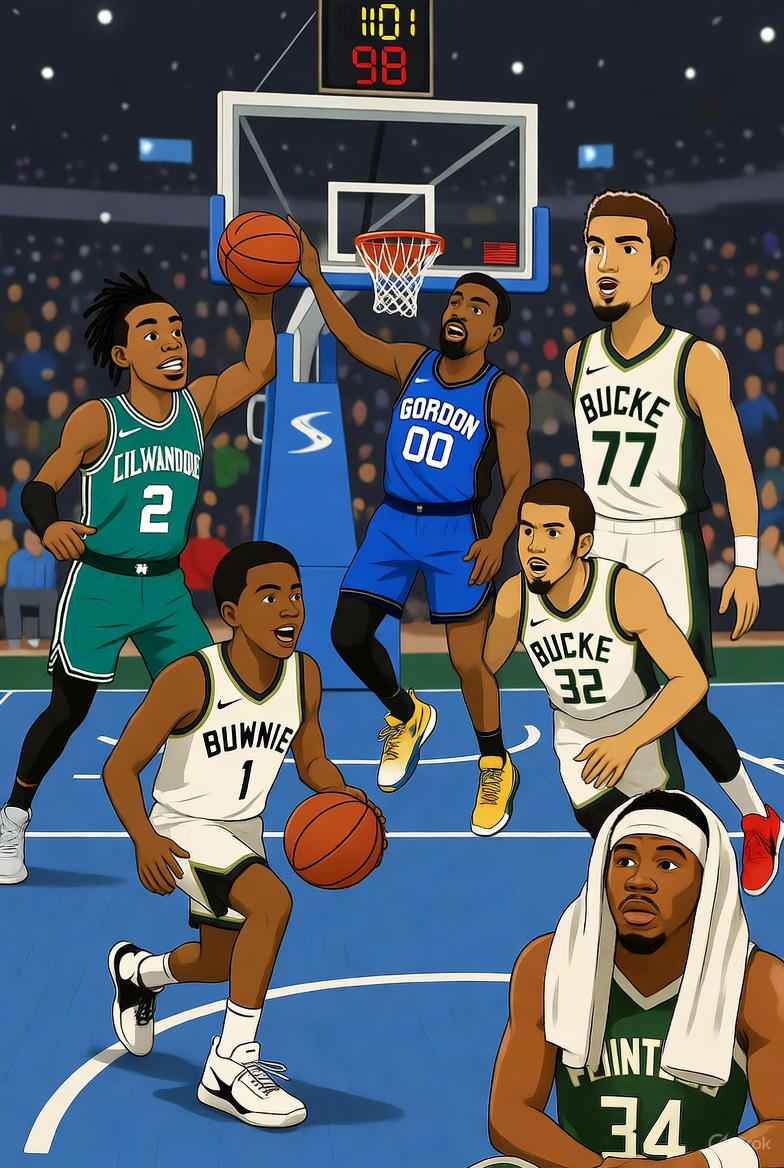
    The 2025-26 NBA season has kicked off with an offensive explosion, and seven superstars—Shai Gilgeous-Alexander, Aaron Gordon, Luka Dončić, Anthony Edwards, Victor Wembanyama, Tyrese Maxey, and Alperen Şengün—are leading the charge. Through the first two games, these players have delivered performances that are rewriting record books and setting the tone for an electrifying season. At the same time Giannis, playing two of the worse teams in the NBA for his first two games, still can’t shoot mid range, still has loads of turnovers, still can’t screen. He simply has not developed at all.

    Shai Gilgeous-Alexander: Thunder’s Scoring Tsunami

    Shai Gilgeous-Alexander is making an early MVP case with a jaw-dropping 45.0 points, 6.5 rebounds, and 5.0 assists per game on 47.4% shooting through two games. In the Oklahoma City Thunder’s season opener, a 141-135 double-overtime thriller against the Indiana Pacers, SGA erupted for a career-high 55 points (15-31 FG, 23-26 FT), tying Russell Westbrook for the most 50-point games in Thunder history. He followed it up in Game 2 with 35 points, 5 rebounds, 5 assists, 2 steals, and 2 blocks, powering OKC to another victory and a 2-0 start. His two-game total of 90 points ranks fourth all-time for an opening weekend in NBA history. SGA’s silky mid-range game, relentless drives, and 88.5% free-throw shooting are making him a nightly highlight reel. The Thunder look like title contenders, and Shai’s in the driver’s seat.

    Aaron Gordon: Denver’s Unexpected Scoring Juggernaut

    Aaron Gordon, the Nuggets’ high-flying forward, has shocked the league with 50.0 points, 8.0 rebounds, and 2.0 assists per game on an unreal 81.0% from the field. In Denver’s opener, a 137-131 overtime loss to the Golden State Warriors, Gordon exploded for a career-best 50 points, including a franchise-record 10 three-pointers, joining Michael Jordan and Kyrie Irving as one of the few to drop 50 in an opener. Known for his dunks and defense, Gordon’s sudden emergence as a long-range assassin alongside Nikola Jokić gives Denver a terrifying new dimension. This isn’t the AG we knew—this is a superstar reborn.

    Luka Dončić: Lakers’ New Wizard Wows in Hollywood

    Luka Dončić’s blockbuster move to the Los Angeles Lakers is paying immediate dividends. He’s averaging 43.0 points and 12.0 rebounds per game, with playmaking flair that’s lighting up Tinseltown. In the opener, a 119-109 loss, Luka delivered 43 points (17-27 FG), 12 rebounds, 9 assists, 2 steals, and 1 block in 41 minutes, showcasing his signature step-back threes and paint dominance. At 26, Luka’s vision and scoring touch are meshing perfectly even without LeBron James on the floor yet this season, making the Lakers’ offense a nightly spectacle. If this is Luka’s baseline in purple and gold, the league’s in trouble.

    Anthony Edwards: Ant-Man’s Explosive Start

    Anthony Edwards is staking his claim as the NBA’s next big thing, averaging 41.0 points per game for the Minnesota Timberwolves. In Game 1, he showcased his athleticism and shooting touch, setting the stage for a breakout season. Game 2 saw him drop 31 points (11-19 FG, 3-6 3PT) in a loss, but his efficiency and aggression were undeniable. Across both games, Edwards’ blend of highlight-reel dunks, deep threes, and improved playmaking alongside Rudy Gobert has Minnesota dreaming big. At just 24, Ant-Man’s confidence and swagger make every game must-watch TV. The Wolverine is clawing his way to superstardom.

    Victor Wembanyama: The Alien’s Sophomore Surge

    Victor Wembanyama, the San Antonio Spurs’ 7’4” unicorn, is averaging a monstrous 40.0 points, 15.0 rebounds, and 71.4% FG through two games. His opener was a masterclass, with a double-double featuring rim-rattling dunks, blocks that sent shots into the stands, and smooth perimeter shooting. His length and skill make him a defensive nightmare, while his offensive versatility has Spurs fans envisioning a dynasty under Gregg Popovich. Wembanyama isn’t just the future—he’s the present, and he’s rewriting what a big man can do.

    Tyrese Maxey: Philly’s Speedy Scoring Sensation

    Tyrese Maxey is torching defenses for the Philadelphia 76ers, averaging 40.0 points and 6.0 assists on 54.2% shooting. In the opener, he set the tone with blazing speed and a quick release, racking up points in bunches. Game 2 he had limited minutes, but his full performances show a star who’s taken a leap, complementing Joel Embiid with drives and jumpers. Maxey’s ability to score efficiently in transition and create for others is making Philly’s offense lethal. At 24, he’s no longer a rising star—he’s arrived, and the Sixers are reaping the rewards.

    Alperen Şengün: Houston’s Triple-Double Titan

    Houston Rockets center Alperen Şengün is a stat-sheet stuffer, averaging 39.0 points, 11.0 rebounds, and 7.0 assists on 50.0% shooting. His opener showcased his post dominance and passing wizardry, with a near-triple-double that set the tone for Houston’s 2-0 start. Game 2 kept the momentum, with Şengün’s soft touch and Jokić-like vision creating nightmares for opponents. His ability to score, rebound, and facilitate at 23 years old has the Rockets looking like playoff locks. Şengün’s Turkish hammer is pounding, and Houston’s frontcourt is a force.

    A Season Already Ablaze

    These seven stars aren’t just playing well—they’re setting the NBA on fire. With 50-point outbursts, triple-doubles, and record-breaking efficiency, the 2025-26 season is shaping up to be a historic one. Shai’s scoring, Gordon’s shooting, Luka’s playmaking, Edwards’ explosiveness, Wemby’s dominance, Maxey’s speed, and Şengün’s versatility are just the beginning. As we roll into Week 2, the question isn’t who’s playing better—it’s how much higher this ceiling can go. Oh and they are driving TV ratings crazy (unlike Giannis.) These players can dribble, control the game, shoot from any distance, provide solutions for their teams in tough matchups.

    Giannis Antetokounmpo: Not Eclipsing

    the New-Age Scorers

    In a season opener that’s seen a barrage of 40+ point explosions from the likes of Shai Gilgeous-Alexander, Aaron Gordon, and the rest of our highlighted seven, you might wonder where Milwaukee’s Greek Freak fits in. Giannis Antetokounmpo, the two-time MVP and perennial All-NBA beast, is off to another monster start—historically so, in fact. But against the easiest opponents possible. Through the Bucks’ 2-0 beginning (a

    133-120 rout of the Wizards followed by a gritty win over the Raptors), he’s posted 30.0 points, 15.0 rebounds, and 5.0 assists per game, becoming the first player ever to hit 60-30-10 in a season’s opening duo. Game 1: 37 points, 14 boards, 5 dimes on 16-of-26 shooting. Game 2: A double-double that sealed the historic line, with his relentless drives and rim-finishing keeping Milwaukee’s offense humming. Of course to be fair, while the other players mentioned in this post where playing the toughest team’s in the league, Giannis was playing the very worse. And he is still a ball hog as you can see on the chart.

    Giannis isn’t quite “close” to the supernova pace of those seven right now: He hasn’t shown the kind of tangible, eye-popping improvement that’s catapulting the others into uncharted territory. Those guys? We’re seeing Aaron Gordon morph into a 50-point, 10-three sniper (81% FG be damned); Luka Dončić

    seamlessly integrating into a new Lakers system with 43-12 lines; Victor Wembanyama expanding his alien toolkit to 40-15 dominance; and Tyrese Maxey evolving from spark plug to 40-point Ferrari. It’s leap-year growth: New skills, higher ceilings, “holy crap, he can do that now?” moments that scream evolution. Again last night, no mid range shooting.

    Giannis? He’s Giannis. The 30-15-5 is elite, sure—it’s MVP-adjacent and has the Bucks looking cohesive early under Doc Rivers—but it’s a refinement of what he’s done for years. His free-throw woes persist (around 57% last season, no signs of a breakthrough yet) and there’s no radical shift in playstyle to suggest he’s adapting to the league’s scoring arms race. Last year, he averaged 30.4-11.9-6.5; this year, it’s tracking eerily similar, just with more rebounding grunt work. No added pull-up range, no sudden point-forward explosion, no “I’ve unlocked mid-range mastery” arc like SGA. It’s dominance, but it’s familiar dominance—beautiful in its brutality, but not the “amazingly improved” revelation that’s got the others rewriting highlight reels. And in the 4th quarter nobody is expecting him to become clutch. Gary Trent Jr scored the same amount of points in half the minutes. In fact why was Giannis even on the floor at the end as the Bucks were blowing the Raptors out?

    Don’t get it twisted: Giannis is still a walking triple-double threat who’s dragging Milwaukee toward contention despite roster flux (hello, Myles Turner spacing). If the Bucks gel around his paint-pounding, he could average 32-12-7 by midseason and remind everyone why he’s the Freak. But in this early-season fireworks show, where the narrative is all about who’s leveled up now, Giannis feels like the grizzled vet holding the fort rather than igniting the revolution. He’s close in impact, miles ahead in hardware, but that lack of a clear “new trick” keeps him a step behind the evolution parade—for now. Keep watching; the Greek Freak doesn’t stay stagnant for long.

  • I know what they did this summer (while Giannis was statIC

    I know what they did this summer (while Giannis was statIC


    Despite his status as one of the NBA’s elite, Giannis Antetokounmpo’s early performances this season suggest that he has not notably expanded his skill set over the summer. Observers and analysts have noted that Giannis continues to rely on his physical dominance, downhill driving, and interior finishing, with little visible improvement in his outside shooting mechanics or consistency from mid-range, nor an increase in his playmaking sophistication in the

    halfcourt offense. Defensive versatility remains his strength, but there’s no evidence that he has addressed long-standing weaknesses such as unreliable free-throw shooting or limited off-ball scoring tools. He went just 5-of-12 from the line (41.7%), continuing a long-standing issue that has plagued his efficiency in recent seasons (he’s shot below 66% from the stripe in each of the last three years). This inefficiency led to a notable moment early in the game when he was called for a 10-second violation on a free throw, delaying his attempt for over 12 seconds. And of course no mid range. 1 out of 6 against the worse team in the league is pathetic. This lack of noticeable skill growth stands in contrast to the significant development shown by other rising stars around the league who

    entered the season with clearly sharpened or new elements to their games.

    By the way that chart on the left is proof that nothing has changed. Giannis is still a massive ball hog.

    Victor Wembanyama: The Defensive Dynamo Ascends

    Victor Wembanyama’s second NBA offseason took on a special intensity after recovering from a blood clot scare that ended his season early. Determined to return both stronger and more versatile, he crafted a training regimen focused on “violent” physical conditioning, global experiences, and mastering alternative movement styles.

    Rather than polishing just his offensive moves, Wembanyama spent months with Hall of Famer Hakeem Olajuwon learning low-post footwork and body control. He placed a relentless emphasis on fitness, physical strength, and recovery, dedicating far more hours to defensive drills—sometimes defending every teammate in succession, without a breather. The change in his physique has enabled him to absorb contact, contest shots more aggressively, and improve lateral movement—hallmarks of top-tier rim protectors.​

    Wembanyama’s improved three-point accuracy (up to 35% despite high volume), his expanded leadership voice, and the confidence gleaned from a productive, pain-free summer have transformed him into a more complete, dominant force. His Spurs teammates now see him as both a physical and vocal anchor, elevating team standards on both ends.​

    Tyrese Maxey: Evolution into a Lead Playmaker

    Tyrese Maxey’s offseason was defined by a shift in mentality: he’s no longer just a scorer, but the Sixers’ engine. With James Harden now gone, Maxey worked with the team’s coaching staff to master manipulation of defenses, run the pick-and-roll, and generate open shots for both himself and others. Summer workouts focused on increasing his passing creativity and controlling game tempo—skills crucial for a lead guard.

    Maxey’s spot-up shooting has also unlocked new levels of consistency. He refined his shooting mechanics, particularly adding more arc and working on smooth releases to eliminate his tendency to shoot flat. His relentless shooting routines led to more reliable results from well beyond the arc. Leadership was a focal point too: Maxey is now seen as the vocal leader in Philadelphia, with the expectation he’ll keep teammates engaged and elevate the Sixers in clutch moments.

    Anthony Edwards: Embracing Contact, Playmaking, and Leadership

    Training with advice from veterans and coaches, Anthony Edwards focused on handling defensive pressure, playmaking, and embracing leadership responsibilities this summer. He spent countless hours improving his ball-handling under duress, working against double-teams and simulating physical contact to prepare for postseason intensity.​

    One major leap is his patience as a playmaker—Edwards worked on reading defenses out of the pick-and-roll and throwing precise lobs, opening up opportunities for his teammates, especially bigs like Rudy Gobert. Another area: defensive consistency. Edwards set routines to become a steady two-way threat, intent on using his physical gifts not just for highlight plays but for reliable stops. The young Timberwolves star is primed for an elite season, both as an offensive focal point and spiritual leader.​

    Alperen Sengun: Stretching the Floor, Sharpening Defense

    Alperen Sengun spent the summer evolving from a classic low-post big into a modern, multidimensional center. Recognizing that high-level bigs must offer offensive versatility, Sengun dedicated extensive time to improving his shooting range—both mid-range and from deep. His preseason exhibits more confident three-point attempts and a knack for hitting turnaround jumpers.​

    Sengun also invested in refining his ball handling and passing, making him a greater connector in Houston’s offense. His focus on conditioning paid off defensively, allowing him longer stints on the floor and improved mobility in pick-and-roll coverage. Free-throw shooting is another breakthrough; Sengun’s improvement at the stripe should boost both his scoring and late-game reliability.​

    Now, he is much harder to match up with on both ends, able to draw big defenders out of the paint and help Houston’s dynamic perimeter core flourish.​


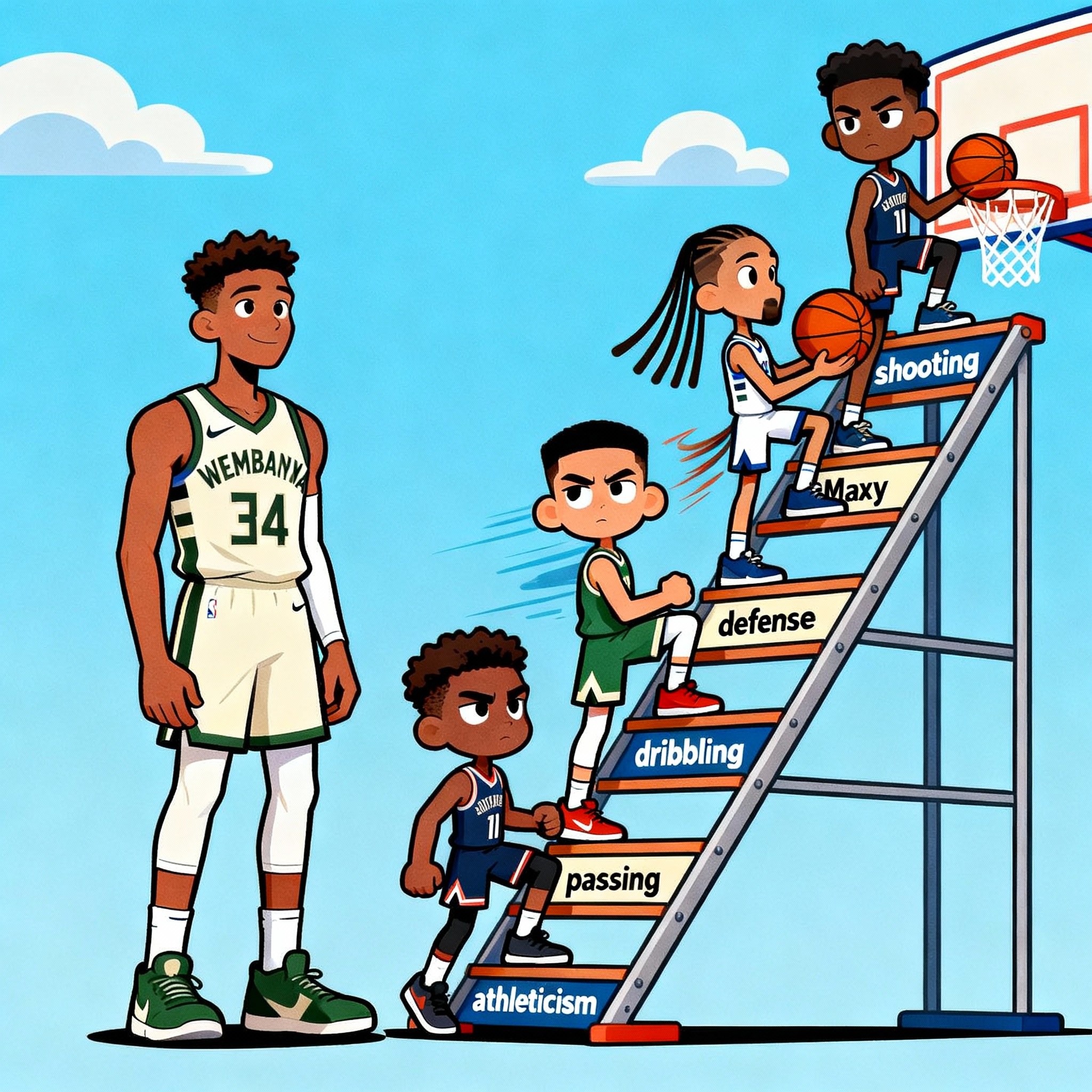
    These four rising stars have pushed themselves to the edge over the summer, returning as the vanguard of the NBA’s new era. Their rigorous development, sharpened skills, and growing leadership make them must-watch figures, promising to redefine both their teams and the league’s hierarchy in 2025–26. But they are not alone. While Giannis stays static, the league moves on. Maybe hold those “MVP” chants for a minute…

  • Giannis’ Reliance on Size and Strength: A Double-Edged Sword

    Giannis’ Reliance on Size and Strength: A Double-Edged Sword

    Standing at 6’11” with a 7’3” wingspan and with explosive athleticism, he’s been aptly nicknamed the “Greek Freak.” His ability to overpower defenders, bulldoze to the rim, and dominate in transition has made him a perennial MVP candidate. However, as Giannis continues to evolve in his career, a recurring critique persists: his game leans heavily on his physical gifts, and he has yet to fully develop the diverse skill set necessary to elevate his game to new heights and ensure long-term success. It is now year 13, what excuse does he have?

    The Foundation of Giannis’ Dominance

    Giannis’ physical attributes are the cornerstone of his game. His ability to cover ground quickly, combined with his strength, makes him nearly unguardable in certain situations. In transition, he’s a freight train, capable of going coast-to-coast in a few strides, finishing with thunderous dunks over helpless defenders. In the half-court, his long strides allow him to attack the basket with a single step from the three-point line, often overpowering smaller defenders or outmaneuvering slower bigs. His physicality also used to shine on defense, where he could guard multiple positions, switch seamlessly, and protect the rim with his length. (Back when he cared to play defence.)

    His efficiency at the rim—converting over 70% of his shots within three feet—stems from his ability to leverage his size and strength to create space and finish through contact. This physical approach has carried him to great heights, including an NBA title and Finals MVP honors, (a long time ago) but it also reveals the cracks in his game when opponents exploit his lack of versatility.

    The Limitations of a One-Dimensional Approach

    While Giannis’ physical gifts make him a matchup nightmare, his reliance on size and strength becomes a liability against certain defensive schemes, particularly in high-stakes playoff scenarios. Teams like the Toronto Raptors in 2019 and the Miami Heat in 2020 exposed this by employing strategies like the “wall” defense—packing the paint with multiple defenders to neutralize his drives. Without a reliable perimeter game or advanced playmaking skills, Giannis struggles when his path to the basket is cut off.

    1. Lack of a Consistent Jump Shot

    Giannis’ jump shooting remains a work in progress. His three-point shooting percentage has hovered around 29% for his career, with a high of 30.6% in the 2022-23 season on low volume (1.5 makes per game). Defenders often sag off him, daring him to shoot from beyond the arc or even from mid-range. This lack of shooting threat allows opponents to clog the paint, limiting his driving lanes and forcing him to take low-percentage shots. For comparison, players like Kevin Durant or Nikola Jokić, who combine size with shooting touch, keep defenses honest, creating space for themselves and their teammates.

    2. Limited Post Moves

    In the post, Giannis relies heavily on power moves—drop steps, spins, or bullying his way to the rim—rather than finesse. Unlike players like Hakeem Olajuwon or even Joel Embiid, who use a variety of footwork and countermoves to score efficiently, Giannis’ post game lacks diversity. Defenders who can match his physicality or anticipate his moves can force him into turnovers or contested shots. His turnover rate (3.7 per game in 2022-23) often spikes when teams force him into crowded areas without a refined arsenal to counter.

    3. Playmaking and Decision-Making

    While Giannis averages a respectable number of assists, his playmaking is more a product of his ability to draw help defense than advanced court vision. When defenses collapse on his drives, he often makes simple kick-out passes to open shooters, but he struggles to manipulate defenses with the precision of players like LeBron James or Jokić. His assist-to-turnover ratio (1.55 in 2022-23) reflects his tendency to force passes or drives into heavy traffic, particularly in playoff settings where defenses are more disciplined.

    4. Free-Throw Shooting Woes

    Giannis’ free-throw shooting has been a persistent weakness, with a career average of 68.5%. In high-pressure playoff games, this becomes a glaring issue, as teams intentionally foul him to exploit his inconsistency. His prolonged free-throw routine—often exceeding 10 seconds—also disrupts game flow and puts additional pressure on him mentally. Improving his free-throw percentage to a reliable 75-80% would not only boost his scoring but also deter teams from hacking him in crucial moments.

    Playoff Struggles: When Size Isn’t Enough

    The playoffs are where Giannis’ reliance on physicality is most exposed. In the 2019 Eastern Conference Finals, the Raptors’ “wall” strategy neutralized him, holding him to 22.7 points per game on 44.3% shooting, well below his regular-season averages. Similarly, in 2020, the Heat’s zone defense and physical play limited his effectiveness, leading to a second-round exit. Even in the Bucks’ 2021 championship run, Giannis’ success was partly due to favorable matchups and injuries to opponents like the Nets’ Kyrie Irving and James Harden. In 2023, the Heat once again exploited his limitations, with Giannis shooting just 23.5% from three and struggling against their defensive schemes in a first-round upset.

    These playoff performances highlight a key issue: when teams take away Giannis’ primary weapon—his ability to attack the rim—his lack of secondary skills leaves the Bucks vulnerable. Elite defenses know they can afford to give him space on the perimeter, forcing him to either shoot or make plays under pressure, areas where he’s less comfortable. And when opponents care about the game you can be sure they will stop Giannis. What then?

    The Path Forward: Developing a More Complete Game

    To reach the next level and ensure longevity as an elite player, Giannis must diversify his skill set. Here are some areas where he could focus:

    1. Developing a Reliable Jump Shot: Giannis doesn’t need to become a 40% three-point shooter, but improving his mid-range and three-point shooting to league-average levels (around 35%) would force defenders to guard him more closely, opening up driving lanes and creating space for teammates. Working with a shooting coach to refine his mechanics—particularly his release point and consistency—could yield significant dividends.
    2. Expanding His Post Game: Adding finesse moves like fadeaways, hook shots, or up-and-under fakes would make Giannis more unpredictable in the post. Studying footage of players like Hakeem or Dirk Nowitzki could help him develop a more versatile scoring arsenal, reducing his reliance on brute force.
    3. Improving Playmaking: Giannis could benefit from studying how players like Jokić or Draymond Green read defenses and make precise passes. Enhancing his ability to manipulate defenses with hesitation moves or pick-and-roll play would make him a more complete offensive hub.
    4. Fixing Free-Throw Shooting: Simplifying his free-throw routine and building confidence at the line through repetition could push his percentage into the 75-80% range. This would not only boost his scoring but also make him a more reliable closer in tight games.
    5. Adapting to Defensive Schemes: Giannis could work on recognizing and countering defensive strategies like zones or walls. Quick decision-making, such as passing out of double-teams or using pump fakes to draw fouls, would make him harder to game-plan against.

    The Bigger Picture: Longevity and Legacy

    At 30 years old (as of 2025), Giannis is past his prime and the physical toll of his playing style raises questions about longevity. Players who rely heavily on athleticism, like Russell Westbrook, often face challenges as their explosiveness wanes. By developing a more skill-based game, Giannis would ensure he remains a dominant force into his mid-30s, much like LeBron James, who evolved from a slasher to a versatile playmaker and shooter.

    Moreover, expanding his skill set would solidify his legacy as one of the all-time greats. While he’s already a two-time MVP and champion, players like Michael Jordan, Kobe Bryant, and Kevin Durant elevated their games by adding layers of skill to their natural gifts. For Giannis to join that pantheon, he must show he can adapt when physicality alone isn’t enough.

    His lack of a consistent jump shot, limited post moves, and struggles against elite playoff defenses highlight the need for a more well-rounded game. By investing in his shooting, playmaking, and overall basketball IQ, Giannis can transcend his current ceiling. For now, his physical dominance remains his greatest asset—but also his greatest crutch. The question is whether the Greek Freak can evolve into a complete player because the smarter defenses have clearly caught up with him.

  • Reasons People Dislike Giannis Antetokounmpo – On and Off the Court

    Reasons People Dislike Giannis Antetokounmpo – On and Off the Court

    Giannis Antetokounmpo is a polarizing figure in the NBA, admired for his work ethic and humility but also criticized for multiple reasons both on and off the court. Dislike often stems from a mixture of his playing style, incidents involving opponents, his public persona, and perceptions of his behavior.


    On-Court Reasons for Dislike

    1. Physical and Aggressive Playing Style

    Many critics argue that Giannis’ dominance relies more on brute athleticism than skill, with players and fans perceiving his approach as “bulldozing,” lacking finesse, or being unrefined. This has led to accusations of being “boring” or taking the “easy route” by overpowering defenders rather than out-skilling them. Very often this is offensice fouls he all too often gets away with. It is also boring to watch as he has an extremely limited set of ways to score. Especially his dunks are very predictably the same ol same ol all the time.

    2. Dirty or Reckless Plays

    There have been notable incidents—like undercutting shooters, hard fouls, or physical altercations—that have led to accusations of recklessness or even dirty play. Though some former players defend him as not intentionally dirty, the reputation persists due to repeated aggressive incidents against opponents such as Jayson Tatum and driving plays that result in injuries. His physical dominance sometimes leads to others getting hurt, which is sometimes considered dangerous if not outright unsportsmanlike by fans and media.

    3. Unsportsmanlike or Childish Antics

    Opponents and commentators have called out Giannis for gestures like faking a handshake after a hard foul or reactively escalating situations in the heat of the game. Jaylen Brown, for example, labeled Giannis “a child” for such antics after receiving an elbow and being on the receiving end of a pulled-back handshake.​

    4. Clutch Performance and Playoff Disappointments

    Despite his MVPs and championship, critics have pointed to specific playoff failures, perceived shortcomings in leadership, and offensive limitations (like shooting and free throws) as reasons to question his greatness and underachiever labels. When his teams falter, detractors highlight his inability to adapt or “raise his game,” fueling negative discussion.


    Off-Court Reasons for Dislike

    1. Incidents with Teammates and Staff

    There have been viral incidents of Giannis slapping or berating teammates, such as the recent episode with Greek teammate Giannoulis Larentzakis during a team huddle. While some dismiss this as passionate leadership or even cultural banter, others see it as lacking respect or unnecessarily aggressive. We get it, he is annoyed that the league knows how to shut him down when it counts.

    2. Locker Room Behavior and Internal Frustration

    Reports and viral clips have surfaced of locker room outbursts, confrontational meetings, and visible frustration taken out on teammates, which can be interpreted as poor leadership or lack of composure under pressure.

    3. Media Relationships and Perceived Arrogance

    Episodes of walking out on reporters following tough losses or being selective about his communication have led to friction and media-driven narratives about him being inaccessible or having a chip on his shoulder. Worse still he often plays the “I was so poor” story when he has no real answer to basketball related questions. ​

    4. Xenophobia and Outsider Status

    A distinct stream of criticism from both fans and some players arises from his international roots. Some commentators and NBA insiders bluntly say part of the negativity is due to Giannis being a “foreigner,” lacking the typical “American swag,” or not coming up through U.S. basketball circuits—prompting feelings that he’s “not one of us”. This bias is echoed in NBA locker rooms and the media. Most importantly he seems totally hypocritical claiming he “feels Nigerian” the one minute, then “Greek at heart” the next and then “my home is in Milwaukee” just a second later.​

    5. Viral “Disrespect” Incidents

    On and off the court, Giannis has had confrontations with other players’ families (e.g., a notable incident with Tyrese Haliburton’s father postgame) , or the ball game indicent and opposing staff (the “ladder incident” in Philadelphia) where his reactions have been called unprofessional or unduly emotional.​ And he is ultra hypocritical about his kids of course.


    Summary Table: Main Reasons for Dislike

    TypeExamples & IncidentsThemes
    On-CourtAggressive/dirty plays, taunting, playoff failuresStyle over skill, sportsmanship, immaturity
    Off-CourtLocker room conflicts, disrespectful gestures, slapsPoor leadership, disrespect, bad teammate
    MediaWalkouts, introversion, handling tough questionsArrogance, unapproachable, negative narratives
    CulturalNot American, foreign roots, outsider perspectiveXenophobia, lack of U.S. basketball pedigree

    Additional Notes

    • Jealousy and Resentment: Some dislike may ultimately be rooted in jealousy, as Giannis’ physical gifts and meteoric rise are seen as “unfair” by former greats or less gifted players. It does seem like he has been over hyped and under delivered. ​
    • Weirdness: He does not seem to want to fit in. He doesn’t train with other players, he makes weird Dad jokes, pretty infantile, he makes people uncomfortable very often with his approach.
    • Pathetic mistakes. He leads the league in palming and other such infantile things. Even if he gets away with a lot, he still tops categories no pro should be in, let alone a supposed MVP candidate.
    • Stat padding: It is hard not to see a lot of what he does as putting his personal stats above everything. And then blaming the rest of the roster.
    • Ungrateful. The ultimate snub, after Khris, Jrue and Brook got him to the Finals he kept saying he “did it the right way” implying he was the only star on the team. But the stat padding is legit.
    • Nepotism. Both Thanasis and now Alex have no place on an NBA bench. If an adult 30 year NBA player wants them as cheerleaders he should ask the Bucks to hire them as such, not take up a valuable team place.
    • Excuses excuses. He has been in the league 13 years now and still falls back on the same excuses when he fails. Sad that his fans still think “if only he improves X Y Z this season” even now. And his “no failure in sports” speech was the most disrespectful ever.
    • Sneaky manipulation of trades, whilst all along pretending he knows nothing. We now know for sure that he dictates terms pretty clearly. Coaches, players, trades are all signed off by him but then he plays the innocent ignoramus. And a question about how he gets all star votes lingers too.
    • Annual trade mill that Giannis instigates and then acts like he knows nothing. No other super star wants to play with him of course. They know it’s all hype.

    The above points encapsulate the primary criticisms and negative perceptions that have emerged around him.​

    1. https://foxsportsradio.iheart.com/content/2022-09-01-the-real-reason-why-nba-players-constantly-hate-on-giannis-antetokounmpo/
    2. https://www.youtube.com/watch?v=BtleYOSFS1o
    3. https://thesportsrush.com/nba-news-i-dont-think-giannis-antetokounmpo-is-a-dirty-player-jeff-teague-reacts-to-jaylen-brown-altercation-with-bucks-star/
    4. https://www.youtube.com/watch?v=FBy4KE7IFbg
    5. https://www.reddit.com/r/nba/comments/11m2da2/regarding_the_discourse_around_giannis/
    6. https://www.youtube.com/watch?v=NIeGfpTE_Rc
    7. https://creators.spotify.com/pod/profile/hardfoul/episodes/Giannis-Antetokounmpo-is-Dirty-Player-e2s5lt5
    8. https://thesportsrush.com/nba-news-dirty-giannis-antetokounmpo-gets-called-out-for-his-behavior-against-jaylen-brown-by-lou-williams/
    9. https://www.reddit.com/r/nba/comments/12b5hbj/does_giannis_deserve_more_credit_for_the_success/
    10. https://www.profootballnetwork.com/nba/should-be-fined-giannis-antetokounmpo-sparks-outrage-after-aggressive-move-on-greek-national-teammate/
    11. https://www.youtube.com/watch?v=FpKCGUzZJk4
    12. https://www.essentiallysports.com/nba-active-basketball-news-frustrated-giannis-antetokounmpo-issues-strong-message-to-locker-room-as-cavs-loss-exposes-concerning-bucks-issues/
    13. https://www.youtube.com/watch?v=4B4kIVHbbsc
    14. https://www.youtube.com/watch?v=BliwOGTxAv8
    15. https://www.marca.com/en/basketball/nba/milwaukee-bucks/2024/11/10/6730ac0b46163fb1658b4582.html
    16. https://www.essentiallysports.com/nba-active-basketball-news-havent-washed-my-btt-locker-room-privacy-concerns-revived-by-giannis-antetokounmpo-in-frustrating-revelation-malika-andrews/
    17. https://thesportsrush.com/nba-news-giannis-doesnt-talk-to-the-media-giannis-antetokounmpo-opens-up-about-being-inaccessible-using-honeymoon-incident/
    18. https://www.jsonline.com/story/sports/2022/10/01/bucks-giannis-antetokounmpo-says-hes-not-losing-sleep-over-criticism/8155329001/
    19. https://www.reddit.com/r/MkeBucks/comments/xuedhm/giannis_antetokounmpo_says_hes_not_losing_sleep/
    20. https://www.si.com/nba/bucks/news/former-nba-player-defends-giannis-antetokounmpo-amidst-ladder-incident
    21. https://www.cnn.com/2025/04/30/sport/giannis-antetokounmpo-haliburton-bucks-pacers-game-5-spt
    22. https://timesofindia.indiatimes.com/sports/nba/top-stories/what-happened-between-giannis-antetokounmpo-and-tyrese-haliburtons-father-milwaukee-bucks-vs-indiana-pacers-courtside-confrontation-explained/articleshow/120748924.cms
    23. https://www.reddit.com/r/MkeBucks/comments/1h0f91j/why_is_giannis_the_only_target_of_media/
    24. https://www.youtube.com/watch?v=iwBHOi7hOhU
    25. https://timesofindia.indiatimes.com/sports/nba/top-stories/giannis-antetokounmpo-reportedly-disrespected-in-nba-rankings-despite-dominant-season/articleshow/123834040.cms
    26. https://www.yardbarker.com/nba/articles/milwaukee_bucks_former_giannis_antetokounmpo_teammate_accuses_media_of_creating_trade_narrative/s1_17009_42870084
    27. https://www.si.com/nba/bucks/off-the-court/giannis-antetokounmpo-shares-how-god-keeps-him-humble
    28. https://www.reddit.com/r/MkeBucks/comments/q1k2rw/why_do_people_hate_giannis/
    29. https://www.facebook.com/controversychronicles/videos/5-most-savage-off-court-moments-of-giannis-antetokounmpo-/465340055517837/
    30. https://www.facebook.com/groups/bostcelt/posts/2258073037940497/
    31. https://www.reddit.com/r/MkeBucks/comments/1at0e22/whats_up_with_the_general_nba_fansmedia_giannis/
    32. https://www.reddit.com/r/nba/comments/1kb5zv9/highlight_giannis_antetokounmpo_on_the/
    33. https://www.youtube.com/watch?v=2LSta5L2eNQ
    34. https://behindthebuckpass.com/lingering-giannis-antetokounmpo-controversy-answer
    35. https://basketnews.com/news-231790-giannis-opens-up-on-european-return-responds-to-viral-slap-controversy.html
    36. https://www.youtube.com/watch?v=ktrwC47E7pQ
    37. https://www.sportsbusinessjournal.com/SB-Blogs/SBJ-Unpacks/2024/01/16/
    38. https://www.youtube.com/watch?v=Ogt4sNEc_1M
    39. https://sports.yahoo.com/article/tyrese-haliburtons-dad-facing-backlash-055352805.html
    40. https://www.facebook.com/groups/1073883926129889/posts/2500927923425475/
    41. https://www.youtube.com/watch?v=rycBgps6e9Q
    42. https://www.youtube.com/watch?v=uZJy5sRxDAw
    43. https://www.reddit.com/r/nba/comments/1gn8ywr/giannis_to_someone_off_camera_in_the_bucks_locker/
    44. https://www.youtube.com/watch?v=aLpS1bVgDus
    45. https://lastwordonsports.com/basketball/2024/12/13/nba-media-bucks-giannis-antetokounmpo/
    46. https://www.youtube.com/watch?v=6NWCga5A1M8
    47. https://www.youtube.com/watch?v=DtsA7Gf8E7o
    48. https://www.facebook.com/SportsHighlightsChannel/posts/hot-according-to-a-highly-reliable-source-inside-the-bucks-locker-room-the-greek/543897208492593/
    49. https://www.tiktok.com/@bleacherreport/video/7435296701503638815
    50. https://www.npr.org/2023/05/01/1173137368/giannis-antetokounmpo-reporter-milwaukee-bucks-nba-playoffs
    51. https://basketnews.com/news-231529-giannis-antetokounmpo-issues-public-apology-after-controversial-live-comment.html
    52. https://sports.yahoo.com/nba/breaking-news/article/giannis-antetokounmpo-not-in-attendance-at-media-day-because-of-covid-but-addresses-talk-about-his-bucks-future-174154952.html
    53. https://sports.yahoo.com/article/giannis-antetokounmpos-bucks-teammate-reacts-054725834.html
    54. https://abcnews.go.com/Sports/giannis-antetokounmpo-loves-greek-freak-nickname-unsure-origin/story?id=70817070
    55. https://www.sportbible.com/nba/lebron-james-basketball-steph-curry-giannis-antetokounmpo-jefferson-397141-20251006
    56. https://www.reddit.com/r/nba/comments/aqfng8/giannis_im_not_trying_to_sound_arrogant_and_cocky/
    57. https://www.youtube.com/watch?v=KFTRJRcLHUc
    58. https://au.sports.yahoo.com/backlash-against-rousey-unwarranted-231922524.html
    59. https://www.youtube.com/watch?v=dPN2A6i6E_U
    60. https://www.express.co.uk/sport/othersport/1064899/Giannis-Antetokounmpo-Milwaukee-Bucks-Brooklyn-Nets-NBA-news

  • Giannis’ Scoring Record Over the Last 3 Seasons Is Overrated

    Giannis’ Scoring Record Over the Last 3 Seasons Is Overrated

    Giannis Antetokounmpo, the “Greek Freak,” has been a dominant force in the NBA for years. Over the last three regular seasons (2022-23, 2023-24, and 2024-25), he’s averaged around 30.6 points per game (PPG), putting him among the league’s elite scorers. Fans and analysts often hail this as proof of his all-time greatness, with back-to-back-to-back 30+ PPG campaigns. But let’s pump the brakes. While the raw numbers look impressive, a deeper dive reveals that Giannis’ scoring is overrated. It’s padded by factors like excessive free-throw attempts, limited shooting range, and efficiency that doesn’t hold up under scrutiny—especially when compared to other top scorers or in high-stakes playoff scenarios. Don’t get me wrong: Giannis is a superstar. But treating his PPG as untouchable overlooks some glaring flaws.

    1. Overreliance on Free Throws: Volume Over Efficiency

    One of the biggest knocks on Giannis’ scoring is how much it depends on getting to the free-throw line. Over the last three seasons, he’s averaged a whopping 11.2 free-throw attempts (FTA) per game—leading the league in that category. That’s more than players like Shai Gilgeous-Alexander or Luka Dončić, who also drive a lot but incorporate more perimeter scoring.

    Sure, drawing fouls is a skill, and Giannis’ physicality makes him a nightmare for defenders. But here’s the issue: his free-throw percentage (FT%) has been mediocre at best, hovering around 64% across these seasons (64.5% in 2022-23, 65.7% in 2023-24, and 61.7% in 2024-25). That’s well below the league average for high-volume scorers, who often shoot 80-90% from the line. As a result, he’s leaving points on the table—points that could make his scoring look even more dominant if he converted at a higher rate.

    This foul-baiting style inflates his PPG without requiring the same level of skill diversity as other scorers. For context, in 2022-23 alone, nearly 40% of his points came from free throws, thanks to those 12.3 attempts per game. Critics argue this makes his scoring “predictable and biased” by officiating, as seen in games where refs swallow their whistles, and his output drops. Without this crutch, his averages might dip closer to 25-27 PPG, putting him in good-but-not-great territory.

    2. Limited Shooting Range: Great at the Rim, But That’s It

    Giannis is arguably the best finisher at the rim in NBA history, with field-goal percentages (FG%) north of 55-61% in these seasons. His euro-steps and dunks are highlight-reel stuff. But step back a few feet, and the story changes. His three-point shooting (3P%) has been abysmal: 27.5% in 2022-23, 27.4% in 2023-24, and a career-low 22.2% in 2024-25. He attempts fewer than 2 threes per game on average, meaning defenses can sag off him and clog the paint without fear.

    This lack of versatility means his scoring is “overrated away from the rim,” as one analysis put it. Compare that to players like Kevin Durant or Stephen Curry, who can score from anywhere, forcing defenses to respect their entire game. Giannis’ approach works in the regular season when teams aren’t scheming as intensely, but it limits his ceiling as a “complete” scorer. In an era where spacing and shooting rule, relying almost exclusively on drives feels outdated—and overrated when propped up by sheer athleticism rather than skill.

    3. Efficiency Metrics Don’t Stack Up to Peers

    True Shooting Percentage (TS%) is a gold-standard metric for scoring efficiency, accounting for field goals, threes, and free throws. Giannis’ TS% over the last three seasons averages about 62.6% (60.5% in 2022-23, 64.9% in 2023-24, 62.5% in 2024-25). That’s solid for a big man, but for someone averaging 30+ PPG, it’s not elite. High-volume scorers like Nikola Jokić or Joel Embiid often post TS% in the 65-70% range while matching or exceeding his points.

    In comparisons of top scorers over the last three seasons, Giannis ranks outside the top tier in relative TS% (adjusted for league average). For instance, players like Curry or Durant have historically been +5-10% above league average on similar volume, while Giannis hovers around +2-4%. His low FT% drags this down—imagine if he shot 80% from the line; his TS% could jump to 68-70%, making his scoring truly unstoppable. As it stands, the metric reveals inefficiency masked by volume.

    Some argue TS% “downplays” Giannis because of his high FTA, but that’s the point: efficiency includes making those shots. He’s getting more opportunities than most, yet not capitalizing fully.

    4. Playoff Drops: Regular-Season Hero, Postseason Question Marks

    The regular season is one thing, but championships are won in the playoffs—and that’s where Giannis’ scoring often falters. Over the last three years, he’s averaged 29.4 PPG in the postseason, but across only 8 games due to injuries (missing the entire 2023-24 playoffs). More telling is the efficiency drop: In the 2022-23 playoffs, his TS% plummeted to 52.5% from 60.5% in the regular season, with FT% at a dismal 45.2%.

    Defenses wall up the paint in the playoffs, exposing his lack of outside shooting. As one Reddit discussion noted, people overhype his playoff scoring by focusing on raw points while ignoring “significant drops in efficiency.” Even in his strong 2024-25 playoff showing (33.0 PPG, TS% 65.1%), turnovers spiked to 4.6 per game, showing vulnerability under pressure. This inconsistency suggests his regular-season PPG is boosted by a less intense environment, making it overrated as a measure of true scoring prowess.

    5. Contextual Factors: Games Played and Team Support

    Finally, let’s talk durability and context. Giannis played only 63 games in 2022-23 and 67 in 2024-25—missing significant time due to injuries. While his per-game averages hold up, sustaining that over a full 82-game slate is another story. Other top scorers like LeBron James or Kevin Durant have logged more minutes while maintaining efficiency.

    The Bucks’ system also plays a role. With shooters like Damian Lillard drawing attention, Giannis benefits from open lanes. But when the team struggles (as in recent playoff exits), his scoring doesn’t elevate them enough. Critics have called his overall impact “overrated,” pointing to underachievement in key moments. Even in the regular season against better opponents Giannis seems unable to make a difference.

    Impressive, But Not Untouchable

    Giannis Antetokounmpo’s 30+ PPG over the last three seasons is a testament to his talent and work ethic. But it’s overrated because it relies too heavily on free throws, lacks range, and doesn’t translate as efficiently in playoffs or against top defenses. If he improves his FT% and adds a reliable jumper, he could silence the doubters. Until then, let’s appreciate the numbers for what they are: great, but not the full story of elite scoring.

  • A CRIME! Bucks Let Russell Westbrook Slip Away

    A CRIME! Bucks Let Russell Westbrook Slip Away

    As the 2025-26 NBA season kicks off, the Milwaukee Bucks find themselves at a crossroads. With a revamped roster featuring stars like Giannis Antetokounmpo, Myles Turner, and Kyle Kuzma, the team is poised for contention in the Eastern Conference. But one glaring omission stands out: Russell Westbrook. Just days ago, the former MVP inked a one-year deal with the Sacramento Kings, marking his seventh team in as many years. This move comes after speculation linked Westbrook to Milwaukee, with analysts like Kendrick Perkins vocally advocating for the fit. Instead, the Bucks opted to maintain the status quo, including re-signing Thanasis Antetokounmpo—Giannis’ older brother—who continues to occupy a roster spot despite minimal on-court impact.

    It’s hard not to see this as a massive wasted opportunity. While family loyalty is admirable, prioritizing it over a proven veteran like Westbrook could haunt the Bucks in their quest for another championship. Westbrook, at 36, still brings a unique blend of energy, leadership, and production that could have elevated Milwaukee’s bench and overall dynamism. Let’s dive into why passing on Russ is such a regrettable decision, breaking down the “family stacking” issue and the myriad ways Westbrook could have transformed this team.

    The Bucks’ Curious Prioritization: Family Over Firepower?

    First, a quick look at the Bucks’ roster decisions. Milwaukee has undergone significant changes this offseason, adding pieces like Turner for rim protection and Kuzma for scoring versatility. However, one constant remains: Thanasis Antetokounmpo. Signed to a veteran’s minimum deal, Thanasis has been with the Bucks since 2019, primarily as a locker-room presence and occasional end-of-bench player. His stats tell the story—averaging under 3 points and 2 rebounds per game in limited minutes, he’s more symbolic than substantive.

    This isn’t to diminish the Antetokounmpo brothers’ inspiring journey from Greece to NBA stardom. Giannis has repeatedly credited his family for his success, and keeping Thanasis around fosters team morale. But in a league where every roster spot counts—especially for a title contender like the Bucks—allocating one to a player with negligible impact feels like nepotism over necessity. Reports suggest the Bucks explored veteran guards but ultimately stood pat, allowing Westbrook to head west. It’s a choice that prioritizes sentiment over strategy, and in the cutthroat NBA, that can be costly.


    Why Russell Westbrook Would Have Been a Game-Changer for the Bucks

    Now, onto the heart of the matter: Russell Westbrook’s potential impact. Despite his age and a nomadic recent career (from the Nuggets last season to now the Kings), Westbrook remains a force. He’s a nine-time All-Star, the all-time triple-double leader, and a player who embodies relentless energy. Analysts and fans alike have pointed to Milwaukee as an ideal landing spot, with ESPN’s Kendrick Perkins stating outright, “I think he should be on the Milwaukee Bucks right now.” Here’s a detailed breakdown of what Westbrook could have brought:

    1. Elite Playmaking and Bench Leadership

    The Bucks’ backcourt is solid with Cole Anthony and Kevin Porter Jr. handling point guard duties, but depth is a concern. Westbrook, thriving in a bench role during his time with the Clippers and Nuggets, averaged around 11 points, 5 rebounds, and 4 assists last season—efficient production in limited minutes. His ability to push the pace would have injected life into Milwaukee’s second unit, which struggled with stagnation in recent playoffs.

    Imagine Westbrook orchestrating fast breaks, dishing to shooters like Gary Trent Jr. or lobs to Turner. His vision and passing—honed over 17 seasons—would alleviate pressure on Giannis, allowing the Greek Freak to focus on scoring rather than initiating offense. As one analyst noted, “Westbrook would be instant offense off the bench.”

    2. Rebounding and Defensive Intensity

    One of Westbrook’s underrated strengths is his rebounding prowess. As a guard, he averages over 7 rebounds per game career-wise, grabbing boards that spark transition opportunities. Pairing him with Giannis—who thrives in the open court—could have created a rebounding tandem reminiscent of Russ’s OKC days with Kevin Durant. The Bucks ranked middling in rebounding last season; Westbrook’s tenacity would address that, turning defensive stops into quick scores.

    Defensively, while not the lockdown player of his prime, Westbrook’s athleticism and competitiveness add edge. Perkins highlighted this, saying Westbrook could “bring an edge the Bucks are missing.” In a conference loaded with guards like Jalen Brunson and Tyrese Haliburton, that intensity matters.

    3. Veteran Mentorship and Locker-Room Presence

    Beyond stats, Westbrook’s intangibles are invaluable. He’s a former MVP with championship experience (albeit without a ring), known for his work ethic and leadership. The Bucks, coming off a 48-34 season and early playoff exit, need that veteran voice to guide younger players like Andre Jackson Jr. and Chris Livingston.

    Westbrook’s fiery personality could ignite a team that sometimes lacks urgency. As Clutch Points reported, his speed and athleticism make him “an ideal fit next to Giannis.” Contrast this with Thanasis’ role—more cheerleader than contributor—and the opportunity cost becomes clear.

    4. Fit in the System and Low-Risk Addition

    Critics might point to Westbrook’s shooting woes (career 30% from three) or turnover-prone style, but in a bench role, these are mitigated. The Bucks’ spacing with shooters like Trent and Kuzma would give him driving lanes, and under coach Doc Rivers—who has a history with vets—Westbrook could thrive without dominating the ball.

    A one-year, minimum deal (what he signed with Sacramento) would have been low-risk, high-reward. Reddit discussions echoed this: “Bucks could use him… he’d make a great 6th man.”


    A Championship Window Squandered?

    The Milwaukee Bucks had a golden chance to add a Hall-of-Fame caliber player who could address key weaknesses, all while maintaining their core. Instead, by sticking with family-oriented roster spots, they’ve let Westbrook join a Western Conference rival. As the season unfolds, if the Bucks’ bench falters or their energy wanes, fans will undoubtedly wonder “what if?” It’s not too late for Milwaukee to learn from this—prioritize winning over everything else. For now, though, this feels like an enormous wasted opportunity in the Giannis era. But at the end of the day that is exactly what it was: Giannis again making the wrong choices.

  • Just how good is alex?

    Just how good is alex?

    Alex Antetokounmpo, the youngest member of the Antetokounmpo basketball family, is currently on a two-way contract with the Milwaukee Bucks, having spent previous seasons developing in the NBA’s G League and overseas. While his career is still in its early stages, his unique athletic profile and family name have kept him in the spotlight. However, the influence of nepotism on his NBA pathway and the Bucks’ roster construction continues to provoke discussion and criticism.​

    Player Profile and Physical Attributes

    Standing at 2.03 meters (about 6’7″) with a wingspan reportedly reaching 7’2”, Alex is an athletic combo forward. His background includes experience in both European leagues (Aris Thessaloniki) and NBA G League teams, such as the Wisconsin Herd and Raptors 905. He’s known for his physical tools, competitive drive, and the potential to fill multiple forward roles on the floor.​

    Strengths

    • Athleticism and Length: Alex’s physical attributes—elite length, solid leaping ability, and good size for a wing—make him a versatile defender and potential transition weapon.​
    • Energy and Hustle: He plays with effort, often making positive hustle plays, chasing rebounds, and disrupting passing lanes with deflections.​
    • Open Floor Play: He’s particularly effective in transition and filling lanes for fast breaks, running the floor well and drawing fouls.​
    • Passing Vision and Rebounding: Alex has shown flashes as a ballhandler with decent passing instincts, and he’s a strong offensive rebounder for his position.​

    Weaknesses

    • Raw Skillset: While his athleticism is undeniable, Alex is regarded as a raw prospect. He does several things at a decent level but doesn’t yet excel in any specific area.​
    • Shooting Consistency: His shooting mechanics and shot selection are inconsistent, resulting in below-average percentages, especially from three-point range. His feet orientation and repetitive shooting form need significant work.​
    • Ball Handling: He remains turnover-prone, with loose ball-handling, especially under pressure or when forced to use his left hand.​
    • Decision Making: Tends to make questionable decisions with the ball, telegraphing passes or choosing poor moments for aggressive plays.​
    • Defensive Awareness: Despite physical tools, he sometimes struggles with defensive rotations, help defense, and maintaining focus.​

    Statistical Snapshot (G League Averages):

    SeasonTeamMPGPPGRPGAPGFG%3P%FT%
    2023-24Wisconsin Herd21.25.72.90.632.019.671.4
    2022-23Wisconsin Herd22.35.83.10.837.224.755.9
    Career18.65.02.60.636.724.763.3

    NBA Potential

    Despite his potential upside, Alex currently projects as a fringe rotation player—his ceiling will depend on significant development in skill areas and decision-making. Scouts note he could become a switchable defender and secondary playmaker with 3-and-D value, but this requires improvement in perimeter shooting, ball security, and on-ball defense.​

    Nepotism and Its Impact on the Bucks

    The Antetokounmpo family connection undeniably influences roster decisions. Giannis’s status as the franchise centerpiece has led the Bucks to extend opportunities to his brothers, including Thanasis and Alex, often at the expense of more competitive or developmental roster spots. High-profile commentators have called out this nepotism, suggesting it undermines meritocratic team building and can create resentment or frustration among teammates striving for opportunities on talent alone.

    • Limited Roster Spots: Two-way and end-of-bench positions are valuable for developing young talent. Allocating these to family members primarily for off-court harmony or star retention can stunt the growth of other prospects.​
    • Locker Room Dynamics: Nepotism may strain relationships if players feel roles aren’t earned, potentially affecting locker room morale and on-court chemistry.
    • Team Performance: While strengthening Giannis’s ties to Milwaukee may have intangible benefits, it can impair overall competitiveness if the roster isn’t built purely on merit.youtube​​

    So what’s the point?

    Alex Antetokounmpo’s NBA journey is emblematic of both the opportunities and controversies created by family ties in pro sports. He embodies raw physical talent and hustle but lacks a specialized skill set at the moment. For now, his presence on the Bucks is less a product of exceptional on-court impact than of Giannis’s influence, and ongoing nepotism risks diminishing the franchise’s talent pipeline and fairness in player development.

    The real problem is Giannis. A 30 year old adult claiming he needs his brothers around to perform? Are we all serious?

    ​There really is not that much to go on so here are all my sources for this post.

    1. https://nypost.com/2023/09/21/espns-shannon-sharpe-rips-bucks-giannis-antetokounmpo-for-nepotism/
    2. https://www.espn.com/nba/story/_/id/46583158/bucks-sign-alex-antetokounmpo-two-way-contract
    3. https://basketball.realgm.com/player/Alex-Antetokounmpo/Summary/140079
    4. https://el.wikipedia.org/wiki/%CE%86%CE%BB%CE%B5%CE%BE_%CE%91%CE%BD%CF%84%CE%B5%CF%84%CE%BF%CE%BA%CE%BF%CF%8D%CE%BD%CE%BC%CF%80%CE%BF
    5. https://www.nbadraft.net/players/alex-antetokounmpo/
    6. https://basketball.eurobasket.com/player/Alex-Antetokounmpo/434387
    7. https://www.proballers.com/basketball/player/236144/antetokounmpo-alex
    8. https://nbadraftroom.com/p/alex-antetokounmpo/
    9. https://www.nbascoutinglive.com/alex-antetokounmpo-scouting-report/
    10. https://gleague.nba.com/player/1630828/alex-antetokounmpo
    11. https://3stepsbasket.com/player/alex-antetokounmpo/advanced?season=gbl25
    12. https://www.sportingnews.com/us/nba/news/alex-antetokounmpo-giannis-brother-bucks-g-league/xjijq0xhrhqf1cz455q8s0nz
    13. https://www.reddit.com/r/nba/comments/19ffacb/why_do_the_bucks_have_thanasis_but_not_kostasalex/
    14. https://www.youtube.com/watch?v=VMkBolSFhnc
    15. https://www.youtube.com/watch?v=LGL3wtkPDUE
    16. https://en.wikipedia.org/wiki/Alex_Antetokounmpo
    17. https://www.nba.com/player/1630828/alex-antetokounmpo
    18. https://bleacherreport.com/articles/2695855-with-unlimited-potential-alex-antetokounmpo-hype-growing-to-freakish-levels
    19. https://en.wikipedia.org/wiki/Nepotism
    20. https://www.youtube.com/watch?v=l8vzaosGicc
  • The Lingering Shadows of a Late Start: Giannis

    The Lingering Shadows of a Late Start: Giannis

    Giannis Antetokounmpo, even after over a decade in the league has certain aspects of his game stubbornly underdeveloped. These weaknesses—ranging from inconsistent shooting to poor screening and defensive lapses—can be traced back to his unconventional entry into basketball. Unlike many NBA stars who honed their skills from childhood, Giannis didn’t start playing organized basketball until he was around 13 years old, first touching a basketball at that age and beginning professional play in Greece at 16. This late start meant he missed out on years of foundational training, where muscle memory for technical skills like shooting form, screen-setting technique, and quick decision-making is typically built. Instead, Giannis has relied heavily on his extraordinary physical gifts—length, speed, and power—to compensate, but these gaps persist, affecting both his individual performance and the Milwaukee Bucks’ team dynamics.

    Struggles at the Charity Stripe and Beyond: The Shooting Woes

    One of the most glaring and persistent issues in Giannis’ arsenal is his shooting, particularly from the free-throw line and long range. Despite years of practice and tweaks to his routine, his career free-throw percentage hovers at a mediocre 69.3%, dipping to 61.7% in recent seasons. This isn’t just a minor flaw; it’s a strategic vulnerability that opponents exploit, especially in playoffs, by fouling him intentionally to disrupt drives and force him to the line. Insiders have pointed out that if Giannis could convert at a higher rate—given he leads the league in free-throw attempts—he’d likely have more MVP trophies, as it would naturally boost his scoring average without additional shots.

    Beyond free throws, his overall shooting profile reveals deficiencies. He’s historically struggled with three-pointers and mid-range shots, posting some of the lowest field-goal percentages in the league in these areas during playoffs. While recent developments show improvement in mid-range efficiency (hitting 54.5% over stretches and ranking second league-wide in certain periods), his form lacks the fluidity of players who drilled jumpers from a young age. And of course he has no mid range when it matters in the playoffs or harder regular season games. This ties directly to his late start: Shooting is a skill rooted in repetition and mechanics developed early. Without that foundation, Giannis’ attempts often look mechanical or forced, relying on power rather than touch. In half-court sets, defenses sag off him, daring him to shoot, which clogs driving lanes and limits his effectiveness as a playmaker.

    The Art of the Pick: Why Giannis Can’t Set Effective Screens

    Screen-setting might seem like a basic team skill, but for Giannis, it’s a glaring weakness that hampers the Bucks’ offense. Analysts describe his screens as “ghost screens”—half-hearted efforts where he doesn’t establish a solid base, sets them too high, or angles them poorly, allowing defenders to slip through easily. With his massive 7-foot, 253-pound frame, he should be a screening powerhouse, but instead, he often prioritizes rolling to the rim for his own scoring opportunities, leading to shoddy execution. Statistically, this shows: He averages just over two screen assists per game, generating only five points, and the Bucks rank near the bottom in off-screen efficiency at 0.5 points per possession.

    This flaw is particularly damaging in pick-and-roll heavy schemes with stars like Damian Lillard, where effective screens create space for pull-ups or drives. Without them, the offense stagnates, forcing isolation plays. Again, the late start explains this: Screening requires precise footwork, body positioning, and timing—fundamentals drilled in youth leagues. Giannis, who jumped straight into high-level play without that base, treats it as an afterthought, leaning on his athleticism to dominate individually rather than synergize with teammates.

    Giannis’ screening IQ is obviously something that can’t magically appear. He doesn’t understand angles at the most fundamental level. He also doesn’t understand

    Defensive Reactions: Elite Talent with Occasional Lapses

    Giannis is a defensive monster—his length and instincts earned him DPOY honors—but he isn’t flawless. Critics note he struggles with quick reactions in certain scenarios, like chasing guards around screens or maintaining off-ball awareness. He can “fall asleep” off the ball, failing to rotate promptly or box out, which leads to easy rebounds or cuts for opponents. While his help defense is elite, perimeter switching exposes slower lateral quickness against shifty guards, and his reactions in complex schemes can lag.

    This isn’t about effort but ingrained habits. Starting basketball late meant less exposure to defensive drills that build anticipation and reaction speed. Players like Kawhi Leonard or Draymond Green, who started young, have that intuitive read-and-react ability honed over years. For Giannis, defense is more reactive to his physical tools than proactive fundamentals, making him vulnerable in playoff matchups where teams scheme to isolate these gaps.

    Passing and Decision-Making: The Half-Court Hurdles

    Giannis’ passing is another area where limitations shine through. While he averages solid assists, he’s not a “great passer,” as opponents like Alperen Sengun have exploited by collapsing the paint and forcing him into tough decisions. In half-court sets, he struggles with quick reads, often over-dribbling (sometimes for 14 seconds) or opting for isolation shots instead of hitting open teammates. This contributes to the Bucks’ low rankings in passes and assists, turning a potential juggernaut into a predictable unit.

    Tied to his late start, decision-making under pressure requires basketball IQ built from countless reps in varied scenarios. Without early immersion, Giannis defaults to his strengths—driving or pulling up—rather than orchestrating like a true point forward.

    Ball-Handling, Counter Moves, and Other Bad Habits

    Giannis’ handle lacks creativity, making him predictable when trapped. He

    doesn’t have a wide array of counter moves, often resorting to the same Euro-step or spin without variation. Bad habits compound this: fascination with inefficient isolation mid-rangers or dribble-up threes, poor off-ball movement, and inconsistent boxing out. These stem from relying on physical dominance rather than refined skills, a byproduct of skipping foundational years.

    The Cost of a Late Bloom and Paths Forward

    Giannis’ weaknesses aren’t from lack of effort—he’s worked tirelessly to improve. But starting at 13 meant building a skyscraper on a shallow foundation; the cracks show in technical areas requiring early muscle memory. For the Bucks to contend, Giannis must evolve beyond isolation heroics, embracing team play like better screens and quicker passes. At 30, there’s still time, but these lingering issues remind us: Even freaks of nature have human origins.

  • The Bucks can’t stop Giannis from leaving

    The Bucks can’t stop Giannis from leaving

    In the high-stakes world of the NBA, superstar players like Giannis Antetokounmpo hold immense leverage, especially when their contracts include player options. As the 2025-26 season tips off, whispers about the Greek Freak’s future with the Milwaukee Bucks are growing louder amid trade rumors and questions about the team’s championship viability. While Giannis can’t walk away immediately after this season, his contract structure sets him up for unrestricted free agency as early as the summer of 2027 – at the end of the 2026-27 season. Once he declines his player option, the Bucks will have zero recourse to keep him. Let’s break down the rules, his contract details, and why Milwaukee is essentially at his mercy.

    Giannis’s Contract: A Timeline of Security and Flexibility

    Giannis has been a Buck since 2013, rising from a raw rookie to a two-time MVP and 2021 NBA champion. His loyalty has been rewarded with massive extensions, but the latest one – signed in October 2023 – gives him an exit ramp that’s hard for the front office to block.

    The current deal is a three-year, $175 million maximum veteran extension that kicked in for the 2025-26 season. Here’s the breakdown:

    • 2025-26: $54.1 million (guaranteed).
    • 2026-27: $58.5 million (guaranteed).
    • 2027-28: $62.8 million (player option).

    The first two years are fully guaranteed, meaning Giannis is locked in through the end of the 2026-27 season. But the third year? That’s where his power shines. The player option for 2027-28 allows Giannis (or his representatives) to decide by June 29, 2027, whether to exercise it and stay with Milwaukee for one more year at that salary. If he declines – opting out – he hits unrestricted free agency (UFA) in the summer of 2027, free to sign with any team of his choosing.

    This isn’t some obscure loophole; it’s a standard feature in NBA supermax contracts for stars like Giannis, who qualify under the Designated Veteran Player rules. These extensions allow teams to pay above the salary cap but often include player-friendly terms like options to maintain flexibility in a league where careers are short and contention windows narrow.

    Prior to this extension, Giannis was already under a five-year, $228 million deal from 2020 that carried him through 2025-26, but the new extension superseded the final year for cap purposes. The Bucks front office, led by GM Jon Horst, structured it this way to keep their star happy while navigating the collective bargaining agreement (CBA) restrictions, including the over-36 rule (Giannis turns 33 in 2027, so no over-38 issues yet). But by building in the player option, they’ve handed Giannis the keys to his own destiny.

    NBA Rules on Player Options and Free Agency: The Bucks’ Hands Are Tied

    To understand why the Bucks can’t stop Giannis from leaving, we need to dive into the NBA’s free agency rules under the current CBA.

    A player option is a contractual clause that gives the player – not the team – the unilateral right to decide whether to fulfill the final year(s) of the deal. If exercised, Giannis would play out 2027-28 in Milwaukee. But if he opts out, that year vanishes, and he becomes an unrestricted free agent. As a UFA, any NBA team can negotiate and sign him without restrictions – no qualifying offers, no right of first refusal, nothing. The Bucks’ Bird Rights (which allow over-the-cap re-signings) wouldn’t apply if he opts out and signs elsewhere; they’d only help if he stays or returns later.

    Contrast this with restricted free agency, where teams can match offers. Player options like Giannis’s bypass that entirely. The CBA explicitly prohibits contracts from including clauses that limit a player’s free agency after the option period, ensuring stars can chase rings or bigger paydays elsewhere.

    Moreover, Giannis doesn’t have a no-trade clause in this extension, meaning the Bucks could theoretically trade him before the opt-out deadline without his consent. But if Giannis wants to play out his guaranteed years and then bolt via free agency, Milwaukee has no leverage. They can’t force him to exercise the option, extend early (he’s eligible for a four-year, $275 million extension starting October 2026, but only if he stays), or block his departure.

    In practice, this creates massive trade leverage for Giannis even before 2027. After the 2025-26 season, with just one guaranteed year left, his value skyrockets for contending teams. The Bucks would face a “trade now or lose for nothing” dilemma – a scenario that’s played out with stars like Kevin Durant and James Harden. Recent reports indicate Giannis is already exploring options, with interest from teams like the Knicks, and the Bucks are bracing for potential mid-season drama if results falter.

    Why Now? The Bucks’ Window Closing and Giannis’s Leverage

    Giannis has repeatedly affirmed his commitment to Milwaukee, saying he’s “locked in” but leaving the door open for change if the team doesn’t contend. The Bucks have surrounded him with talent like Damian Lillard and recent additions, but back-to-back early playoff exits have fueled doubts. At 30 years old (turning 31 in December 2025), Giannis knows his prime won’t last forever. Opting out in 2027 could net him a new supermax elsewhere – potentially over $300 million – with a contender.

    For the Bucks, the nightmare is losing their franchise cornerstone for nothing. They can’t poison-pill his contract or use opt-out protections because the CBA doesn’t allow it. Their only plays are winning big this and next season to convince him to extend early or trading him on his terms to recoup assets.

    The Bottom Line: Player Power in the Modern NBA

    Giannis Antetokounmpo’s player option embodies the shift toward player empowerment in the NBA. By the end of the 2026-27 season, if he chooses to walk, the Bucks are spectators – unable to match offers, extend forcibly, or retain rights. It’s a stark reminder that even loyal stars like the Greek Freak prioritize championships over sentiment. As trade rumors swirl into the 2025-26 season, Milwaukee must deliver, or risk watching their MVP depart on his own terms.

    If Giannis Antetokounmpo declines his player option, he would be able to leave the Milwaukee Bucks and become an unrestricted free agent in the summer of 2027, immediately after the conclusion of the 2026-27 NBA season. His current contract guarantees him two more years, covering the 2025-26 and 2026-27 seasons, with a player option for the 2027-28 season—which he can choose whether or not to accept. If he opts out, the earliest possible departure is July 2027. What is most likely? At the end of this (failed again) Bucks’ season, they try to trade him for as much talent and draft capital they can. Giannis has no choice. But at the end of that second season he returns to Greece.

  • How many top100 nba players have done worse than giannis in the playoffs?

    How many top100 nba players have done worse than giannis in the playoffs?

    While Giannis Antetokounmpo has indeed struggled with consistent playoff success, with six first-round exits in his ten playoff appearances (60% first-round exit rate) , a few more top 100 NBA players of all time have actually had worse or comparable playoff failures relative to their talent and expectations.

    Karl Malone – Often ranked in the top 15-20 all-time

    Karl Malone holds the unfortunate record for most playoff games (193) without winning a championship. Despite being a two-time MVP and reaching two Finals, he suffered multiple devastating losses:

    • Lost both Finals appearances to Michael Jordan’s Bulls (1997, 1998)
    • Had significant playoff efficiency drops compared to regular season performance
    • His transition-heavy style was less effective against disciplined playoff defenses

    Charles Barkley – Universally considered top 20-25 all-time

    Barkley had a worse playoff series record than Giannis, going 12-13 in playoff series throughout his career :

    • Only one Finals appearance (1993 loss to Bulls)
    • Eight first-round exits, compared to Giannis’s six
    • Career playoff record of 62-61, barely above .500

    Steve Nash – Two-time MVP, often ranked 30-40 all-time

    Nash never reached an NBA Finals despite his elite regular season success :cbc+1

    • Played 120 career playoff games without a championship
    • Series record of 11-12 in the playoffs
    • Multiple devastating playoff exits with Phoenix despite having superior teamsyoutubecbc

    Reggie Miller – Hall of Famer, top 50-75 all-time

    Miller’s playoff record was remarkably similar to current Giannis :

    • Series record of 14-15 in 29 playoff series
    • Eight first-round exits throughout career
    • Only one Finals appearance (2000 loss to Lakers)
    • Played 144 playoff games without winning a championship

    Patrick Ewing – Top 50 player, #1 draft pick with championship expectations

    Despite being the centerpiece of multiple strong Knicks teams, Ewing never won a championship :

    • Went 0-5 against Michael Jordan’s Bulls in playoff matchups
    • 139 career playoff games without a title
    • Known for several crucial playoff failures, including the infamous missed finger-roll

    Players with Similar or Slightly Better Records

    Chris Paul – Top 75 player, “Point God”

    Paul has had numerous devastating playoff collapses :

    • Record holder for most blown 2-0 playoff leads (4)
    • Series record barely above .500 at 72-68 overall
    • Only advanced past the second round twice in 13 playoff appearances
    • Eight first-round exits in his career

    James Harden – Former MVP, top 75 player

    Despite regular season excellence, Harden has underperformed in crucial playoff moments :

    • Multiple playoff collapses, including the infamous 2018 Western Conference Finals
    • Known for poor elimination game performances
    • Only one Finals appearance (2012 with OKC as sixth man)

    Recent Struggles in Context

    Giannis’s recent struggles three consecutive first-round exits from 2023-2025 are concerning. But while Giannis’s six first-round exits in ten appearances represent genuine playoff struggles, at least 5-7 other top 100 players had worse or comparable playoff failures relative to their talent and expectations. Players like Karl Malone, Charles Barkley, Steve Nash, Reggie Miller, and Patrick Ewing all had more devastating playoff careers when accounting for their lack of championships and multiple crushing defeats.

    Why Giannis Struggles in the Playoffs: A Comprehensive Analysis

    Giannis Antetokounmpo isn’t inherently “bad” in the playoffs—he still puts up impressive individual numbers—but he faces specific, exploitable weaknesses that championship-level teams have learned to target systematically. His playoff struggles stem from a combination of technical limitations, strategic vulnerabilities, and psychological factors that become magnified under postseason pressure.

    The Primary Weaknesses

    Free Throw Shooting: The Fatal Flaw

    Giannis’s most glaring weakness is his free throw shooting, which deteriorates significantly in the playoffs :

    • Career playoff free throw percentage: 62% compared to 69.3% in regular season
    • Recent playoff performance: As low as 57% in some series
    • Strategic impact: Teams deliberately foul him late in games, knowing he’s likely to miss

    His excessively long free throw routine (15-20 seconds per shot) creates mental pressure and allows fans to affect his concentration. The routine lacks fluidity and doesn’t mirror his actual shooting motion, making it essentially “not a basketball act”.

    The “Giannis Wall” Strategy

    Since 2019, teams have deployed a devastating defensive scheme called “The Wall” that has consistently neutralized his dominance :

    How it works:

    • Three defenders collapse on Giannis when he drives, forming a “wall”
    • Two additional defenders stay back to contest his kick-out passes
    • Forces him into difficult shots or turnovers

    Historical success against Giannis:

    • 2019 Raptors: Pioneered the strategy, won series 4-2
    • 2020 Heat: Perfected it, dominated series 4-1
    • 2022 Celtics: Used effectively despite losing 4-3
    • 2023-2025: Multiple teams continue using variations successfully

    Three-Point Shooting Vulnerability

    Teams actively encourage Giannis to shoot three-pointers, knowing it plays away from his strengths :

    • Recent playoff 3PT%: 25-27%, well below league average
    • Strategic exploitation: Defenses sag off him, daring him to shoot
    • Shot selection issues: Takes contested threes instead of driving when teams expect it

    Psychological and Tactical Factors

    Pressure and Decision-Making

    Giannis struggles with decision-making when facing intense playoff pressure :

    • Turnover increase: Higher turnover rate in playoffs, especially against walls
    • Forcing shots: Tends to force drives into set defenses rather than making correct passes
    • Takes it personally: Admits he gets emotional when facing “The Wall” strategy

    Supporting Cast Dependency

    Unlike other superstars, Giannis requires exceptional supporting cast performance to succeed :

    • 2021 championship context: Won with injured opponents (Nets’ Big 3, Lakers’ stars)
    • Recent struggles: When Middleton, Holiday, or Lillard struggle, Bucks lose
    • Role player reliance: Needs shooters to make open shots when he passes out of walls

    Screen Setting Deficiency

    An underrated weakness that affects team offense :

    • Poor technique: Sets “ghost screens” that don’t create real advantages
    • Low efficiency: Only 30th percentile as pick-and-roll roll man
    • Impact on teammates: Limits Damian Lillard’s effectiveness in pick-and-roll

    Why These Weaknesses Are Magnified in Playoffs

    Preparation Time

    Playoff teams have extensive time to study and prepare specific schemes :

    • Regular season success doesn’t translate when teams gameplan specifically for him
    • Coaches like Nick Nurse, Erik Spoelstra excel at exploiting these weaknesses systematically

    Defensive Intensity and Focus

    Playoff defenses are more disciplined and committed to executing complex schemes :

    • Teams willing to sacrifice individual defense to build effective walls
    • Better communication and rotation on defensive schemes
    • More physical play that disrupts his rhythm

    Clutch Moments and Mental Pressure

    High-stakes situations expose his technical limitations :

    • Free throw struggles become magnified in close games
    • Three-point shooting weakness limits late-game options
    • Increased pressure affects decision-making under duress

    The Championship Exception: 2021

    Giannis’s 2021 championship run succeeded because of unique circumstances :

    • Opponent injuries: Brooklyn’s Big 3 were injured, Lakers eliminated early
    • Supporting cast peak: Middleton and Holiday played at their highest level
    • Health: Giannis overcame his own knee injury to deliver historic Finals performance

    Giannis isn’t “bad” in the playoffs—he’s a victim of solvable basketball problems that he hasn’t adequately addressed. His combination of free throw struggles, three-point shooting deficiencies, and vulnerability to sophisticated defensive schemes creates a blueprint that disciplined playoff teams can exploit. Unlike transcendent playoff performers who elevate their games under pressure, Giannis’s technical limitations become more pronounced when facing elite, prepared defenses with months to gameplan specifically for his weaknesses.

  • The Rebounding Illusion: Giannis Antetokounmpo the Bucks Worse on the Boards

    The Rebounding Illusion: Giannis Antetokounmpo the Bucks Worse on the Boards

    In NBA analytics, some stats cut through the hype and reveal uncomfortable truths. The “BEAST ON THE BOARDS” chart illustrates how star big men’s presence impacts their team’s rebound percentages. Players like Steven Adams (+19.1 OREB%, +18.5 TREB%) and Nikola Jokic (+3.1, +6.2) boost their squads, living up to their reputations as rebounding forces. But then there’s Giannis Antetokounmpo, with negative differentials: -3.1 OREB% and -0.2 TREB%. This isn’t a glitch—it’s a pattern that questions the “Greek Freak’s” true impact.

    Giannis posts gaudy individual numbers, averaging double-digit rebounds most seasons, but the team’s rebounding suffers when he’s on the floor. Why? It’s not just about team dynamics; it’s tied to Giannis’ evolving priorities, defensive shortcomings, and a focus on personal stats over team success. Since his 2019-20 Defensive Player of the Year (DPOY) award, his defence has declined, he’s emphasised offence, chased highlights, and padded rebounds—often at the expense of cohesive play. Let’s break it down with data and context.

    Understanding On-Off Rebound Percentages

    Before we dissect Giannis’ case, let’s clarify the stat. Rebound percentage measures the share of available rebounds a team (or player) secures while on the court. It’s more insightful than raw rebounds because it accounts for pace and opportunities—after all, a fast-paced game might have more misses, but the percentage normalizes that.

    • OREB%: The percentage of a team’s own missed shots that they rebound (offensive rebounds / (offensive rebounds + opponent’s defensive rebounds)).
    • TREB%: The overall rebound percentage, combining offensive and defensive boards.

    The “on-off differential” compares the team’s performance in these metrics when a player is on the court versus off. A positive number means the team rebounds better with the player playing; a negative means they rebound better without them.

    Data from sites like Cleaning the Glass shows this isn’t a one-off fluke for Giannis. In the 2021-22 season (which aligns closely with the chart’s numbers, showing -2.8 OREB% on-off), and other years like 2018-19 (-1.2%) and 2020-21 (-1.9%), Giannis posted negative differentials. Yet, in more recent seasons like 2023-24 (+2.6 OREB%) and 2024-25 (+1.8%), it’s flipped positive. So, what’s going on?

    Giannis’ Individual Stats: Impressive, But Inflated?

    Giannis ranks among the league’s top rebounders, but scrutiny reveals issues:

    SeasonRebounds Per Game (RPG)Total Rebound % (TRB%)Defensive Rating (DRtg)Defensive BPM (DBPM)
    2019-2013.621.4%974.1
    2020-2111.018.5%1072.8
    2021-2211.619.2%1063.5
    2022-2311.819.8%1082.7
    2023-2411.518.8%1122.4
    2024-2511.919.5%1092.5

    (Source: Basketball-Reference)

    His RPG and TRB% are solid, but notice the defensive metrics. Post-DPOY (where he posted a league-best 97 DRtg), his DRtg has worsened to 107-112, indicating more points allowed per 100 possessions. DBPM, measuring defensive impact, dropped from 4.1 to as low as 2.4. This decline correlates with negative rebound diffs, as poor defence leads to more opponent makes—and fewer rebound chances.

    The Shift: From Defensive Anchor to Offensive Focus

    Giannis won DPOY in 2019-20 as a versatile defender, using his 7-foot wingspan for help defence and rim protection. But since then, his effort has waned. Analysts note he’s prioritised offence over grinding on D. Bucks’ schemes rely on him as a free safety, but he often chases “highlight reel” plays—spectacular blocks or steals—instead of sticking to plans.

    This individualism disrupts team rebounding. Teammates “clear out” on misses, letting Giannis grab easy defensive boards to pad stats, rather than contesting collectively. A notorious 2023 incident saw him intentionally miss a shot for his own rebound to secure a triple-double, later rescinded by the NBA amid “stat-padding” backlash. Fans and media called it “shameless,” highlighting a pattern where personal milestones trump team efficiency.

    Defensive Shortcomings: Speed, Switching, and Fundamentals

    Giannis’ late start in basketball—he didn’t play organised ball until age 13 in Greece—shows in his reflexes and scheme comprehension. Unlike peers who honed instincts young, he struggles with complex switches in modern pick-and-roll defences. He’s not fast enough laterally to guard perimeter threats, often getting blown by or mispositioned. This leads to breakdowns: Opponents exploit gaps, leading to more makes and fewer Bucks rebounds.

    In high-pace lineups with Giannis, the team leaks out for transitions, but his defensive lapses mean more opponent scores—reducing OREB% opportunities. Bench units, without him, play more structured, grabbing boards at higher rates. Social media discussions echo this: “Giannis was only ever a helpside defender… not much of a rim protector.” His blocks (around 1-1.5/game post-DPOY) are flashy but don’t anchor like Gobert’s.

    Lineup and Opponent Factors: Excuses or Reality?

    Sure, roster changes matter—Brook Lopez’s injuries forced adjustments, and backups like Bobby Portis (16.5% TRB% in 2021-22) feast in non-Giannis minutes. But this masks Giannis’ issues. He faces starters, but his declining DBPM suggests he’s not elevating the unit. Bucks’ overall TREB% (50-52%) is average, but negatives persist because Giannis’ style—offence-first, stat-chasing—trades team rebounding for personal glory.

    He’s in his prime physically but coasting defensively.

    Time for Accountability

    Giannis’ negative on-off rebound diffs aren’t a paradox—they’re a symptom of prioritising offence, highlights, and stats over defence and team play. His late basketball start hampers reflexes in schemes, and rebound “padding” inflates numbers while hurting the Bucks. Milwaukee won in 2021 despite this, but as defences evolve, Giannis must recommit defensively. In 2025-26, under Doc Rivers, watch if he adapts—or if the illusion crumbles further.

  • How Turkey obliterated Giannis.  And almost anyone can do the same (when it counts)

    How Turkey obliterated Giannis. And almost anyone can do the same (when it counts)

    The basketball world was buzzing after the EuroBasket 2025 semifinals on September 12, when Turkey pulled off a stunning upset, defeating Greece 82-74 to advance to the finals for the first time in 24 years. At the centre of the drama? None other than Milwaukee Bucks superstar Giannis Antetokounmpo, the two-time MVP and perennial NBA Defensive Player of the Year candidate, who was held to a shocking 12 points on 6-of-13 shooting. For a player who is presented as unguardable throughout his career—averaging over 25 points per game in the tournament up to that point—this was a defensive clinic that exposed vulnerabilities in the Greek Freak’s game.

    Turkey, under coach Ergin Ataman, didn’t just defend Giannis; they dissected him with a blend of physicality, teamwork, and tactical precision. This wasn’t a fluke—it was a blueprint that echoes strategies we’ve seen (and debated) in the NBA for years. Three years of early playoff exits, three years of losing even in the regular season against teams that care enough to defend him like this.

    The EuroBasket Breakdown: Turkey’s Defensive Symphony

    Greece entered the semifinal as favourites, largely on Giannis’s reputation. By sheer luck of the bracket however Greece had not faced any serious opponents. Giannis skillfully avoid playing against Nurkic because he knew what would happen. (They lost anyway, Giannis avoided looking foolish though.) The recipe is simple:

    1. Disrupt the Delivery: Pressure the Perimeter

    Turkey’s first line of attack was simple but ruthless: make it hard for Greece to get the ball to Giannis. Guards Sehmus Hazer and Shane Larkin (yes, the ex-Celtics sharpshooter now starring for Anadolu Efes) hounded the inbounders and ball-handlers, using quick hands and relentless pressure to force 12 turnovers in the first half alone. Cedi Osman, the NBA veteran forward, chipped in by switching onto Giannis in open court, denying easy touches and forcing him to receive the ball further from the rim than he prefers.

    This tactic preyed on one of Giannis’s subtler weaknesses: his ball-handling under duress. At 6’11” with a long stride, he’s a transition monster, but Turkey’s transition defence was lockdown—limiting fast breaks and keeping Greece in a half-court grind. As Alperen Sengun later noted in a post-game interview, “We knew if we let him bring the ball up freely, it was over. So we trapped early and often.”

    2. One-on-One Anchor with Help on Demand: Osmani’s Heroics

    Enter Ercan Osmani, Turkey’s 6’10” power forward and the unsung hero of the night. Osmani drew the primary assignment, bodying Giannis in the post and contesting every move with physicality that matched the Freak’s ferocity. But this wasn’t hero-ball defence; it was a relay. Whenever Giannis put the ball on the floor inside the three-point line, the paint collapsed. Sengun, the Houston Rockets’ rising star centre, rotated over as the “wall,” swatting at drives and contesting lobs without leaving his man exposed.

    Shane Larkin summed it up perfectly in a post-game breakdown: “The plan was to collapse whenever he raised that ball to drive. Force the kick-out, then rotate hard on the perimeter. We accepted threes from their guards—guys like [Thomas] Walkup aren’t lights-out shooters.” This “shrink the floor” approach turned Giannis into a passer and like Sengun had said before the game “Giannis is not a great passer.”

    3. Zone and Traps: The Triple-Team Fortress

    When Giannis did touch the ball in his sweet spot—the low block or mid-post—Turkey flipped the script to a hybrid zone. Double-teams (often Osman and Sengun) quickly escalated to triples, with a third defender (frequently Osman circling back or Hazer digging in) forming what one reporter called a “fortress wall.” Passing lanes were clogged, leading to strips and turnovers. Physicality was key: Turkey played with NBA-level bump-and-turn, wearing Giannis down over 35 minutes.

    The result? Giannis, who thrives on momentum and space, looked frustrated—good for just 12 points, 12 rebounds, and those 5 assists. Turkey’s bench erupted after a key sequence in the third quarter where a triple-team forced a kick-out that sailed wide, sealing the momentum shift. It was defense as performance art: collective, adaptive, and unrelenting.

    Why This Works in the NBA: Timeless Principles Meet Pro Pace

    EuroBasket might play at a slower tempo than the NBA’s breakneck speed, but Turkey’s blueprint is straight out of the league’s defensive playbook. Giannis’s dominance—elite athleticism, length, and finishing—makes him a matchup nightmare, but he’s not invincible. His game relies on driving lanes, transition opportunities, and post-ups, all of which can be neutralized with smart team defense. Here’s why Turkey’s tactics aren’t just FIBA-specific:

    The “Wall” Strategy: A Proven NBA Staple

    Coined during the 2021 playoffs when the Heat and Nets tried (and sometimes succeeded) in slowing Giannis, “The Wall” involves funneling him baseline or middle with on-ball pressure, then crowding the paint with help defenders. Turkey executed this to perfection, much like the Miami Heat’s 2020 bubble run, where Bam Adebayo and a rotating cast of bigs forced Giannis into 5+ turnovers per game. In the NBA, where spacing is tighter due to better shooters, teams live with contested threes from role players (e.g., Bucks’ Pat Connaughton) rather than letting Giannis bulldoze to the rim.

    Physicality and Rotations: Exploiting Fatigue

    The NBA’s 82-game grind amplifies Turkey’s physical approach. Giannis averages 34+ minutes per game; constant doubles wear him down, forcing passes that expose slower rotations. Data from the 2024-25 season shows Giannis’s efficiency dips 15% against teams that trap him 20%+ of possessions (per Second Spectrum tracking). Turkey’s zone hybrids mirror what the Warriors used in their March 2025 win over Milwaukee, where Draymond Green orchestrated rotations to limit Giannis to 18 points.

    Transition Denial: The Silent Killer

    FIBA rules limit fast breaks slightly, but the principle holds: Deny outlet passes and force half-court sets. In the NBA, where Giannis scores 40% of his points in transition, teams like the Celtics use length (Tatum, Brown) to mirror this, dropping Milwaukee’s transition efficiency by 12 points per 100 possessions in recent matchups.

    In short, Turkey’s win proves that with discipline, no star is untouchable—especially one whose jumper (still a work in progress at 29.5% from three in 2025) keeps defenses honest but not terrified. After all as I have explained at length and with much statistical proof, Giannis has no mid range when it matters.

    NBA Defenders Who’ve Cracked the Code: A Hall of Fame Lineup

    Over Giannis’s decade in the league, only a select few have consistently turned him mortal. These aren’t just stat-line suppressors; they’re tacticians who force the Bucks to play “away” from their star. Here’s a rundown of the most effective, based on playoff and regular-season matchups (points per possession allowed under 1.00, per NBA Advanced Stats):

    Bam Adebayo (Miami Heat) – The Gold Standard

    Bam’s the closest thing to a 1v1 kryptonite. In the 2020 and 2023 playoffs, he held Giannis to 22.4 PPG on 48% shooting, using his lateral quickness to stay in front and strength to absorb contact. Fun fact: Adebayo’s the only defender who’s outscored Giannis in head-to-head minutes while forcing 2.1 turnovers per game. Why it works? Bam funnels him without help, buying time for rotations.

    Joel Embiid (Philadelphia 76ers) – The Post Enforcer

    Embiid’s size (7’0″, 280 lbs) and IQ make him a post-up nightmare. In 2023 Eastern Conference Semis, Philly’s scheme with Embiid as the anchor dropped Giannis to 19.8 PPG. He’s physical enough to bang without fouling and mobile enough to recover on drives—key against Giannis’s euro-steps.

    Draymond Green (Golden State Warriors) – The Chaos Conductor

    Green’s not matching Giannis’s athleticism, but his brain is unmatched. In the Warriors’ 104-93 dismantling of the Bucks in March 2025, Draymond guarded him straight-up for 28 minutes, limiting him to 18 points on 7-18 shooting. It’s all about positioning: Green pressures full-court, funnels baseline, and communicates traps like a quarterback. Career vs. Giannis: Holds him under 1.05 PPP.

    Rudy Gobert (Minnesota Timberwolves) – The Rim Guardian

    Three-time DPOY Gobert’s length (7’9″ wingspan) clogs lanes. In 2024 playoffs, Minnesota’s “Gobert Wall” (with Jaden McDaniels) restricted Giannis to 24 PPG on 52% eFG%. Rudy’s not quick enough for full games, but in drop coverage, he erases lobs and weak-side help.

    P.J. Tucker (Formerly Clippers/Raptors) – The Gritty Veteran

    Tucker’s the ultimate “annoyance” defender. During the 2019 Raptors run, he bodied Giannis into 22.3 PPG on inefficient shots. His low center of gravity and hand-fighting disrupted rhythm—perfect for half-court sets.

    Honorable mentions: Al Horford (Celtics’ zone wizardry in 2022 ECF), Jayson Tatum (versatile switching), and OG Anunoby (Raptors’ length in isolation). Hell, even the much shorter Dillon Brooks last season wiped Giannis on his own!

    The Freak’s Evolution and the Defender’s Edge

    Turkey’s EuroBasket triumph wasn’t just a win—it was a reminder that basketball’s a team sport, even against unicorns like Giannis. By disrupting flow, collapsing space, and embracing the grind, they turned a supernova into a shooting star. In the NBA, where schemes evolve daily, expect more coaches to dust off this playbook as the Bucks chase another ring.

    What’s next for the Greek Freak? A sharper jumper? Better pick-and-roll vision? It doesn’t seem like he has added anything at all to his game all these years. More and more NBA players will just pull him apart like Turkey did. Bucks’ fans get confused because in easy games in the regular season most teams don’t bother. Why risk injury when so many times the officials don’t even give you the clear offensive foul Giannis commits? But when it counts? Three first round exits say “Giannis ain’t got it no more”.


    Sources: FIBA EuroBasket recaps, Basketball Sphere analysis, JSONline game reports, NBA Advanced Stats, and Second Spectrum data.

    Notable Individual Defenders

    • Dillon Brooks: Noteworthy for his physical, pesky defense on Giannis in 2024 NBA and Olympic matchups, using aggressive and disciplined tactics.
    • Lu Dort: Regarded as one of the top perimeter defenders, Dort used his strength and lateral quickness to defend Giannis on switches and in isolation, occasionally frustrating him in transition and halfcourt.
    • Bam Adebayo: Perhaps the most consistently effective one-on-one defender in playoff contexts, especially as the anchor for Miami’s wall defense.
    • Draymond Green: Famous for a 2025 regular-season performance where he held Giannis scoreless as a primary defender, supported by a strong team approach.
    • Grant Williams: Physical, disciplined, and effective—particularly in Celtics playoff series, often forcing Giannis into help coverage and tough shots.
    • Al Horford: Senior defender with a strong understanding of positioning, effective in both solo coverage and with Boston’s team help.
    • OG Anunoby: Length and strength allow him to contest Giannis’ drives and shots with discipline.
    • Onyeka Okongwu: Young big man with mobility and strong hands; considered one of the better defenders in direct matchups.
    • Anthony Davis: On healthy stretches with the Lakers, has the rim deterrence and agility to challenge Giannis at the basket.
    • Ben Simmons: Before recent injury downturn, was praised for his length and on-ball defense on Giannis.
    • Jonathan Isaac: When healthy, combined size, speed, and anticipation to bother Giannis in isolation and around the rim.
    • Jaren Jackson Jr.: Rim protection and lateral movement enable strong paint defense against Giannis.
    • Steven Adams: Physical strength inside makes him a tough post matchup for Giannis when protected by team schemes.
    • Clint Capela: Athletic rim protector, effective in switching schemes and as a help defender.
    • Zion Williamson: When healthy, physical enough to body Giannis and contest drives.
    • Evan Mobley & Jarrett Allen: The Cleveland frontcourt uses length and anticipation to wall off the lane and force tough finishes.
    • LeBron James: While not a primary defender, has successfully defended Giannis in stretches, using size and intelligence
  • The “Bucks Wall of Bigs” Hype is Overly Optimistic

    The “Bucks Wall of Bigs” Hype is Overly Optimistic

    If you’ve been scrolling through NBA offseason chatter, you’ve probably seen the glowing takes on the Milwaukee Bucks’ revamped frontcourt. With Giannis Antetokounmpo anchoring the middle, the addition of Myles Turner for elite rim protection, and Bobby Portis providing that spark-plug energy, some pundits are calling it a “wall of bigs” that could reshape the Eastern Conference. Doc Rivers now has a trio of towers that, in theory, dominate both ends of the floor. Portis himself hyped it up: “We can grow together. We can get better together. You can’t really find three better bigs together on any other team.” It’s a seductive narrative—the Bucks rising back to championship glory with sheer size and athleticism.

    But hold up. As much as I love a good underdog story (or in this case, a powerhouse resurgence), this view strikes me as overly optimistic. It’s the kind of hot take that ignores the gritty realities of NBA basketball: chemistry, spacing, match ups, and the unforgiving nature of playoff hoops.

    The Spacing Nightmare: When Too Many Bigs Clog the Paint

    At the heart of the optimism is the idea that Giannis, Turner, and Portis form a versatile, energy-packed unit. Giannis, the two-time MVP and perennial All-NBA force, is the engine—driving, dunking, and defending like a freight train. Turner brings modern big-man skills: stretch-five potential with his three-point shooting (career 35% from deep) and top-tier shot-blocking (he’s led the league in blocks multiple times). Portis? He’s the ultimate sixth man, a fearless rebounder and scorer off the bench who averaged 13.8 points and 7.4 rebounds last season while shooting 40% from three.

    Sounds perfect, right? Wrong. The real issue is fit. All three players operate primarily in the paint or as rollers in pick-and-rolls. Giannis thrives on drives to the rim, where he draws fouls and collapses defences but he can’t screen, let’s face it. Turner, despite his shooting, is best as a drop-coverage centre who protects the rim without much mobility to switch onto guards. Portis is a bulldog inside, excelling in hustle plays but lacking the foot speed for perimeter defence. When you stack them together, you’re essentially turning the paint into a traffic jam.

    Imagine a possession: Giannis posts up, Turner sets a screen and rolls, and Portis crashes the boards. Defenses like the Boston Celtics or Philadelphia 76ers—teams loaded with switchable wings—will simply pack the lane and dare the Bucks to shoot from outside. Milwaukee’s offense already ranked mid-tier in three-point attempts last season (around 35 per game), and without reliable spacing from this frontcourt trio, Giannis’s efficiency could dip. He already shot his worse season ever for 3pt% last season. Hell worse in NBA history almost! Turner’s three-point volume is solid (about 3-4 attempts per game), but he’s not a volume bomber like Karl-Anthony Towns. Portis hits spot-up threes, but his attempts are sporadic and his percentages can be streaky.

    In the playoffs, where spacing is king, this could be fatal. Remember how the Bucks struggled against the Heat in 2023? Jimmy Butler feasted by exploiting poor floor balance. A “wall of bigs” might sound imposing, but without perimeter threats to pull defenders away, it’s more like a sitting duck.

    Defensive Strengths… and Glaring Weaknesses

    On paper, this trio screams defensive dominance. Giannis is a Defensive Player of the Year candidate with his length and instincts. Turner is a perennial blocks leader (1.5+ per game career average), providing the anchor Milwaukee lacked after trading away Jrue Holiday’s versatility. Portis adds rebounding grit, helping control the glass (the Bucks were top-10 in defensive rebounding last year).

    But let’s pump the brakes. While they might stifle slashers and protect the rim, modern NBA offenses exploit bigs who can’t switch. Turner is a classic drop big—great at erasing shots at the hoop but vulnerable to pick-and-rolls where guards like Jalen Brunson or Tyrese Maxey can pull him out of position. Giannis can switch 1-4, but asking him to guard elite wings every night wears him down. Portis? He’s a liability on the perimeter; opponents targeted him in switches last season, and his 6’10” frame doesn’t translate to elite foot speed against quicker forwards.

    The East is a minefield of versatile scorers: Jayson Tatum, Joel Embiid, Donovan Mitchell, and even Paolo Banchero. In a seven-game series, teams will hunt mismatches relentlessly. Doc Rivers’ defensive schemes have historically relied on communication and help defense, but integrating three bigs with overlapping roles could lead to breakdowns. And Giannis is not know for high IQ plays, adaptability or even managing to understand complex systems. It’s not just about blocks—it’s about containment. This “wall” might hold against lesser teams but crumble under sustained pressure from playoff juggernauts. Which is a very common Bucks’ theme. Everyone gets excited in the regular season but then when it matters? Zilch!

    The Perimeter Creation Void: No Shooting, No Problem? Think Again

    The optimism assumes Giannis can carry the offense as the “engine,” with Turner and Portis providing secondary scoring. But here’s the rub: Milwaukee lacks true perimeter creation. Without a secondary ball-handler or elite spot-up shooters in the frontcourt, the Bucks become predictable. Giannis’s heliocentric style works when there’s spacing, but against teams that double-team him (as the Celtics did effectively in recent years), who kicks out to? Turner’s shooting helps, but he’s not a playmaker (career 0.5 assists per game). Portis is more of a finisher than a facilitator. This trio doesn’t address Milwaukee’s need for off-ball movement or multiple creators—issues that plagued them in the playoffs.

    Compare other front courts that stretch the floor, switch seamlessly, and have multiple threats. The Bucks’ setup feels like a throwback to the 90s bully-ball era, which the three-point revolution has largely rendered obsolete.

    Injury Risks: A House of Cards Built on Health

    No discussion of this frontcourt is complete without addressing durability. Giannis is a tank, playing 70+ games most seasons, but he’s had calf and hamstring scares that sidelined him at critical times. Turner? His injury history is a red flag—he missed 25 games last season with a stress reaction in his foot and has dealt with calf strains and ankle issues throughout his career. Portis is tougher, but at 29, he’s not immune to wear-and-tear from his high-energy style.

    In a league where load management is king, relying on three bigs means depth is crucial. If Turner goes down (a real possibility given his track record), the Bucks fall back on Portis and maybe a less proven option like Sandro Mamukelashvili. Suddenly, that “unmatched trio” becomes a duo, and the wall crumbles. The optimism glosses over this fragility—health isn’t guaranteed, especially in a grind-it-out Eastern Conference. Especially the way Giannis plays. So far he has counted on teams not bothering to defend him all on in the regular season. But there are young teams and players who saw what happened in Greece vs Turkey and might want to take on the challenge. It’s not that hard. If Dillon Brooks can shut Giannis down, hey, many can.

    Doc Rivers’ Integration Challenge: Chemistry Isn’t Instant

    Doc Rivers brings championship pedigree (2008 with the Celtics), but his Bucks tenure has been rocky. Last season, Milwaukee underperformed expectations, exiting in the first round despite superstar talent. Integrating Turner—a new acquisition—alongside Giannis and Portis requires time. Rivers’ systems emphasize veteran leadership, but bigs need reps to gel on rotations, pick-and-roll timing, and defensive coverages.

    Portis’s quote about “growing together” is feel-good, but NBA reality is harsher. Chemistry takes preseason games, early-season tweaks, and avoiding early slumps. Rivers has a history of slow starts (e.g., with the Clippers), and if the frontcourt experiments flop, fan frustration could mount. This isn’t a plug-and-play unit; it’s a high-risk rebuild of the paint.

    The Eastern Conference Gauntlet: No Room for Error

    Finally, let’s zoom out. The East is stacked: Boston’s dynasty-level depth, Philly’s Embiid-led firepower, Cleveland’s young guns, New York’s grit, and Orlando’s athleticism. The Bucks’ bigs might bully some teams, but against elite defenses, they’ll struggle. The Celtics, for instance, ranked first in defensive rating last season and have wings who can body Giannis while shooters pull him away. Philly could match size with Embiid and Paul Reed, turning games into slugfests where Turner’s blocks are neutralized.

    In simulations or advanced metrics (like those from Cleaning the Glass), heavy-big lineups often underperform in pace-and-space eras. The Bucks might win 50+ games, but a deep playoff run? That’s where optimism meets reality. Last season let’s not forget that the Bucks beat zero teams above 0,500 in the regular season even.

    Tempered Expectations for the Bucks

    One of the primary concerns with pairing Turner and Giannis is their overlapping preferences for operating near the basket, which could lead to congested spacing if not managed carefully. Giannis thrives on drives, post-ups, and transition attacks, averaging 30.4 points per game last season with a heavy emphasis on paint touches. Turner, while a capable stretch big (career 35% from three on about 3-4 attempts per game), isn’t a high-volume bomber like Kristaps Porziņģis or Karl-Anthony Towns, and his scoring often comes from pick-and-rolls or spot-ups rather than creating off the dribble. In Indiana, Turner’s teams weren’t dominant on the glass or in creating open looks, and analysts worry that without elite perimeter threats around them, defenses could sag off and pack the paint, limiting Giannis’s efficiency.

    That said, Turner’s agility and shooting could mitigate this better than Brook Lopez did in recent years, allowing for more fluid movement offences like dribble hand-offs (DHOs) and short-roll decisions. Discussions online emphasise that Turner’s floor-spacing ability is a step up, potentially enabling three-guard lineups to pull defenders out. However, if Turner’s three-point volume doesn’t increase (he averaged just 3.5 attempts last season), the duo risks becoming predictable, especially in playoffs where teams like the Boston Celtics exploit poor spacing with switchable wings. Early posts from fans highlight the need for additional 3-and-D players to surround them, underscoring that their fit relies heavily on roster tweaks for optimal spacing. But this is just the common Bucks’ fans excuse isn’t it? “If only we had sharp shooters that never miss from the 3pt line…” Duh!

    Secondary Scoring and Creation: Turner as a Limited Second Option

    A glaring issue is Turner’s role as a potential second-leading scorer, especially after the Bucks traded Damian Lillard, leaving a void in perimeter creation and high-volume scoring. Turner’s career-high scoring is 18 points per game (from 2021-22), far below Lillard’s 25+ PPG output, and he’s more of a finisher than a self-creator, relying on screens and spot-ups rather than isolation plays. Analysts like those at The Athletic question whether Turner can handle the Bucks’ expectations to average more while maintaining two-way impact, noting that asking him to fill Lillard’s shoes could be overly demanding. Giannis has expressed excitement about Turner’s ability to shoot and drive, but reports suggest he’s internally questioning if Turner is a true championship-caliber second option.

    This lack of secondary creation exacerbates the Bucks’ offensive predictability. Without a reliable playmaker to alleviate pressure on Giannis, the frontcourt duo might struggle in half-court sets against elite defenses. Pundits like Bill Simmons have called the signing “desperate,” arguing that paying Turner $27 million annually highlights deeper roster flaws rather than solving them. While the Giannis-Turner pick-and-roll has “scary” potential, the team’s offensive ceiling depends on a committee approach, which could lead to inconsistent production if Turner under performs.

    Defensive Schemes: Strengths in Rim Protection but Vulnerabilities in Versatility

    Defensively, the pairing shines in theory: Giannis is arguably the best help defender in NBA history, and Turner has led the league in blocks multiple times, providing elite rim protection. Turner’s mobility is an upgrade over Lopez, allowing for better switching and perimeter pressure, potentially enabling aggressive schemes with Giannis roaming. However, Turner’s drop-coverage style exposes weaknesses in isolation match ups against quicker forwards or guards, where his foot speed can be exploited. Analysts point out that Turner isn’t a direct Lopez replacement on defence, and without addressing the Bucks’ past perimeter vulnerabilities, the duo alone won’t fix team-wide issues. Giannis is no longer the best help defender, he seems more concerned with wondering aimlessly about looking for a highlight block.

    Coaching and Team Dynamics: Integration Under Doc Rivers and Roster Depth

    Head coach Doc Rivers’ system is a potential mismatch, with critics on Reddit warning that his outdated schemes could hinder Turner’s impact, limiting the duo to regular-season success rather than playoff dominance. The Bucks’ front office views Turner as an “evolution” of Lopez, but integrating him requires chemistry-building, especially with a younger roster post-Lillard. Depth remains a red flag; as ClutchPoints notes, the Bucks lack enough support around Giannis, meaning Turner must be exceptional, not average, to open the championship window—potentially necessitating midseason trades.

    Giannis’s media day comments didn’t fully ease future concerns, hinting at underlying doubts about the roster’s competitiveness. While Turner is excited about the fit and their early communication, the pressure on this duo to gel quickly is immense, given Milwaukee’s recent first-round exits.

    Overall Assessment: High Upside with Significant Risks

    The Turner-Giannis pairing offers tantalising potential—a mobile, two-way frontcourt that could dominate the paint and stretch defences. Yet, fit issues in spacing, creation, defensive versatility, and team integration make it a gamble. For the Bucks to succeed, Turner must elevate his game, the roster needs bolstering, and Rivers must adapt. Without these, this “wall of bigs” might crumble under playoff scrutiny, as sceptics like Simmons suggest. As training camp approaches, watch for preseason chemistry; it could determine if this duo propels Milwaukee back to contention or exposes deeper flaws.Look, I get the excitement—the Bucks have talent for days, and if everything clicks, this front court could be special. Giannis is a generational force, and adding Turner’s defence addresses a key weakness. But labelling it an “unmatched trio” that will “reshape the East” ignores the NBA’s complexities. Spacing issues, defensive mismatches, creation gaps, injury woes, integration hurdles, and stiff competition make this more gamble than guarantee.

    Giannis’ Inherent Limitations: Challenges for Any Teammate

    Giannis Antetokounmpo, despite being one of the most dominant names in the NBA, possesses limitations that inherently make it challenging for any teammate to thrive alongside him, including someone like Turner. His subpar outside shooting—career 28.9% from three on low volume—forces defences to sag off him, clogging driving lanes and reducing spacing for others, which particularly hampers bigs who also prefer interior play and requires a supporting cast heavy on elite shooters to open up the floor. Furthermore, Giannis’s heliocentric playing style, where he handles the ball extensively (usage rate often above 30%), demands complementary pieces who excel in spot-up shooting and off-ball movement, limiting the effectiveness of players without strong perimeter skills and reducing opportunities for teammates to cut or create independently. His inconsistent free-throw shooting (around 70% career) invites “Hack-a-Giannis” strategies in crunch time, disrupting team rhythm and putting undue pressure on others to compensate during high-stakes moments. These factors create a roster-building puzzle, as analyses note how his approach maximises his own impact but can stifle team dynamics, making it tough for non-specialised players to fit seamlessly and often leading to frustrations in playoff scenarios where adaptability is key. You can’t blame it all on Doc Rivers!

    As fans, we love bold predictions, but smart analysis demands balance. The Bucks could contend, but they’re not locks for the top. Keep an eye on training camp reports and early games— that’s where the real story unfolds. Check them when the going gets tough, in clutch, against better teams.
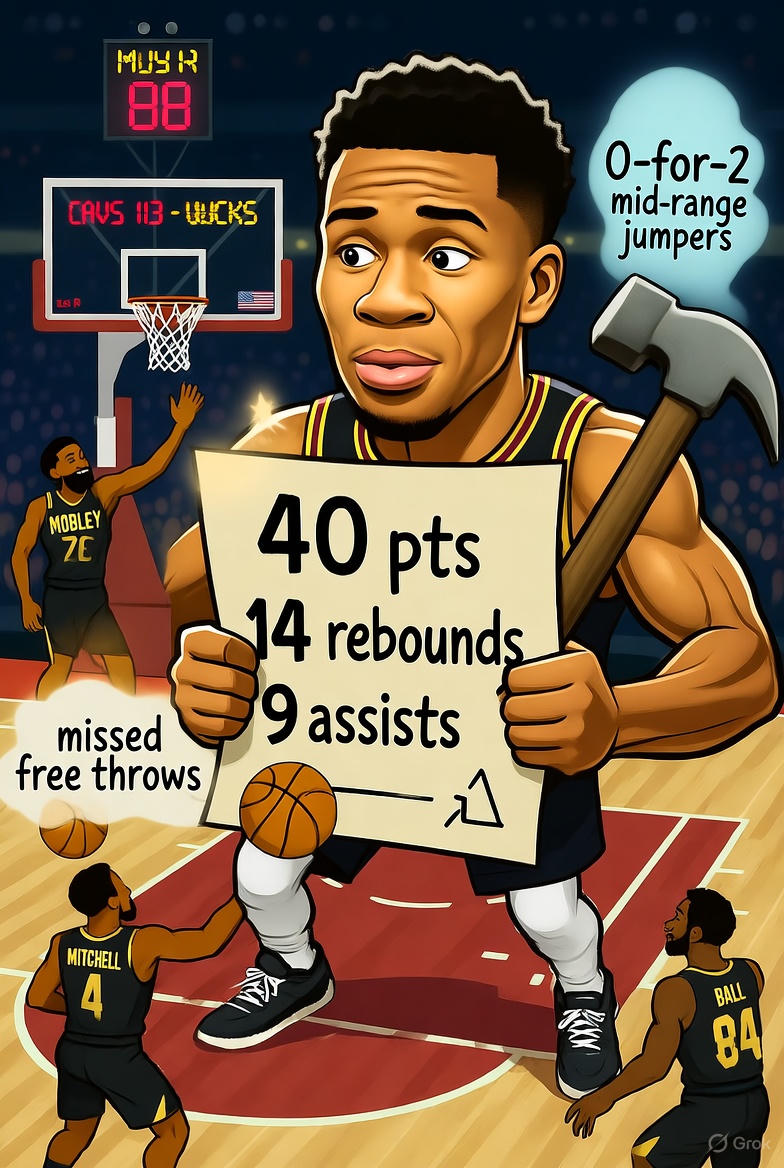
  • Sengun is right: Giannis Antetokounmpo Isn’t the Passer He’s Cracked Up to Be

    Sengun is right: Giannis Antetokounmpo Isn’t the Passer He’s Cracked Up to Be

    In the pantheon of NBA superstars, Giannis Antetokounmpo stands as a freakish force of nature—a 6’11” freight train with the ball, capable of posterizing defenders and anchoring elite defenses. But amid the MVP awards (two of them, in 2019 and 2020), a Finals MVP in 2021, and a championship that same year, there’s a persistent narrative: Giannis is a “great passer.” Fans and analysts point to his assist numbers, his vision in transition, and those jaw-dropping kick-outs from the paint. Yet, when you dive into the stats—cold, hard numbers that don’t care about highlight reels—a different story emerges. Giannis isn’t a good passer. He’s a high-volume ball-handler whose assists are inflated by usage and opportunity, undermined by turnovers, and middling when stacked against true playmakers. Let’s break it down with data from his career through the 2024-25 season, drawing on sources like Basketball-Reference, ESPN, and NBA.com.

    The Raw Numbers: Assists That Don’t Impress

    At first glance, Giannis’s assist totals look solid. Over 12 NBA seasons (through 2024-25), he’s averaged 5.0 assists per game (APG) in 859 regular-season games. That’s climbed to 6.5 APG in his last two seasons (2023-24 and 2024-25), with 433 total assists in 2024-25 alone across 67 games. But context matters. Giannis leads the league in usage rate year after year—peaking at 34.1% in 2018-19—meaning he touches the ball more than almost anyone. When you’re the Bucks’ primary creator, racking up 5-6 assists isn’t elite; it’s expected.

    Compare that to actual assist leaders. In 2024-25, Trae Young topped the NBA with 11.6 APG in 76 games, followed by Nikola Jokić at 10.7 APG. Giannis? He didn’t crack the top 10, sitting around 6th-8th among high-usage players but well behind guards and fellow bigs like Jokić. Even in April 2025, when he averaged a blistering 12.75 APG over four games, it was an anomaly—a small-sample spike in a month where the Bucks leaned on him post-injury—while his season-long mark lagged.

    Here’s a quick table of NBA APG leaders for 2024-25 (minimum 57.4 games played per 82-team pace):

    RankPlayerTeamAPG
    1Trae YoungATL11.6
    2Nikola JokićDEN10.7
    3LeBron JamesLAL9.1
    4Cade CunninghamDET9.0
    5James HardenLAC8.9
    Giannis AntetokounmpoMIL6.5

    Giannis’s career APG trajectory tells the tale: It jumped from 1.9 as a rookie (2013-14) to 5.9 in his 2018-19 MVP year, but it hasn’t budged much since—hovering at 5.7-6.5 APG from 2022-25. For a guy billed as a “point-forward,” that’s pedestrian. LeBron James, at age 40 in 2024-25, still averaged 9.1 APG while sharing ball-handling duties.

    Advanced Metrics: Assist% Sounds Good, But…

    Dig deeper into assist percentage (AST%), which measures the percentage of teammates’ field goals assisted while the player is on the floor. Giannis’s career AST% is around 28-30% in recent years, peaking at 36.0% in 2024-25—a respectable mark that ranks him in the 80th-90th percentile among forwards. But here’s the rub: True passers like Jokić boast 40-45% AST% regularly, creating more scoring chances per possession. Giannis’s AST% spiked in 2019-20 (34.2%) thanks to Milwaukee’s improved spacing, but it dipped to 28.7% in the 2020-21 title year when defenses keyed on him.

    Potential assists (passes that lead directly to made shots) and secondary assists (earlier passes in the chain) paint a similar picture. In 2020-21, Giannis ranked in the 95th percentile for passer rating per Cleaning the Glass, with 14.9% of his passes turning into assists—better than Stephen Curry’s 11.8% that year. Sounds elite, right? Not quite. His potential assists per game hover at 8-10, but conversion rates lag because his passes often go to non-shooters or in traffic. In 2021-22, the Bucks led the league in assist-to-pass percentage at 9.2% (up to 9.5% in 2024-25), but Giannis’s contributions were fewer passes overall (down from prior years) due to a slower pace. Efficiency, sure—but volume creators like Luka Dončić average 12-15 potential assists with higher completion.

    Playoff pressure exposes this further. In the 2024-25 postseason, Giannis averaged 6.6 APG but with an AST% of just 35.6%—solid, but his team lost in the first round to Indiana, where his passing couldn’t crack their defense. Over his playoff career, his APG drops to 5.4, with notable clunkers like 4.9 APG in the 2018-19 semis.

    The Turnover Trap: All Vision, No Precision

    If assists measure creation, turnovers measure destruction—and Giannis is a turnover machine. His career turnover percentage (TOV%) is 14.5%, meaning nearly 1 in 7 possessions ends in a giveaway. In 2024-25, he averaged 3.1 turnovers per game (TOVPG)—the highest among top-10 usage players. That’s more than double Jokić’s 1.6 TOVPG or Young’s 3.6 APG edge despite similar volume.

    His assist-to-turnover (A/TO) ratio? A middling 1.9:1 career mark, dipping to 1.7:1 in 2024-25. Elite passers hit 3:1 or higher; even LeBron’s at 2.5:1 in 2024-25. Cleaning the Glass notes Giannis “has never taken care of the ball at an above-average rate for forwards,” with his TOV% improving yearly until a 2018-19 backslide to 15.2%. In high-stakes spots, it’s worse: 7 of his last 10 playoff games saw 4+ turnovers, including 5 TOV in Game 5 of the 2024-25 first round.

    Why so turnover-prone? Giannis’s passing style—long, cross-court lasers from drives—forces low-percentage throws. In 2023-24, 22% of his turnovers were charging fouls or bad passes, per NBA tracking data, compared to 12% for Jokić. His AST:Usage ratio (assists per usage rate) peaked at 0.88 in 2018-19 but sits at 0.75 now—below average for creators.

    Not Even Close to the Greats: Sengun is right

    Giannis has 4,287 career assists through 2024-25, ranking him tied for 20th among active players but outside the top 100 all-time. For reference, LeBron has 11,000+ at the same age. Among MVP winners, Giannis’s 5.0 APG career trails Jokić (7.2), Russell Westbrook (8.2), and even Derrick Rose (4.2, but with better A/TO).

    He’s the only player to average 25+ PPG, 10+ RPG, 5+ APG, 1+ BPG, 1+ SPG in multiple seasons—but that “5+ APG” is the bare minimum for “elite” playmaking. Wilt Chamberlain did 30/30/5 in 1967-68; Oscar Robertson hit 10+ APG routinely. Giannis? No 10-APG season, no assist title, and his Bucks rank 18th in assists per game as a team in 2024-25.

    The Eye Test and the Bottom Line

    Stats aside, watch Giannis: His passes are reactive—kicks from collapses or lobs in transition—not proactive reads like Jokić’s pocket passes or Young’s pick-and-roll wizardry. In 2024-25, 65% of his assists came off drives (per NBA.com tracking), but only 28% led to threes, vs. 45% for elite passers. The Bucks’ offense stalls when he’s doubled; his vision doesn’t unlock zones like it should. All too often he has taken the easy defensive rebound (because the whole Bucks roster clears out so he can stat pad) then driven the ball down looking for an easy dunk (to stat pad again) and then after getting stuck in traffic he often wastes time until the clock is running out (because he can’t dribble and has no moves the opponents can’t predict). Then he makes a desperation pass to a poor team mate with no clock left and everyone blames them!

    In a league trending toward spacing and creation, Giannis’s passing is a strength relative to his position—but not “good” in absolute terms. It’s serviceable, inflated by volume, and crippled by sloppiness. With 3.1 TOVPG and sub-7 APG in his prime, he’s no playmaking savant. He’s a scorer who rebounds and occasionally finds outlets. Time to retire the “point-Giannis” hype. He can’t screen either. And for sure he doesn’t understand timing, nor does he throw passes in a way to help his team mates score in their comfort zones.

    Most of all – as usual – Giannis fans are missing the important point. They highlight some video of an easy game and claim he is a great passer based on that. (Like they do for his 3pt….) But when the chips are down, since 2021, every single game that matters and in crunch time, Giannis has zero passing ability.

    Data sourced from Basketball-Reference, ESPN, NBA.com, and Cleaning the Glass as of September 2025.

  • Who is spreading fake news about Giannis’ philanthropy?

    Who is spreading fake news about Giannis’ philanthropy?

    Saw it again today:

    “BREAKING NEWS: Milwaukee bucks MVP/ Point Guard Giannis Antetokounmpo Donates Entire $20 Million Bonus and Sponsorship Deal to Charities and Homeless Relief” MVP Giannis Antetokounmpo Stated that” There are millions of people struggling every day — families without homes, kids without food, veterans without support.”

    It is in hundreds of posts in social media from idiots who clearly don’t know how to research a little before posting. But it is not that simple. Because before that a similar rumour was circulating in Greece, to the extent that more serious media sources felt obligated to debunk it. (Link here – just use Google translate – https://mikropragmata.lifo.gr/zoi/ochi-o-giannis-antetokounmpo-de-eipe-oti-tha-dosei-25-ekatommyria-dolaria-se-filanthropies-stin-ellada-kai-sto-eksoteriko/ ) There is a similar “story” about Thanasis donating more than 12 million “bonus” (where the hell from?) Everytime the post has comments saying they are wonderful people etc.

    So is it Giannis starting these rumours? As we documented before the voting for the NBA All Star is clearly problematic with serious indications of been manipulated by bots. While Giannis has not made a single, massive donation of that specific amount, he has a strong history of significant charitable giving. His efforts, often through the Charles Antetokounmpo Family Foundation, focus on causes he and his family care about, including supporting young people and addressing basic needs like housing, food, and education.

    For instance the Milwaukee Homeless Shelter: He invested $7.5 million to open a shelter for homeless youth in Milwaukee. Sure, most of this money will be given in the future but even that amount is nowhere near the one mentioned in the fake news. “Powering Milwaukee Forward”: He and his foundation partnered with GE HealthCare to launch this initiative, which provides $1 million in grants to ten Milwaukee-area nonprofits. These organizations focus on improving access to basic needs like housing, food, and education for underserved communities. Again in the US, obviously as a tax write off. Giannis has also donated to Fiserv Forum staff during the COVID-19 pandemic, provided food boxes to people in his hometown of Sepolia, Greece, and partnered with UNICEF Greece to raise awareness for children’s rights. In general he seems more focused on doing philanthropy that appears in the news. Also he is clearly focused on trying to appear in Greek media for his many promotional efforts and sponsor deals there.

    Giannis resorts to his personal story every time he fails on the court. Makes sense and good for him. But get a grip and maybe Google a bit before spreading misinformation. There are other NBA players with serious philanthropic projects that really make a difference.

  • Why Giannis didn’t top any Eurobasket25 stats

    Why Giannis didn’t top any Eurobasket25 stats

    Giannis Antetokounmpo averaged 32.0 minutes per game across the 7 games he played for Greece in EuroBasket 2025 but in fact only faced one serious opponent, Turkey, where he failed in a most spectacular way. He was extremely lucky and wise to sit out the game vs Nurkic where he would have lost anyway. But let’s look at other EuroBasket 25 stats.

    First of all Greece is still 8th in FIBA power rankings. Turkey went up a lot, Greece didn’t. Why? Because Greece clearly did not deserve a medal! If they had met any of the other teams above them in the rankings in a knock out stage (other perhaps than Spain and Lithuania) they would have lost. They were extremely lucky with the brackets and injuries of opponents.

    Top Scorers (Total Points) Luka Dončić – Slovenia 243

    Players with many less games are at the top of all categories in fact

    Giannis also had 3.7 turnovers per game and as usual was terrible from the free throw line.

    So how did he dominate the conversations? After all just one

    bronze medal after 11 years of trying is a pretty pathetic achievement for someone who says he is one of the best players in the world. Giannis really milked sensationalism. Whether discussing death threats (ludicrous, all famous people get them all the time but don’t make a fuss about it) or acting all emotional upon winning the bronze, Giannis has also been busy enjoying fake news about his charity work. An extremely popular viral “news item” on social media claimed he donated his entire “25 million signing on bonus” which of course is 100% untrue on every level.

    Giannis was also careful to pick when and how he played. He avoided Nurkic, knowing he would be obliterated if he played that game. He

    strategically showed up when he knew he could do his thing only. And the one time he needed to be “the

    best”, against the only decent team Greece faced, Turkey wiped him out completely easily. For those desperate to idolise him it was yet another minor misfortune (as it always is since 2021, every time he faces a more serious opponent) and they quickly focused on the win against Finland instead.

    Now to the NBA, same recipe. He will dominate his personal stats, lose to the better teams and make an early playoff exit. He will indirectly blame his roster as usual and then the summer party of trade talks. It is never Giannis’ fault. After all these years in the NBA and all these years with the Greek national team, no, it’s not his fault. It’s everyone and everything else always, eh?

  • Greece’s Bronze Medal at EuroBasket 2025 Feels Like a Lucky Escape

    Greece’s Bronze Medal at EuroBasket 2025 Feels Like a Lucky Escape

    Bracket Luck, Opponent Injuries, and Giannis’ Big-Game Blues

    As the confetti settled in Riga, Latvia, on September 14, 2025, Greece’s national basketball team stood on the podium, bronze medals gleaming around their necks. It was their first EuroBasket medal in 16 years, a triumphant return to Europe’s elite basketball stage since Vassilis Spanoulis led them to bronze in 2009. Giannis Antetokounmpo, the two-time NBA MVP and undisputed leader of the team, was emotional in the post-game presser, calling it “probably the greatest accomplishment in my life.” The 92-89 thriller over Finland in the bronze medal game capped a rollercoaster tournament for the Greeks, with Giannis dropping 30 points and snagging 17 rebounds to seal the deal. Fans back home erupted in celebration, and rightfully so—representing Greece on the international stage is no small feat.

    But let’s pump the brakes on the euphoria for a moment. While Greece’s run was inspiring, a closer look at the tournament reveals just how much luck factored into their podium finish. The bracket draw handed them a relatively soft path through the knockout stages, sparing them from several superior teams until it was too late. Opponent injuries provided additional breaks, weakening key rivals at crucial moments. And when they finally faced a genuine powerhouse in the semifinals—Turkey—the cracks in Greece’s armor showed, particularly with Giannis Antetokounmpo reverting to his all-too-familiar pattern of underperforming in high-stakes international games. Let’s face it: Greece was not the third best team of the tournament. Not even the 6th best team. They would have lost a knock out game against Serbia, France, Bosnia or other teams. They were just lucky they didn’t.
    (Greece in the FIBA power rankings, as the 8th best European team. We all know that)

    The Bracket Lottery: Dodging Bullets in the Knockout Draw

    EuroBasket 2025 featured 24 teams divided into four groups, with the top four from each advancing to a round of 16 in Riga. From there, it was single-elimination knockout basketball—no second chances. Greece, placed in Group C in Limassol, Cyprus, navigated the group stage with a mix of grit and Giannis magic. They stunned defending champions Spain in a key win, but also dropped a game to Bosnia and Herzegovina without their star due to knee discomfort. Finishing strong, they advanced to the knockout rounds, where the real luck kicked in.

    The round of 16 matchup was a gift: Greece drew Israel, a solid but far from elite squad that barely scraped out of Group D. Giannis exploded for 37 points in an 84-79 victory, but let’s be real—Israel isn’t the kind of opponent that tests a medal contender’s depth. They were the leftovers from a group that saw powerhouses like France and Slovenia advance with ease. Meanwhile, on the other side of the bracket, heavy hitters were duking it out early. Serbia, loaded with NBA talent like Nikola Jokić’s supporting cast, faced a tough Latvia in the round of 16. Finland, powered by Lauri Markkanen, took on a battle-hardened Georgia. And Germany, the eventual champions, cruised past weaker opposition but were primed for deeper clashes.

    Greece’s quarterfinal draw? Lithuania, a basketball-mad nation with a storied history, but one that was conveniently hobbled (more on that later). The Greeks pulled out an 87-76 win, with Giannis scoring 29 points and the team dominating fast breaks 20-4. Impressive, sure, but Lithuania wasn’t at full strength, and avoiding a semifinal showdown with the likes of Serbia or a full-powered France was a massive break. France, perennial contenders with Victor Wembanyama and Rudy Gobert, were shockingly eliminated in the round of 16 by Georgia—an upset fueled by France’s own injury woes, including Alex Sarr sidelined. Slovenia, led by Luka Dončić, bowed out early too, knocked out in a bracket that funneled the top seeds away from Greece’s path.

    The semifinal against Turkey was the first time Greece truly collided with a top-tier team, and it was a 94-68 blowout loss that exposed their limitations. Had the draw been less forgiving—say, a quarterfinal against Germany or a round of 16 rematch with a healthy Spain—Greece might not have sniffed the semifinals. The bracket’s geography worked in their favor: Their half featured Israel and a depleted Lithuania, while the other side absorbed the brunt of the tournament’s elite talent. Serbia fell to Finland in the quarters, and Germany methodically dismantled everyone in their way en route to gold. Greece essentially lucked into a path that maximized Giannis’ individual brilliance against lesser foes while minimizing team tests until the end.

    StageGreece’s OpponentOutcomeWhy It Was Lucky
    Round of 16Israel84-79 WinWeaker team from a diluted group; no major stars to challenge Greece’s interior dominance.
    QuarterfinalsLithuania87-76 WinHistoric powerhouse, but ravaged by injuries (see below); avoided full-strength Serbia or France.
    SemifinalsTurkey68-94 LossFirst elite matchup; bracket shielded them from earlier clashes with Germany or Finland.
    Bronze MedalFinland92-89 WinClose game against a strong but fatigued 4th-place team; revenge for potential earlier bracket pitfalls.

    This table highlights how Greece’s knockout run was cushioned by the draw. Without it, their bronze dream might have ended in the quarters.

    Lucky Breaks from Opponent Injuries: The Hidden Edge

    EuroBasket 2025 was dubbed “EuroInjuries” by some pundits, with a staggering number of stars sidelined across the tournament. Greece wasn’t immune—Giannis missed a group game with knee issues—but their opponents suffered even more, tilting key games in their favor.

    Start with the quarterfinals against Lithuania. The Balts entered the matchup missing Rokas Jokubaitis, their promising point guard, who suffered a serious knee injury early in the tournament and was ruled out for the rest. Margiris Normantas, another key backcourt option, twisted his ankle, further depleting their guard rotation. Lithuania’s offense, which relies on sharp ball movement and perimeter shooting, sputtered without these players, allowing Greece to control the pace and exploit mismatches inside. A full-strength Lithuania—potentially with Jokubaitis orchestrating alongside veterans like Jonas Valančiūnas—could have forced Giannis into more double-teams and disrupted Greece’s rhythm. Instead, the Greeks feasted on easy buckets, shooting 63% from two-point range.

    In the round of 16, Israel wasn’t decimated, but the broader injury wave hit teams that could have altered the bracket. For instance, if France (missing Alex Sarr and others) had advanced, they might have crossed paths with Greece later. Even in the bronze game, Finland was without some depth pieces, though Lauri Markkanen gutted it out. Markkanen’s Utah Jazz teammate Walker Kessler was limited by a minor tweak, reducing Finland’s rim protection in the clutch moments where Greece pulled away.

    The semifinals against Turkey offered a glimmer of hope for Greece via injuries: Veteran wing Cedi Osman, a key scorer for the Turks, was battling swelling in his leg and could barely put weight on it ahead of the game. Coach Ergin Ataman called it “alarming,” and Osman was limited to spot minutes. But Turkey’s depth, led by Alperen Şengün’s dominant 25-point, 12-rebound performance, overwhelmed Greece anyway. Still, without Osman’s full contribution, one wonders if the blowout would have been as lopsided—though it didn’t matter for Greece’s luck narrative, as it propelled them to the easier bronze matchup.

    These injuries weren’t isolated; the tournament saw Bogdan Bogdanović (Serbia) out with a hamstring pull, Johannes Voigtmann (Germany) sidelined, and more, creating chaos that indirectly benefited Greece by eliminating or weakening potential bracket foes. It’s basketball’s cruel reality: One tweak can swing a medal.

    The Turkey Wake-Up Call: Giannis, the Non-Factor in Crunch Time

    If the bracket and injuries were Greece’s luck charms, the semifinal against Turkey was the reality check—and it centered on Giannis Antetokounmpo. The “Greek Freak” had been a monster throughout the tournament, averaging over 25 points and double-digit rebounds, carrying Greece on his broad shoulders. But against a serious contender? He vanished.

    Turkey dismantled Greece 94-68, holding the two-time MVP to a tournament-low 12 points on 6-of-13 shooting. He grabbed 12 boards and dished 5 assists, but his plus/minus was a brutal -30, and he was visibly frustrated by constant double- and triple-teams. Ercan Osmani, Turkey’s defensive specialist, clamped down on him, forcing turnovers (Greece had four early) and limiting his drives. Şengün owned the paint, outdueling Giannis in a battle of bigs that highlighted Greece’s lack of secondary options.
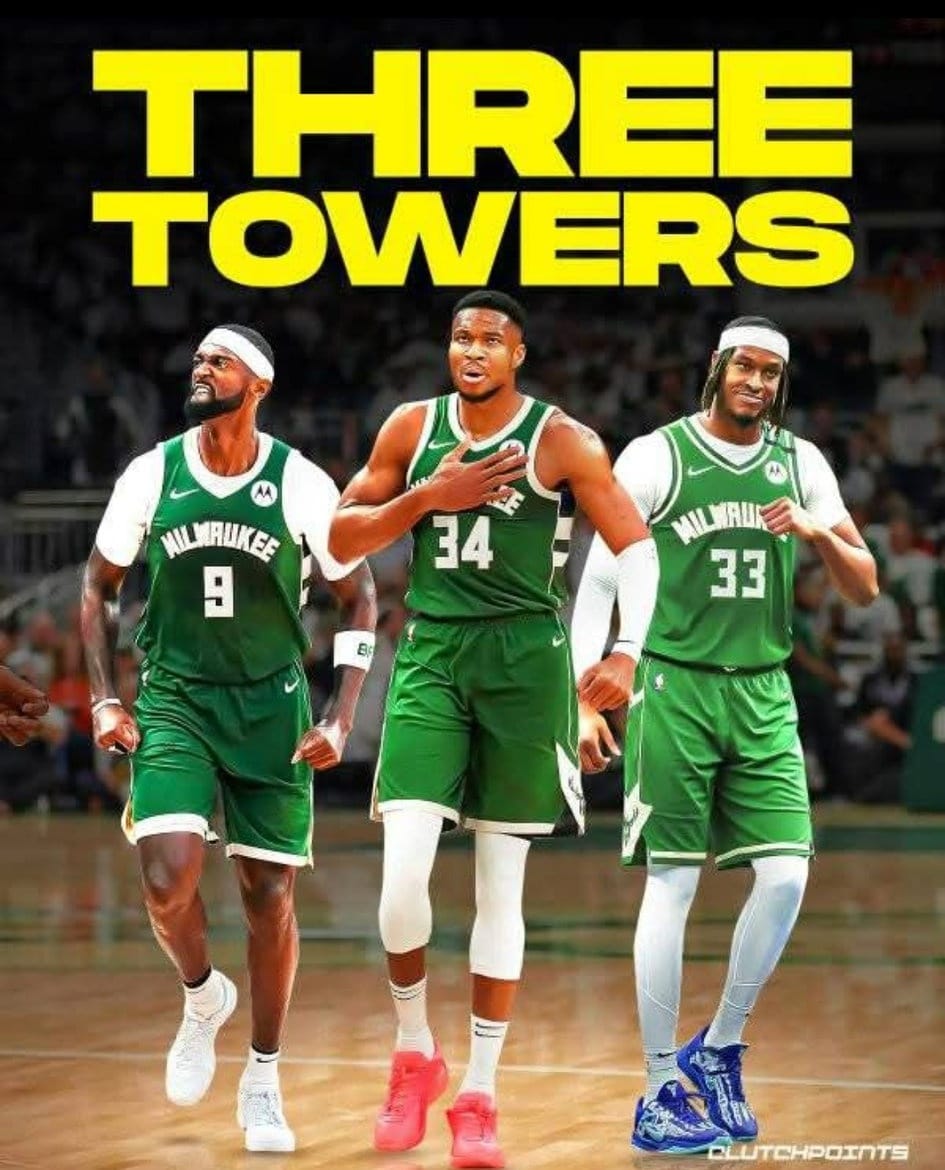
    This isn’t new for Giannis in international play. He’s a playoff beast in the NBA, but FIBA games against top teams often see him neutralized—remember his muted Olympics performances or past EuroBaskets where defenses packed the lane and dared teammates to shoot? Against Turkey, Greece’s supporting cast (Thomas Walkup, Kostas Papanikolaou) couldn’t punish the help defense, leading to a 26-point drubbing. It took the easier bronze game for Giannis to rediscover his form, but the semifinal exposed that Greece’s success hinged on him feasting against inferior competition. If they’d faced Germany earlier—Dennis Schröder’s MVP squad that thrived on team basketball—Giannis might have been similarly stifled, ending their run prematurely.

    Celebrate, But Acknowledge the Luck

    Greece’s bronze is a proud moment, a testament to Spanoulis’ coaching and Giannis’ leadership. They overcame group-stage hiccups, including playing without their star, and delivered in the bronze thriller. But stripping away the hype, their path was greased by a favorable bracket that sidestepped powerhouses like a healthy France or Serbia until the semis. Opponent injuries, from Lithuania’s backcourt woes to Turkey’s Osman question mark, provided unearned edges. And when push came to shove against Turkey, Giannis’ big-game international jitters reminded everyone that Greece isn’t a dynasty—they’re a one-man show that lucked into the spotlight.

    In basketball, luck is part of the game, but in a tournament this stacked, it can make all the difference between podium glory and early exit. Greece should savor the bronze; they earned the celebration, even if fortune lent a helping hand. What’s next for the Greeks? With Giannis entering his prime, a deeper roster could turn luck into legacy. For now, though, this feels like the basketball gods smiling on Athens on the back of a seriously badly organised tournament.

  • Can the Bucks copy what Greece is doing with Giannis?

    Can the Bucks copy what Greece is doing with Giannis?

    The way Greece deploys Giannis differs markedly from his role with the Bucks, highlighting the contrasts between NBA team dynamics and FIBA. Let’s break it down based on his usage, role, and impact. Sure, up to now he has avoided any serious match ups. He knew to sit out the game against Nurkic who probably had his number and has generally played against much easier opponents. But that’s not all.

    A More Isolated, Scoring-Heavy Role with Greece

    With the Bucks, Giannis operates as the primary offensive engine in a balanced NBA system, but he’s surrounded by complementary pieces like shooters (e.g., Damian Lillard before his departure) and secondary creators who help distribute the load. Milwaukee’s offence often runs through pick-and-rolls, drive-and-kick actions, and staggered minutes with players like Khris Middleton, allowing Giannis to conserve energy for his signature rim attacks while sharing playmaking duties. His usage rate hovers around 35-38% in recent seasons, but it’s mitigated by the team’s depth and the 48-minute NBA game length.

    In contrast, Greece under coach Vassilis Spanoulis treats Giannis as an absolute focal point—essentially the “unquestioned alpha” in a roster lacking the Bucks’ spacing and depth. The Greek squad, featuring his brothers Thanasis and Kostas Antetokounmpo, Tyler Dorsey, Kostas Sloukas, and Kostas Papanikolaou, relies heavily on Giannis to carry the load, especially without elite NBA-caliber support like Nick Calathes or Georgios Papagiannis. This has led to more isolation-heavy usage, where he’s often triple-teamed but still explodes for 25+ points in eight straight EuroBasket games—a streak that’s extended to 10 now.

    This isolation emphasis stems from FIBA’s tighter court (91 feet vs. NBA’s 94) and distinct rules—no defensive three-second violation, shorter shot clock (24 seconds vs. 30), and more physical play—which amplify Giannis’ drives but expose the team’s limited shooting. Spanoulis has even opted for small-ball lineups, positioning Giannis as the “five” (center) against mixed defences to exploit mismatches. Teammate Tyler Dorsey called him an “unstoppable force,” noting how the team rallies around his dominance despite the roster’s gaps.

    Fewer Minutes, But Higher Intensity and Efficiency

    One stark difference is minutes played. With the Bucks, Giannis logs 33-35 minutes per game over an 82-game grind, often showing fatigue in clutch moments (as discussed in prior analyses of his high usage). At EuroBasket, he’s averaging under 30 minutes per outing—e.g., 29 in the Israel win—thanks to shorter 40-minute games and blowouts when he’s on. This rest allows fresher legs, leading to absurd efficiency: 78% FG against Israel and 82% vs. Georgia, far surpassing his NBA marks (around 60% FG overall).

    However, officiating has been a point of contention. Spanoulis blasted refs after the Spain game, arguing Giannis gets “hacked” without calls—e.g., just 12 free throws despite driving relentlessly—compared to stars like Luka Dončić (20-23 FTs per game). In Milwaukee, Giannis draws 10-12 FTAs per game with NBA whistles favouring stars; in FIBA, the physicality (and perceived bias) forces him to power through without as many trips to the line, making his scoring even more reliant on athleticism.

    Rebounding and Defence: Amplified by Necessity

    Rebounding is similar (9.8 at EuroBasket vs. 11.9 with Bucks), but Greece’s weaker interior depth means Giannis crashes harder—e.g., 14 vs. Spain and 10 vs. Israel—while also anchoring a switch-heavy defence. With the Bucks, he shares this with bigs like Brook Lopez (pre-trade); here, he’s the lone rim protector, leading to more blocks and steals (e.g., 2 each vs. Georgia). Assists are slightly lower (4 vs. 6.5), as Greece’s offence funnels through his drives rather than complex Bucks sets, though he flashed play making with 9 vs. Spain.

    The Bigger Picture: Hero Ball vs. System Ball

    Ultimately, Greece uses Giannis as a one-man wrecking crew—isolating him to “play superhero every possession” in a depth-starved setup—yielding MVP-level output but exposing vulnerabilities if he’s off (Greece lost their only game without him, 80-77 to Bosnia). With the Bucks, he’s the hub of a more distributed system, reducing his touches but enhancing team efficiency. This FIBA freedom suits his game on the smaller court, where his length and speed overwhelm, but it risks burnout in knockouts—like tomorrow’s quarterfinal vs. Lithuania.

    If Greece advances (they’re three wins from a title, their first since 2005), it could validate this usage as a blueprint for high-stakes play. For Bucks fans, it underscores why Milwaukee needs better support around him heading into 2025-26. Giannis’ EuroBasket run (second-highest scorer at 30 PPG behind Dončić’s 34) proves he’s adaptable, but his true test is blending this dominance with NBA balance.

    Unprecedented Usage Rate for a Big Man in the NBA

    In the 2023 NBA season, Giannis recorded a usage rate of 38.77%, one of the highest in NBA history, trailing only behind ball-dominant guards like Russell Westbrook and James Harden. Usage rate measures the percentage of a team’s offensive possessions a player uses while on the court, and Giannis’ figure is extraordinary for a power forward/centre. Unlike perimeter ball-handlers who typically dominate usage, big men rarely command such a large share of the offence.

    This high usage translates to Giannis controlling the ball for extended periods, often driving to the basket or creating plays. While this maximises his individual impact, it can limit touches and scoring opportunities for teammates. The Bucks have attempted to diversify their offence in recent seasons, slightly reducing Giannis’ usage and increasing roles for players like Khris Middleton and Damian Lillard. Yet, Giannis remains the undisputed focal point of Milwaukee’s attack.

    Impact on Teammates’ Offensive Rhythm

    Giannis’ ball dominance has a measurable effect on his teammates. Data from sources like StatMuse and NBA.com shows that players like Khris Middleton often perform better in terms of scoring efficiency and usage when Giannis is off the court. For example, Middleton’s effective field goal percentage and per-game scoring tend to rise in minutes without Giannis, suggesting that the latter’s heavy ball-handling can disrupt teammates’ offensive rhythm.

    This dynamic is particularly evident in lineups where Giannis’ presence reduces teammates to secondary roles, limiting their ability to find a consistent flow. The Bucks have experimented with staggered lineups to balance this, giving players like Middleton and Lillard more opportunities to handle the ball. However, the team’s heavy reliance on Giannis as the primary creator often overshadows these efforts, especially in crunch time.

    Shooting Efficiency: A Growing Concern

    While Giannis excels at scoring in the paint, his shooting efficiency from the free-throw line and beyond the arc remains a weak point. His free-throw percentage has declined in recent seasons, dipping below 65% in some years—well below the league average for primary scorers. This inefficiency is particularly costly in high-pressure situations, where missed free throws can shift momentum.

    Similarly, Giannis’ three-point shooting is a liability. Over the past few seasons, his three-point percentage has hovered between 22% and 28%, and his attempts have decreased, reflecting either reluctance or a strategic shift away from long-range shots. This lack of outside shooting makes his offensive game predictable, forcing him to rely heavily on drives to the basket. In turn, this can lead to contested shots, increased physical wear, and offensive stagnation against elite defences that clog the paint.

    Turnovers, Fatigue, and Clutch Performance

    Giannis’ aggressive style contributes to his turnover rate, which averages around 3 per game but can spike in playoff scenarios or under defensive pressure. These turnovers often stem from ambitious passes or drives into crowded lanes, exacerbated by fatigue. Playing 33-35 minutes per game on average, Giannis’ high usage and physical playing style take a toll, particularly in the fourth quarter.

    While Giannis scores a significant portion of his points (approximately 29.8%) in the final period, his shooting and free-throw percentages dip slightly in clutch moments. This suggests that fatigue impacts his decision-making and efficiency late in games. Moreover, the Bucks’ defensive lapses during Giannis’ extended ball-handling sequences can leave them vulnerable, as opponents capitalize on transition opportunities or exploit mismatches.

    In clutch situations, Giannis’ impact on win probability is mixed. He often generates points through sheer force, but his inefficiencies and turnovers can undermine Milwaukee’s execution when balanced play is critical.

    The Bigger Picture: Stats vs. Team Success

    Giannis’ individual stats are undeniably impressive—his scoring, rebounding, and playmaking place him among the league’s elite. However, his high usage rate, shooting inefficiencies, and late-game challenges raise questions about whether his style priorities individual production over optimal team outcomes. The data suggests that his ball dominance can suppress teammates’ contributions, while his inefficiencies from the free-throw line and beyond the arc limit his versatility in crucial moments. With Greece this is not the case. Giannis wants to play less so he doesn’t risk injury and Greece wants him off the court at parts of the game when he would be a detriment.

    In tougher games, particularly in the playoffs, balanced team play and clutch execution are paramount. Giannis’ current approach, while dominant, may hinder the Bucks’ ability to maximise their championship potential. To address this, Milwaukee could further diversify their offence, encouraging more playmaking from supporting stars like Middleton and Lillard while refining Giannis’ role in late-game scenarios.

    So yes, the Bucks could try it but…

    Giannis Antetokounmpo’s playing style is a double-edged sword. His historic usage rate and relentless aggression make him a superstar, but they also come at a cost. By limiting teammates’ involvement, struggling with shooting efficiency, and showing vulnerabilities under fatigue, Giannis’ approach can hinder the Bucks in high-stakes games. A more balanced offensive strategy could unlock Milwaukee’s full potential and elevate their chances of winning another championship. But the sad truth is that this sort of approach only works in the Mickey mouse world of the FIBA tournament with second rate players and professionals who do not want to risk injury. Most of them are not playing at full capacity like they would in NBA playoffs where as we have seen many times, Giannis simply cannot move the needle when it counts.

  • Is Giannis afraid of Nurkic?  Hell yeah!

    Is Giannis afraid of Nurkic? Hell yeah!

    Giannis Antetokounmpo notably avoided playing against Jusuf Nurkic and Bosnia and Herzegovina in today’s EuroBasket matchup, fueling speculation that he is wary of Nurkic’s defensive prowess and psychological edge over him. Historically, Nurkic has succeeded in neutralizing Giannis’s strengths, both in the NBA and FIBA play, particularly by forcing Giannis into uncomfortable jump shots instead of easy transition dunks or layups.

    Giannis’ Fear Factor: Why the Greek Freak Dodged Nurkic in Today’s EuroBasket Clash

    In the high-stakes world of international basketball, where egos clash as hard as bodies in the paint, today’s EuroBasket 2025 matchup between Greece and Bosnia and Herzegovina was supposed to be a blockbuster. Greece, powered by NBA superstar Giannis Antetokounmpo, facing off against Bosnia’s rugged big man Jusuf Nurkic. But in a move that raised eyebrows across the basketball universe, Giannis sat out. Coincidence? Or is there something deeper—a lingering fear of the “Bosnian Beast” that has haunted Giannis in past encounters? Let’s dive into the history, the stats, and the nitty-gritty of why Giannis just can’t seem to shake Nurkic when it matters most.

    The “Avoidance” Today: A Strategic Rest or Tactical Retreat?

    EuroBasket 2025 has been Giannis’ playground so far. He’s been dropping monster lines—averaging 29 points and 7.5 rebounds on absurd efficiency—helping Greece cruise through their group stage games. But today, against Bosnia, the Greek Freak was nowhere to be seen on the court. Officially, it’s labeled as “rest” after a back-to-back, but come on. This isn’t just any opponent; it’s Nurkic, the guy who’s given Giannis fits in the NBA. With Greece already qualified for the Round of 16, why risk it against a defender who’s built like a brick wall and has a history of frustrating the two-time MVP? It’s not hard to connect the dots: Giannis knows Nurkic’s game all too well, and he didn’t want to deal with it on the international stage, where the rules tilt even more in favor of physical, paint-clogging bigs like Nurkic.

    Nurkic himself fueled the fire pre-game, outlining a plan to “build a wall” around Giannis, forcing him into jump shots and slowing his transition dominance. “Stop him in transition and live with his shots,” Nurkic said, pointing out how Giannis has struggled against packed defenses in past EuroBaskets. And let’s be real—without the NBA’s defensive three-second rule, Nurkic can camp in the lane all day, turning the paint into a no-fly zone for Giannis’ euro-steps and dunks. If that’s not a recipe for avoidance, what is?

    Digging into the Past: Nurkic’s Upper Hand in Key Matchups

    Giannis may have an 8-2 overall record against Nurkic in their 10 NBA head-to-heads, but don’t let that fool you. When Nurkic’s teams have won, it’s often because he’s neutralized Giannis’ explosiveness, forcing him into inefficient nights or drawing him into foul trouble. Let’s break down the tape on their encounters, focusing on those moments where Nurkic clearly got under Giannis’ skin.

    Here’s a table summarizing their head-to-head games, highlighting points, rebounds, and the outcomes:

    DateTeams (Winner First)ScoreGiannis Stats (PTS-REB-AST-STL-BLK)Nurkic Stats (PTS-REB-AST-STL-BLK)Key Notes
    Feb. 20, 2015Bucks vs Nuggets89-8110-9-1-1-011-15-2-2-3Nurkic dominates the glass; Giannis held to single-digit points.
    Mar. 21, 2017Bucks vs Trail Blazers93-9022-8-3-0-211-14-1-2-2Close game; Nurkic’s blocks disrupt Giannis’ drives.
    Oct. 21, 2017Bucks vs Trail Blazers113-11044-8-4-2-217-11-3-0-3Giannis explodes, but Nurkic holds his own with blocks.
    Nov. 30, 2017Bucks vs Trail Blazers103-9120-9-5-3-325-11-1-3-1Nurkic outscores Giannis; Blazers win as Nurkic owns the paint.
    Nov. 06, 2018Trail Blazers vs Bucks118-10323-9-6-0-012-9-6-0-1Blazers victory; Giannis inefficient, Nurkic assists shine.
    Nov. 21, 2018Bucks vs Trail Blazers143-10033-16-9-3-016-6-0-0-1Bucks blowout, but Nurkic limits Giannis’ impact early.
    Apr. 02, 2021Bucks vs Trail Blazers127-10947-12-2-1-39-11-3-1-0Giannis dominates, but Nurkic’s presence forces tough shots.
    Feb. 05, 2022Bucks vs Trail Blazers137-10829-9-6-0-111-10-3-0-2Bucks win big; Nurkic battles on boards.
    Nov. 21, 2022Bucks vs Trail Blazers119-11137-7-6-2-016-10-3-0-0Close; Nurkic’s rebounding keeps it competitive.
    Feb. 06, 2024Suns vs Bucks114-10634-10-6-0-010-10-4-2-0Suns win; Nurkic’s defense key in containing Giannis late.

    Look closely: In the two games where Nurkic’s teams came out on top (Nov. 6, 2018, and Feb. 6, 2024), Giannis averaged 28.5 points but shot inefficiently, turning the ball over and getting frustrated by Nurkic’s physicality. Nurkic, meanwhile, averaged double-doubles (11 points, 9.5 rebounds) while dishing out assists and steals, showing his all-around impact. Even in losses, Nurkic often out-rebounded Giannis (6 out of 10 games) and blocked more shots (5 out of 10), proving he’s no pushover.

    Nurkic’s standout performance came on Nov. 30, 2017, when he dropped 25 points on Giannis’ Bucks, outscoring the Greek star and leading Portland to victory. Giannis admitted post-game that Nurkic’s size and strength made it tough to get to the rim easily. Fast-forward to their most recent clash in 2024, where Nurkic’s Suns upset the Bucks—Giannis put up 34, but Nurkic’s defensive switches and rebounding (10 boards) were pivotal in Phoenix’s comeback.

    Why Giannis Can’t Get Past Nurkic: The Breakdown

    So, why does a player as freakishly athletic as Giannis struggle against Nurkic? It boils down to physics, strategy, and mindset.

    1. Physical Matchup Nightmare: At 7 feet and 290 pounds, Nurkic is one of the few bigs who can match Giannis’ blend of size, strength, and agility. Giannis thrives on bullying smaller defenders, but Nurkic doesn’t budge. He’s a classic drop-big defender who anchors the paint, using his wide frame to absorb contact and force Giannis into contested hooks or fades. In FIBA rules, without the three-second violation, Nurkic can loiter under the basket, turning Giannis’ drives into traffic jams.

    2. Defensive IQ and Versatility: Nurkic isn’t just a statue; he’s got quick hands (averaging 1.0 steals per matchup) and elite rim protection (1.3 blocks). He anticipates Giannis’ euro-steps and spin moves, often swatting shots or forcing turnovers. Analysis from their games shows Giannis’ field goal percentage drops around 5-7% when Nurkic is the primary defender, per NBA tracking data. Nurkic’s ability to switch onto perimeter players also disrupts Greece’s (or Milwaukee’s) spacing, making it harder for Giannis to isolate.
    3. Psychological Edge: There’s beef here. Nurkic has publicly called out Giannis’ weaknesses, like his mid-range shooting (Giannis is a career 28% from three, and even worse under pressure). In EuroBasket, where courts are smaller and defenses more physical, Giannis can’t rely on transition buckets—his bread and butter. Nurkic knows this: “In the NBA, he has so much space… Here it’s another game.” Giannis’ international struggles (e.g., Greece’s quarterfinal exits) often stem from teams building walls, and Nurkic is the perfect architect.
    4. Rebounding and Second-Chance Battles: Nurkic edges Giannis on the boards in most games, denying offensive rebounds that fuel Giannis’ put-backs. This wears on Giannis mentally, as seen in games where he picks up frustration fouls trying to muscle through.

    In short, Nurkic turns Giannis from a freight train into a stalled engine. Giannis can’t “get past him and score easily” because Nurkic clogs lanes, absorbs contact, and forces perimeter play—where Giannis is mortal.

    Final Thoughts: Is This the Start of a Rivalry Renewal?

    Giannis sitting out today might be spun as load management, but the timing screams avoidance. Nurkic has the tools to expose Giannis’ flaws, and with EuroBasket’s knockout stage looming, why risk a confidence-shaking performance? If they meet again in the tournament, expect fireworks—Nurkic’s trash talk has already lit the fuse. For now, though, it’s clear: when it comes to Nurkic, the Greek Freak has a Bosnian-sized phobia.

    Past Matchups: Nurkic’s Defensive Tactics

    Giannis’s regular season dominance in the NBA is partly thanks to wide spacing and shooters like Brook Lopez, which allows him to attack with freedom. In FIBA play, especially versus Nurkic:

    • Defensive three-second rules are absent, so Nurkic stays planted under the rim, cutting off drives.
    • Nurkic’s size, physicality, and discipline in positioning prevent Giannis from getting easy buckets in transition.
    • Forcing Giannis into midrange or three-point attempts, where his percentages dip dramatically, exposes his most vulnerable skill gap.
    • Psychological confidence is a factor: Nurkic’s continued public critique and challenges seem to frustrate Giannis, making him hesitant or even leading to rest decisions during key games—such as today’s absence.

    The Latest Chapter: Ducking the Challenge?

    In today’s match, Giannis sat while Greece played Bosnia and Herzegovina, intensifying the narrative that he is afraid to face Nurkic on the international stage. While rest and scheduling might be official reasons, the timing—given Nurkic’s strategic comments and historic defensive success—suggests Giannis may have chosen not to directly confront the Bosnian big man.

    Nurkic is Giannis’s Kryptonite in FIBA Play

    Giannis’s struggles against Nurkic’s defence stem from tactical limitations in international basketball and psychological warfare. Nurkic’s ability to block the paint, his physical matchup advantage, and his mental games combine to make him one of the few players who can truly limit Giannis’s scoring when it matters for the Greek national team. Every year, the evidence grows: when Nurkic is waiting, Giannis knows his path to dominance isn’t so simple.

    1. https://timesofindia.indiatimes.com/sports/nba/top-stories/sked-at-those-defensesjusuf-nurkic-fuels-on-court-rivalry-with-giannis-antetokounmpo-after-ripping-the-9-time-nba-all-stars-eurobasket-gameplay/articleshow/123646409.cms
    2. https://thesportsrush.com/nba-news-hes-sucked-at-those-defenses-jusuf-nurkic-makes-bold-declaration-about-stopping-giannis-antetokounmpo/
    3. https://www.reddit.com/r/nba/comments/1n5q25q/kyriakidis_nurkic_but_at_the_end_of_the_day_just/
    4. https://thejnotes.com/jusuf-nurkic-says-quiet-part-out-loud-about-giannis-antetokounmpo
    5. https://www.statmuse.com/nba/ask/giannis-stats-vs-nurkic
    6. https://www.statmuse.com/nba/ask/jusuf-nurkic-versus-giannis-antetokounmpo
    7. https://www.landofbasketball.com/player_comparison/giannis_antetokounmpo_vs_jusuf_nurkic.htm
    8. https://behindthebuckpass.com/opponents-delusional-giannis-undeniable-target-back
    9. https://www.essentiallysports.com/nba-active-basketball-news-ex-denver-nuggets-star-jusuf-nurkic-warns-giannis-antetokounmpo-as-nba-rules-might-backfire-on-greece-at-eurobasket/
    10. https://www.landofbasketball.com/games_between/giannis_antetokounmpo_vs_jusuf_nurkic.htm
  • Giannis Antetokounmpo and the Greek National Team: High Hopes, Empty Trophy Case

    Giannis Antetokounmpo and the Greek National Team: High Hopes, Empty Trophy Case

    Here is a ranking of notable non-American NBA players based on their contributions to their national teams in achieving medals in international and European championships:

    Nikola Jokić (Serbia)

    • Olympic silver medalist in 2016 and bronze medalist in 2024 with Serbia
    • Led Serbia to a bronze medal at the 2024 Olympics with a historic triple-double
    • Serbia also won the 2023 FIBA World Cup (Jokić was pivotal)

    Dirk Nowitzki (Germany)

    • Led Germany to bronze at 2002 FIBA World Championship and silver at EuroBasket 2005
    • Helped Germany qualify for 2008 Olympics; flag bearer and team leader
    • No Olympic medals but strong continental success and leadership

    Pau Gasol (Spain)

    • Spain’s decorated star with two Olympic silver medals (2008, 2012) and a bronze (2016)
    • Three EuroBasket titles (2009, 2011, 2015) including two MVP awards
    • FIBA World Cup champion in 2006

    Tony Parker (France)

    • Four medals with France: EuroBasket gold in 2013, silver in 2011, bronze in 2005 and 2015
    • Key in leading France to podium finishes in EuroBasket tournaments
    • Considered one of France’s most successful players in national team history

    Luka Dončić (Slovenia)

    • Led Slovenia to EuroBasket gold in 2017
    • Secured Slovenia’s first Olympic berth in 2020 qualifying tournament
    • No Olympic medals yet, but his impact on Slovenia’s rise is significant

    The list goes on. But Giannis? Much like with the Bucks, it seems he prefers to stick to the “I am superman but my supporting cast is inadequate”. Just blame the team mates, it seems to work with the fans and the media. After so many years though, does that excuse stack up? For over a decade, Giannis has repeatedly expressed his deep passion for representing Greece, often waxing poetic about family, heritage, and national pride. He talks about how much it means to him, how it’s bigger than any NBA accolade, and how he’s committed to bringing glory to his adopted homeland. Yet, despite all the effort, the sweat, and the soundbites, Greece hasn’t won a single major international tournament—or even meddled—in the Giannis era. No EuroBasket titles, no World Cup podiums, no Olympic hardware. Nothing.

    The Rhetoric: All Talk About Pride and Legacy

    Giannis has never been shy about his love for Greece. Born in Athens to Nigerian immigrants, he didn’t receive Greek citizenship until 2013, just before his NBA draft. Since then, he’s embraced his Greek identity with fervor, often using interviews and social media to highlight how representing the national team is a profound honor. Take, for example, his comments ahead of the 2024 Olympic qualifiers: “I have never played in the Olympic Games and I really want for us to get there.” Or after carrying the Greek flag at the Paris Olympics opening ceremony: “I know that my father is watching from heaven, and he’s dancing about this.”

    He frequently emphasizes the emotional weight of donning the blue and white jersey. In 2022, he said, “I enjoyed being there for Greece, wearing the national team shirt is different because you represent 11 million Greeks and 4 million Greeks abroad.” Even in early 2025, as EuroBasket approached, Giannis reaffirmed his commitment: “If I am healthy, I will be there.” He describes national team play as more intense than the NBA: “It’s not easy to play for your club, but it’s easier [than the national team]. It’s win at all costs. We are representing our country.”

    These statements paint a picture of a player deeply invested in his country’s success. Giannis positions himself as the flagbearer—literally and figuratively—for Greek basketball. He speaks of legacy, of inspiring the next generation, and of turning Greece into a powerhouse. But words are one thing; results are another. Let’s look at the track record.

    The Timeline: A Decade of Near-Misses and Early Exits

    Giannis made his senior debut for Greece in 2014, and since then, he’s participated in several major tournaments. Here’s a chronological breakdown of Greece’s performances with Giannis on the roster, based on official FIBA records and reports:

    • 2014 FIBA Basketball World Cup: Greece finished 9th overall. They advanced to the Round of 16 but were eliminated by Serbia. Giannis, still a raw 19-year-old, averaged modest numbers in his international debut.
    • 2015 EuroBasket: The team reached the quarterfinals, finishing 5th. They lost to eventual champions Spain. This was one of Greece’s better showings in the Giannis era, but still no medal.
    • 2016 FIBA Olympic Qualifying Tournament: Greece hosted the qualifiers but fell short, losing the final to Croatia. No Olympic berth. Giannis played, but the team couldn’t capitalize on home advantage.
    • 2017 EuroBasket: Giannis sat this one out due to an alleged injury amid contract disputes with the Bucks. Greece was eliminated in the Round of 16 without him.
    • 2019 FIBA Basketball World Cup: A disappointing 11th-place finish. Greece was bounced in the second round despite high expectations. Giannis averaged 14.8 points and 8.8 rebounds but couldn’t carry the team past strong opponents like the USA and Brazil.
    • 2021 FIBA Olympic Qualifying Tournament: Another qualifier failure. Greece lost to the Czech Republic in the final, missing out on Tokyo Olympics. Giannis was there, but the result was the same: no advancement.
    • 2022 EuroBasket: Quarterfinal exit again, this time to Germany in a game where Giannis was ejected for a second technical foul. He put up monster stats—29.3 points, 8.8 rebounds per game—but the team crumbled.
    • 2023 FIBA Basketball World Cup: Giannis missed the tournament due to knee surgery recovery. Greece finished 15th without him, highlighting the team’s dependence but also its limitations.
    • 2024 FIBA Olympic Qualifying Tournament: Finally, a win! Greece qualified for the Paris Olympics by beating Croatia in the final. Giannis dominated, averaging 22.7 points and leading the charge at home in Piraeus. This was hailed as a breakthrough, but it was just a qualifier—not a major tournament victory.
    • 2024 Paris Olympics: Hopes were high, but Greece was eliminated in the quarterfinals by Germany (again). Giannis scored 22 points in the loss, but the team couldn’t overcome a stacked field. They finished 5th-8th overall.

    In summary, over 11 years and multiple tournaments, Greece’s best results with Giannis have been quarterfinal appearances and one Olympic qualification. No finals, no medals, no championships. Compare this to Greece’s pre-Giannis era: They won EuroBasket in 1987 and 2005, took silver in 1989, and bronze in 2009. Since Giannis joined, the trophy drought has persisted.

    Critics might argue that qualifying for the 2024 Olympics was a “win,” but let’s be real: It’s a stepping stone, not a trophy. Greece hadn’t been to the Olympics since 2008, so Giannis did help end that drought. But in the actual Games? Another quarterfinal flameout. For a player who preaches “win at all costs,” the costs have been high, but the wins absent. Much like his tenure with the Bucks. With that one exception it has been mainly first round playoff exits despite much hype and hopes every time.

    Time for Results Over Rhetoric?

    Giannis Antetokounmpo is a phenomenal athlete and a proud Greek ambassador. His story—from undocumented immigrant to NBA icon—is inspiring. But when it comes to the national team, the gap between his words and the outcomes is glaring. He’s tried for years, pretending he is pouring heart and soul into it, yet Greece remains without a major international accolade in his era. And in fact Giannis hasn’t really put that much effort into it, turning up at the last minute and missing many dates. EuroBasket 2025 looms, this could be another chance for redemption. Will Giannis finally deliver a title, or will it be more of the same—eloquent speeches masking underwhelming results? Only time will tell, but based on history, skepticism is warranted. Greek fans deserve more than just effort; they deserve hardware.

  • The Greek National Team is Giannis’ Ultimate Marketing Play

    The Greek National Team is Giannis’ Ultimate Marketing Play

    The two-time MVP, NBA champion, and all-around powerhouse isn’t just trying to dominate on the court; he’s building a serious empire off it, particularly in his homeland of Greece. Born to Nigerian immigrants in Athens, Giannis is channeling national pride into savvy investments and marketing moves that tie directly back to Greece. Suiting up for the Greek national team isn’t just about patriotism – it’s a smart business strategy that amplifies his personal brand and boosts his ventures.

    Giannis’s Business Interests in Greece: Building a Legacy Beyond Basketball

    Giannis, along with his brothers (Thanasis, Kostas, and Alex), has been strategically investing in Greece through family-led entities like Ante Inc., BYL Group, and the recently launched Build Your Legacy (BYL) Ventures. His focus? Diversifying into real estate, beverages, tech, healthcare, and more, all while promoting Greek products and culture globally. Here’s a comprehensive list based on his publicly reported ventures:

    • Real Estate Investments in Athens: The Antetokounmpo family is pouring money into prime Athens properties. In late 2024, they partnered to transform the Village Shopping Center, a major retail hub, signaling a push into commercial real estate development. This move not only generates revenue but also revitalizes local economies, aligning with Giannis’s image as a hometown hero.
    • Winery and Beverage Stakes: Giannis and his family have a passion for Greek wines. In 2023, through Ante Inc., they acquired a 10% minority stake in Hellenic Wineries, which owns the iconic Boutari winery and Ioli water brand. By early 2025, Giannis expanded this further by acquiring a leading winery estate in Greece, aiming to elevate Greek wines on the world stage.
    • Venture Capital Fund – Build Your Legacy Ventures: Launched in November 2024, this is Giannis’s exclusive venture arm focused on early-stage startups in sports, entertainment, tech, and healthcare. While global in scope, it has strong Greek ties, as part of the broader BYL Group managing his international portfolio. This positions him as an investor-champion, much like his on-court assists.
    • Partnership with Calamos Investments: In 2023, Giannis teamed up with this global asset management firm for joint ventures, including charitable donations from revenues. The partnership has a Greek flavor, emphasizing his heritage.
    • Broader Empire Through Ante Inc. and BYL Group: These umbrellas cover diverse investments in real estate, tech, healthcare, and sports, with a “golden business empire” vibe that’s expanding rapidly in Greece.

    These interests aren’t just side hustles; they’re estimated to contribute significantly to his net worth, which tops $100 million from NBA contracts alone. By investing locally, Giannis is creating jobs, boosting Greek exports (like wines), and solidifying his status as a national icon.

    Giannis’s Promos, Ads, and Marketing Actions in Greece: Leveraging Fame for Local Impact

    Giannis isn’t shy about using his star power for endorsements, especially those that scream “Greece.” His marketing efforts often highlight Greek culture, products, and tourism, creating a symbiotic relationship between his brand and his homeland. Here’s a rundown of his key promos and ads targeted at or originating from Greece:

    • Greek Tourism Promotion Video (2018): Giannis starred in an English-language video for the Greek National Tourism Organization, showcasing Athens and beyond to attract visitors. As an ambassador, he emphasized his personal connection to Greece.
    • Aegean Airlines Campaigns (2017-2018): He featured in commercials for Greece’s flagship airline, including the “Greece by Greeks” initiative, which launched a platform (www.greecebygreeks.gr) sharing his favorite destinations. This partnership promoted travel while tying into his Greek pride.
    • Milk Ad with Brother Kostas (2019): A heartfelt commercial for a Greek milk brand (Milko) recreated young Giannis and Kostas’s life, blending emotion with product placement. It went viral in Greece for its authenticity.
    • Nike Ad Featuring Greek Pride (2019): Post-MVP win, Nike’s ad celebrated Giannis’s Greek heritage with shouts of “Ζήτω η Ελλάδα” (Long live Greece), reinforcing his cultural ties.
    • ESPN “This is SportsCenter” Commercial (2018): A fun spot where Giannis “breaks plates” in Greek tradition (with a twist), poking fun at stereotypes while promoting his personality.
    • GFG (Greek From Greece) Bakery-Café Collaboration (2020): Giannis partnered to promote and sponsor Greek-inspired baked goods, leading to legal battles over his “Greek Freak” trademark but ultimately expanding his food-related marketing.
    • Other Endorsements with Greek Ties: He’s backed brands like STR8 fragrance (Gr. Sarantis SA), Mytilineos SA (energy), Greek From Greece Cafe Cuisine, and even appeared in lifestyle content like “24 Hours in Greece” videos that subtly market his persona.

    These efforts aren’t random; they’re designed to resonate with Greek audiences, driving sales for partners while enhancing Giannis’s relatability.

    Why Giannis Has Every Reason to Play for the Greek National Team: The Business Booster Shot

    So why does Giannis keep lacing up for Greece’s national team, even amid NBA trade rumours and injury risks? Sure, there’s national pride – Giannis has spoken about representing his country to combat racism and inspire youth. But from a business lens, it’s a no-brainer. Playing for Greece supercharges his visibility in the homeland, turning him into a living billboard for his investments and endorsements. There’s no direct evidence in available sources that any of Giannis’s endorsement deals explicitly mandate national team participation. However it would make sense that there are such stipulations or at least strong pressure from his business partners. His decision to turn down an Adidas deal because it didn’t include his brother Thanasis suggests he prioritises family over brand demands.

    First, heightened national hero status: Every EuroBasket or Olympic qualifier appearance (like his focus on qualifying for the 2024 Olympics or prepping for EuroBasket 2025) cements Giannis as Greece’s top ambassador. This goodwill translates to consumer loyalty – think more Greeks buying Boutari wine or visiting his revamped shopping centres because “Giannis owns it.”

    Second, marketing amplification: National team play generates massive media buzz in Greece. His tourism promos and Aegean ads gain traction when he’s leading Greece to victories, creating a halo effect for his brands. For instance, post-game interviews often highlight his Greek roots, indirectly promoting ventures like his wineries.

    Third, overcoming hurdles for long-term gains: Recent insurance snags with the Bucks delayed his 2025 national team participation, but Giannis pushed through because the exposure is worth it. In a country where basketball is huge, his on-court heroics drive endorsement deals and investment opportunities.

    Finally, global-to-local synergy: While his NBA fame is worldwide, national team duties keep him connected to Greek investors and consumers. It’s why his BYL Ventures thrives – partners see him as invested in Greece’s future, not just his own.

    Although there is no direct evidence of Giannis Antetokounmpo’s Greek national team participation being a contractual requirement for endorsements, his appeal and business benefits in Greece can be measured in numerous other impactful ways—including media reach, public engagement, and economic ripple effects that are amplified when he plays for Greece. Metrics That Benefit from National Team Play:

    Media and Social Impact. Publicity Spike: When Giannis plays for Greece, news coverage, TV ratings, and social media engagement in Greece rise sharply, driving attention for brands connected to him.

    National Icon: His presence amplifies patriotic sentiment and aligns brands with national pride, translating to increased advertising effectiveness and higher recall rates for Greek-only campaigns.

    Fan Engagement and Consumer Behavior. Merchandise Sales: Official Greek team gear, memorabilia, and branded products linked to Giannis sell more during his national team appearances, providing indirect revenue for related businesses.

    Event Attendance: Greek basketball events—friendlies, qualifiers, and youth clinics—see major attendance spikes when Giannis is on the court, enhancing sponsor visibility and direct fan-brand interaction.

    Economic and Cultural Influence. Tourism Lift: His ambassador role for Greek tourism is magnified when he plays, as international media coverage drives curiosity and visits from fans and basketball tourists.

    Business Partnerships: Local investments, such as wineries, entertainment centers, and sports academies, benefit from the positive PR and community goodwill associated with his national team activity.

    Giannis’s brand power in Greece goes far beyond formal contracts—it’s reflected in media metrics, consumer enthusiasm, merchandise sales, and the overall economic boost from his association with Team Greece. All these factors receive a measurable lift when he plays for the Greek national team, directly benefiting his business interests and local promotional value. In short, playing for Greece isn’t a distraction; it’s a strategic play that promotes his personal business empire. As Giannis himself might say, it’s all about building a legacy – on and off the court. He holds several Greek-exclusive promotional contracts, particularly with domestic brands and public campaigns, and while there is no direct evidence that these agreements legally require him to play for the national team his participation strongly enhances the value and reach of these promotions and could be measured with other tools in his contracts.

    As we have seen every time he fails he falls back to the rags to riches narrative. How he overcame poverty to get to the NBA. Greece is a big part of that mythology and Giannis knows it is his safe place in terms of the media and the public. Giannis could get injured and leave the NBA at any time. But he will always have a home, and a very strong business to return to, in Greece. All he has to do is show up enough to maintain the myth with the Greek public.

  • Settings expectations on Giannis and Greece for Euro 2025

    Settings expectations on Giannis and Greece for Euro 2025

    Greece enters EuroBasket 2025 with high hopes for ending a 16-year medal drought, and much of the nation’s ambition centers on the performance of Giannis Antetokounmpo. The expectations are clear: Greece is aiming for a podium finish, and Giannis is expected to deliver extraordinary statistics and iconic moments worthy of his NBA superstar status.

    Greece’s Medal Expectations

    Greece has not won a EuroBasket medal since 2009 but with Giannis at the helm and a roster that blends experienced leaders like Kostas Sloukas with promising talent, the team is considered a dark horse with legitimate medal ambitions. They face tough group-stage opponents, including Spain and Italy, yet pre-tournament friendlies have shown strong performances against quality teams, and the fanbase is energized for a breakthrough.

    Group Draw and Knockout Prospects

    Greece competes in Group B against Spain, Italy, Georgia, Bosnia-Herzegovina, and Cyprus, with the top four teams progressing to the knockout stage. The path to a medal demands not just advancing from the group but also overcoming European giants in the elimination rounds. Greece’s experience, defensive tenacity, and the inspiration drawn from Giannis serve as crucial factors. Can Giannis rise to the occasion or will he be content to simply make personal stats like he did with the Bucks this season?

    Statistical Expectations for Giannis

    Giannis is anticipated to lead all scorers at EuroBasket 2025, with projections that he may need to average at least 25 points per game for Greece to contend for a medal. FIBA rules generally reduce stat lines compared to the NBA, but Giannis’s role as primary scorer, rebounder, and playmaker should result in eye-catching numbers. The bar for Giannis is set at:

    • Scoring: 25+ points per game—potentially the highest in the tournament
    • Rebounds: 10+ per game, leveraging his athleticism and defensive skill
    • Assists: 6+ per game, given Greece’s increased transition play under coach Spanoulis

    Additionally, Giannis is expected to deliver a defining performance. Something like a 30+ point, double-digit rebound showcase against a major rival like Spain or Italy could become the tournament’s iconic highlight. Giannis needs this in order to preserve the narrative that he is fantastic and it is only his lack of good team mates that keeps him from success.

    We do NOT expect Giannis to shoot 3pt at all. In the NBA this season he shot them much less and it was still his worse year ever and one of the worse single 3pt % in the history of the NBA. Same with free throws. His worse career year in the NBA. In many respects Giannis is past his prime. He will really need to focus and hope that Euro2025 opponents are more concerned to stay healthy and avoid injury as he gallops towards them like Porzingis did in the friendly game they recently played.

    Iconic Performance and Leadership

    Tournaments are marked by unforgettable moments, and fans and analysts expect Giannis to provide the emotional and athletic centrepiece of EuroBasket 2025. His leadership during clutch possessions, ability to shine in transition, and capacity to break defensive schemes will be pivotal.

    Will Giannis reach these goals?

    The Greek national team will rely on Giannis Antetokounmpo’s elite production and leadership to push for a medal at EuroBasket 2025. From statistical dominance (25+ points, 10+ rebounds per game) to a defining tournament moment, the expectations are both high and inspiring for Greek basketball. Greece not making it to the top 4 of the tournament will clearly be an indictment on Giannis and possibly a good reason for him not to return to the Greek national team again. After so many years with no results this could be the final opportunity.

    Select relevant sources to this article:

    1. https://basketnews.com/news-228600-greece-eurobasket-2025-roster-schedule-and-scores.html
    2. https://greekcitytimes.com/2025/03/28/greece-draw-eurobasket-2025/
    3. https://sports.yahoo.com/article/3-giannis-antetokounmpo-bold-predictions-124051531.html
    4. https://knews.kathimerini.com.cy/en/news/greek-national-basketball-team-touches-down-in-cyprus-ahead-of-eurobasket-2025
    5. https://basketnews.com/news-229916-greece-vs-france-live-eurobasket.html
    6. https://www.uefa.com/uefanationsleague/teams/49–greece/
    7. https://www.fiba.basketball/en/events/fiba-eurobasket-2025-qualifiers/teams/greece
    8. https://www.nba.com/news/the-athletic-eurobasket-2025-groups-expectations
    9. https://en.wikipedia.org/wiki/Greece_national_football_team
    10. https://basketnews.com/news-229678-tyler-dorsey-breaks-down-eurobasket-stars-hopes-to-end-greeces-medal-drought.html

    Featured image from here https://www.fiba.basketball/en/events/fiba-eurobasket-2025-qualifiers/news/locked-in-giannis-confirms-plans-for-fiba-eurobasket-2025

  • Giannis and the Greek National Team: A Blessing or a Barrier to Rebuilding?

    Giannis and the Greek National Team: A Blessing or a Barrier to Rebuilding?

    Giannis Antetokounmpo ,a two-time NBA MVP, NBA champion, and global superstar, his presence on any team is transformative. For the Greek national basketball team, his participation in international competitions like FIBA EuroBasket and the Olympics is a source of immense pride and optimism. However, while Giannis brings unparalleled talent and attention to Greek basketball, there’s a growing argument that his dominance inadvertently holds back the team’s long-term development and delays a necessary rebuild. Remember back when the Greek team was , well, a team? Not just a support cast for a diva.

    The Giannis Effect: A Double-Edged Sword

    Giannis Antetokounmpo’s impact on the Greek national team is undeniable. In EuroBasket 2022, he averaged 29.3 points, 8.8 rebounds, and 4.7 assists per game, showcasing his ability to dominate against elite competition. More recently, in a preparation game for EuroBasket 2025 against Latvia, Giannis delivered 25 points and 10 rebounds in just 15 minutes of play, reinforcing his ability to single-handedly shift the momentum of a game. His athleticism, versatility, and relentless work ethic make him a focal point for Greece, drawing defensive attention and creating opportunities for teammates.

    However, this dominance comes with challenges. The Greek national team has become heavily reliant on Giannis to carry the offensive and defensive load, often at the expense of developing a cohesive team identity. His presence can mask underlying weaknesses in the roster, coaching strategy, and player development pipeline, delaying the inevitable need for a rebuild. Below, we explore the key ways in which Giannis’ role might hinder Greece’s long-term growth.

    1. Over-Reliance on Giannis’ Superstar Play

    The Greek national team’s game plan often revolves around Giannis as the primary scorer, playmaker, and defensive anchor. While this strategy maximizes his individual impact, it can stifle the development of other players. In games where Giannis plays limited minutes or sits out, as seen in some EuroBasket 2025 preparation games, the team struggles to maintain consistency. For example, Greece’s offense often becomes stagnant without Giannis’ ability to drive to the basket or create open looks for teammates. This reliance creates a “Giannis-or-bust” dynamic, where the team’s success hinges on his performance rather than a balanced collective effort.

    This over-reliance also affects younger players who might otherwise step into larger roles. Talented players like Giannoulis Larentzakis, who scored 14 points in the Latvia game, or emerging prospects like Alexandros Samodurov, often find their roles reduced to complementary pieces around Giannis. Without opportunities to take on primary scoring or playmaking responsibilities, these players may not develop the confidence or experience needed to lead the team in the future, especially post-Giannis.

    2. Tactical Challenges and Positional Shifts

    Head coach Vassilis Spanoulis has introduced a tactical system designed to function with or without Giannis, acknowledging his sporadic availability due to NBA commitments and insurance issues. However, this flexibility comes at a cost. In EuroBasket 2025 preparations, Spanoulis has experimented with using Giannis as the primary center, a role he has publicly expressed reluctance to play due to the physical toll it takes. With key big man Georgios Papagiannis absent from the roster, Giannis is tasked with rim protection, rebounding, and screening—roles that expose him to greater injury risk and wear him down over the course of a tournament.

    This positional shift highlights a deeper issue: Greece’s lack of depth in the frontcourt. Instead of investing in developing young bigs who could share the load, the team leans on Giannis to fill multiple roles. This approach not only risks his health—especially concerning given his history of calf strains, foot sprains, and patella tendinopathy—but also delays the development of a sustainable frontcourt rotation for the future.

    3. Insurance Issues and Limited Availability

    Giannis’ participation in international competitions is often complicated by logistical challenges, particularly insurance disputes between the Greek Basketball Federation and the Milwaukee Bucks. In the lead-up to EuroBasket 2025, Giannis missed several preparation games due to unpaid insurance, which protects him in case of injury while on national duty. While these issues were eventually resolved, his delayed integration into the team disrupted chemistry and limited the coaching staff’s ability to experiment with different lineups.

    This sporadic availability forces Greece to build a system that can function without its best player, which is a double-edged sword. While it encourages versatility, it also means the team is rarely at full strength during critical preparation periods. Younger players or role players who could benefit from extended minutes alongside Giannis are instead forced to adapt to a system that prioritizes his eventual return, further delaying the development of a new core.

    4. Delaying the Inevitable Rebuild

    Greece’s national team has not won a EuroBasket medal since 2005, and their recent performances—fifth in 2017, eighth in 2015, and fifth in 2007—reflect a program that has struggled to compete with Europe’s elite. While Giannis’ presence elevates Greece’s ceiling, it also papers over cracks in the roster and infrastructure. The team’s reliance on veterans like Kostas Sloukas, who at 35 is aiming to end Greece’s 16-year medal drought, underscores a lack of young talent ready to take the reins.

    A rebuild would require prioritizing the development of younger players, even at the expense of short-term success. However, with Giannis in his prime at age 30, there’s pressure to maximize his window by surrounding him with experienced veterans rather than unproven prospects. This approach risks creating a gap in the talent pipeline, as emerging players are not given the opportunity to gain meaningful international experience. For example, players like Tyler Dorsey or Konstantinos Mitoglou, who showed promise in preparation games, are often relegated to secondary roles when Giannis is on the court.

    5. Cultural and Strategic Implications

    The intense focus on Giannis as the team’s centrepiece can create a culture where other players feel overshadowed or hesitant to take initiative. The Greek national team’s identity has become synonymous with Giannis, which may discourage the development of a collective ethos that could sustain the program after his international career winds down.

    Strategically, Greece’s coaching staff must balance leveraging Giannis’ unique skills with building a system that can outlast him. The current approach, which prioritizes short-term competitiveness, may yield strong performances in tournaments like EuroBasket 2025 but does little to address long-term needs. A true rebuild would involve taking risks, such as giving more minutes to younger players or experimenting with new tactical systems, even if it means sacrificing some wins in the present.

    The Case for a Rebuild

    To secure long-term success, Greece must begin transitioning away from its Giannis-centric model. This doesn’t mean sidelining the superstar but rather using his presence to elevate younger players and build a more balanced roster. Here are some steps Greece could take to initiate a rebuild:

    1. Develop Young Talent: Identify and nurture young prospects like Alexandros Samodurov or other emerging players in the Greek domestic leagues. Giving them significant roles in preparation games, even alongside Giannis, would accelerate their development.
    2. Diversify the Offense: Move away from a Giannis-or-bust offensive strategy by empowering players like Larentzakis or Dorsey to take on playmaking responsibilities. This would create a more versatile attack and reduce the pressure on Giannis.
    3. Strengthen the Frontcourt: Invest in developing big men who can share rim protection and rebounding duties, reducing the physical toll on Giannis and ensuring depth for the future.
    4. Build Team Chemistry: Use preparation games to experiment with lineups that don’t rely solely on Giannis, fostering chemistry among role players and preparing for scenarios where he’s unavailable.
    5. Long-Term Vision: Shift the focus from immediate medal contention to building a sustainable program that can compete post-Giannis. This might mean accepting short-term struggles in exchange for long-term gains.

    Balancing the Present and Future

    Giannis Antetokounmpo’s commitment to the Greek national team is a testament to his love for his country and basketball. However, his overwhelming presence can inadvertently delay the necessary rebuild that Greece needs to remain competitive in the post-Giannis era. By relying too heavily on his individual brilliance, the team risks stunting the growth of younger players, neglecting roster depth, and postponing strategic changes that could ensure long-term success.

    All too often he hogs not just the ball in game situations but also the attention. All too often he fails to deliver when it counts. They can hardly justify not inviting him but when he comes he is like a sledgehammer in everything he does. The challenge for Greece is to strike a balance: leverage Giannis’ prime years to chase medals while simultaneously investing in the next generation. This requires bold decisions from the coaching staff and the Greek Basketball Federation, including a willingness to prioritise development over immediate results. For now, the Greek Freak remains the biggest obstacle to a sustainable future while never quite having proved that he can be truly be a part of a team that will deliver.

    Many are tired of the scenario we are likely to see in the Euro 2025. Early success, impressive performances in the easy games and then when the going gets tough…same story. Giannis posts some big numbers but the rest of the team suddenly seems inadequate. That is not how basketball works. Unless you are working for the Giannis’ marketing team that is.

  • Giannis Antetokounmpo’s Lackluster Showing in Greece’s Friendly Against France

    Giannis Antetokounmpo’s Lackluster Showing in Greece’s Friendly Against France

    As the EuroBasket 2025 tournament looms, all eyes were on Giannis Antetokounmpo, the Milwaukee Bucks superstar and Greece’s talisman, in the final preparation game against France on August 24, 2025. Expectations were sky-high for the two-time NBA MVP, especially after his explosive 25-point, 10-rebound performance in just 15 minutes against Latvia earlier in the preparation campaign. However, in this critical tune-up match against a formidable French squad, Giannis delivered a performance that left fans, analysts, and perhaps even his own team questioning his readiness for the upcoming tournament.

    A Disappointing Statistical Output

    Giannis, known for his dominance on both ends of the court, failed to live up to his “Greek Freak” moniker against France. In approximately 18 minutes of play, he managed only 12 points on a dismal 4-of-11 shooting from the field, including 0-for-3 from beyond the arc. His free-throw shooting, a persistent Achilles’ heel, was equally troubling, converting just 4 of 8 attempts. While he grabbed 7 rebounds and dished out 2 assists, these numbers pale in comparison to the double-double heroics he displayed against Latvia. More concerning were his 4 turnovers, which highlighted a lack of composure under France’s defensive pressure.

    For a player of Giannis’ caliber, who averaged 30.4 points, 11.9 rebounds, and 6.5 assists on 60.1% shooting in the 2024-25 NBA season, this performance was a significant step backward. The friendly against France was a chance to assert his dominance against a team considered one of the favorites for EuroBasket, yet he appeared out of sync and unable to impose his will on the game.

    Struggles Against France’s Defensive Scheme

    France, even without key NBA stars like Victor Wembanyama and Rudy Gobert, showcased a disciplined and physical defensive approach that seemed to rattle Giannis. The French frontcourt, led by players like Guerschon Yabusele and Mathias Lessort, effectively neutralized Giannis’ drives to the basket. They employed a strategy of crowding the paint and daring him to shoot from mid-range or beyond, areas where he has historically struggled. Giannis’ inability to adjust was glaring—his three-point attempts were ill-advised, and his mid-range game was non-existent, forcing him into contested drives that often ended in turnovers or blocked shots (he was blocked twice).

    Moreover, France’s guards, such as Dennis Schröder (playing for Germany but a comparable defensive pest), pressured Greece’s ball-handlers, disrupting Giannis’ ability to receive the ball in advantageous positions. Without the support of key teammates like Kostas Sloukas, who was rested for this game, Giannis was left to create offense almost single-handedly, a role that exposed his limitations when not surrounded by a fully cohesive unit. His frustration was evident, as he picked up a technical foul in the third quarter after arguing a non-call, further derailing Greece’s momentum.

    Lack of Leadership and Impact

    Beyond the numbers, Giannis’ overall impact on the game was surprisingly muted. As the unquestioned leader of the Greek national team, he is expected to elevate his teammates and set the tone, especially in high-stakes preparation games like this one. However, his body language suggested frustration rather than inspiration. There were moments where he appeared disengaged, particularly in the second half, where Greece’s offense stagnated, and France capitalized with a 12-2 run to pull away.

    Greece’s head coach, Vassilis Spanoulis, has built the team’s strategy around Giannis’ versatility, but in this game, the lack of a clear Plan B when Giannis struggled was telling. His teammates, perhaps overly reliant on his usual heroics, failed to step up, and Giannis did little to rally them. Compare this to his performance at the Paris 2024 Olympics, where he averaged 25.8 points and carried Greece to their first Olympic appearance in 16 years, and it’s clear that something was off against France.

    Fatigue or Rust?

    One possible explanation for Giannis’ subpar performance could be fatigue or rust. After a grueling 2024-25 NBA season, where he played 44 minutes in a playoff overtime loss to the Pacers and earned All-NBA First Team honors for the seventh consecutive year, it’s possible that Giannis is not yet in peak form. His limited participation in earlier friendlies—missing games against Belgium, Montenegro, and Italy due to an insurance dispute with the Bucks and a strategic rest plan—may have left him underprepared for France’s intensity. While his 15-minute outburst against Latvia showed flashes of brilliance, sustaining that level against a deeper, more experienced French team proved challenging.

    Additionally, Greece’s roster management raises questions. With key players like Sloukas and Dinos Mitoglou rested for the France game, Giannis was forced to shoulder an even heavier load, which France exploited. This lack of team cohesion could be a warning sign for EuroBasket, where Greece will face tough Group C opponents like Spain, Italy, and Georgia.

    Fan and Analyst Reactions

    The sentiment among fans, particularly on social media, was one of disappointment. One user noted, “Giannis and his copains les arbitres couldn’t get it done. France’s defence ate him up, and he looked lost out there.” While some of this criticism may be exaggerated, it reflects a broader concern about Giannis’ ability to perform against elite international competition when the stakes are high. Greek media, which hailed him as “unstoppable” after the Latvia game, were more reserved in their analysis of the France matchup, with some outlets questioning whether Greece’s reliance on Giannis could backfire in the tournament.

    Analysts have also pointed out that Giannis’ performance against France mirrors some of his struggles in the NBA playoffs, where teams with strong interior defenders and disciplined schemes have limited his effectiveness. If Greece hopes to contend for a medal—their first since 2009—they’ll need Giannis to find ways to overcome such defenses, whether through improved playmaking, better shot selection, or greater leadership.

    What This Means for EuroBasket 2025

    This friendly against France was Greece’s final tune-up before their EuroBasket campaign begins on August 28 against Italy in Limassol, Cyprus. While it’s just an exhibition game, the loss raises concerns about Greece’s ability to compete with the tournament’s heavyweights. Group C is no cakewalk, with Spain, led by Santi Aldama, and a talented Italian squad posing significant challenges. If Giannis continues to struggle against physical defenses or fails to elevate his teammates, Greece’s hopes of ending their 16-year medal drought could be in jeopardy.

    Moreover, the absence of players like Giorgios Papagiannis and Nikos Rogkavopoulos, coupled with the aging core of Sloukas and Kostas Papanikolaou, puts even more pressure on Giannis to perform at an MVP level. His performance against France suggests that he’s not yet in top gear, and with the tournament just days away, time is running out to find his rhythm.

    Another wake-Up Call for the Greek Freak

    Giannis Antetokounmpo’s lackluster performance against France was a stark contrast to the media hype. Some of us have been saying it all year. His struggles with efficiency, turnovers, and leadership, combined with France’s effective defensive strategy, exposed vulnerabilities that Greece must address before EuroBasket 2025. While it’s unfair to judge Giannis solely on one friendly game, this outing serves as a wake-up call. For Greece to succeed, Giannis needs to rediscover his MVP form, adapt to defensive schemes, and inspire his teammates to rise to the occasion. Otherwise, the Greek Freak’s EuroBasket dreams—and those of a nation—may fall short once again. And more importantly the myth of Giannis as a solution to any team’s problems when it counts. He just can’t seem to ever deliver.

    (Featured image from here.)

  • Giannis in the “friendly” against Latvia: selfish and dangerous!

    Giannis in the “friendly” against Latvia: selfish and dangerous!

    Last night, on August 20, 2025, Greece faced off against Latvia in a EuroBasket warm-up game at the Acropolis Tournament. What was supposed to be a triumphant return for Giannis Antetokounmpo turned into a frustrating display of individualism over team play. Greece may have won 104-86, but Giannis’ performance was anything but the heroic effort some headlines are painting it as. In fact, it was downright selfish and poorly executed in key areas, raising questions about his fit with the national team as they gear up for EuroBasket 2025.

    The Context: High Expectations for the Greek Freak

    Giannis Antetokounmpo, the two-time NBA MVP and Milwaukee Bucks superstar, hadn’t played a competitive game in nearly four months. This exhibition against Latvia—featuring NBA talent like Kristaps Porzingis—was meant to be his tune-up, a chance to shake off the rust and lead Greece to dominance. Instead, what we saw was a player who seemed more focused on padding his own stats than elevating his teammates. Greece’s national team has struggled in recent prep games without him, averaging just 66.7 points per game in their first four exhibitions. But with Giannis back, the offense exploded to 61 points in the first half alone—yet much of that felt forced through one man, highlighting a selfish approach that could spell trouble in tighter contests.

    Stat Line Breakdown: Numbers That Mask the Issues

    At first glance, Giannis’ box score looks impressive: 25 points, 10 rebounds, 3 assists, 2 steals, 2 blocks, shooting 9-of-12 from the field (75%) and 7-of-9 from the free-throw line (78%), all in just 15 minutes. But let’s dig deeper. These stats scream inefficiency in team context and a me-first mentality.

    Here’s a quick table comparing Giannis’ output to what we’d expect from a true team leader in an international setting:

    CategoryGiannis’ StatsExpected for Team PlayCritique
    Points2515-20 (balanced scoring)Hogged shots, taking 12 attempts in 15 minutes— that’s nearly one shot per minute, leaving little room for others.
    Rebounds108-12Solid, but many were uncontested; Latvia’s poor interior defense gifted him easy boards rather than earned through hustle.
    Assists36+Pathetic for a player of his caliber. Only 3 dimes? This shows he prioritized scoring over setting up teammates like Kostas Sloukas (who had 10 assists).
    Shooting Efficiency75% FGHigh, but volume mattersEfficient, sure, but at what cost? Dominating the ball led to fewer touches for Greece’s shooters, who went 14-26 from three as a team but could have done more with better distribution.
    Minutes Played1520-25Benched early? Or pulled because his style wasn’t meshing? He exploded for 20 points in the first half but faded, suggesting stamina or focus issues.
    TurnoversNot reported (assumed low)MinimalWithout full details, we can’t ignore potential sloppy plays; his aggressive style often leads to charges and travels in international rules.
    Defensive Impact2 STL, 2 BLKEliteFlashes of brilliance, but Latvia scored 86 points—too many for a “defensive anchor” like Giannis to allow, especially against a Porzingis-led squad that shot poorly (Porzingis: 7 points on 2-7 FG).

    These numbers reveal a player who was effective in isolation but detrimental to fluid team basketball. Giannis’ 20 points in just 10 first-half minutes might sound like dominance, but it came via 8-9 two-pointers and free throws—basically bullying his way inside without much creativity or involvement of others. In the NBA, this works because of spacing and rules, but in FIBA play, where physicality is ramped up, it borders on selfishness.

    Selfish Play: Ball-Hogging and Ignoring Teammates

    The most glaring issue was Giannis’ selfishness. In 15 minutes, he attempted 12 field goals— that’s a usage rate that would make even prime James Harden blush. While Greece built a 61-45 halftime lead, it felt like a one-man show rather than a cohesive unit. Teammates like Giannoulis Larentzakis (14 points, including hot three-point shooting) had to wait for scraps, only heating up in the third quarter when Giannis sat. And those 3 assists? Barely enough to qualify as playmaking. Compare that to Sloukas’ 10 assists, and it’s clear who was actually facilitating.

    Post-game reactions on social media were overwhelmingly positive, but that’s the hype machine at work. Fans gushed over the “Greek Freak unleashed,” but critics like us see the cracks: a player more interested in personal highlights than building chemistry. More importantly there was clearly an officiating issue with the Latvian players frustrated at dirty plays by the Greeks all game long.

    Badly Executed Moments: Rust or Ego?

    Giannis’ play was bad in subtle ways that stats don’t capture. His free-throw shooting at 78% (7-9) is decent but missed opportunities in a game where Latvia fouled aggressively. Defensively, while he had blocks and steals, Latvia’s 86 points indicate lapses—Porzingis may have struggled, but role players like Rihards Lomazs (17 points) found open looks too easily. And let’s talk rust: after four months off, Giannis looked gassed by the end of his stint, forcing shots instead of deferring.

    Greece won by 18, but against a Latvia team missing full strength (Porzingis limited to 19 minutes and clearly frustrated at the dirty plays he received early on), this should have been a blowout. Instead, it was a grind until the fourth quarter, partly because Giannis’ iso-heavy style disrupted rhythm. You have to wonder if the Bucks are not regretting allowing him to play and risk injury, since he clearly does not understand how to behave safely on the court.

    What This Means for Greece and EuroBasket 2025

    This performance is a red flag. If Giannis continues this selfish approach, Greece risks imploding in EuroBasket, where team basketball reigns supreme. Coach Vassilis Spanoulis needs to rein him in, emphasise passing, and integrate him better. Remember, international success comes from unity, not one-man heroics.

  • How much worse is Giannis when the going gets tough?

    How much worse is Giannis when the going gets tough?

    It is easily measurable. His overall field goal percentage (FG%) decreases from 55.1% in the regular season to 53.2% in the playoffs. More pronounced drops are observed in his perimeter shooting and free throw accuracy. His three-point percentage (FG3%) falls from 28.4% in the regular season to 25.9% in the playoffs. The most significant decline is seen in his free throw percentage (FT%), which drops from 69.3% in the regular season to 62.5% in the playoffs. Consequently, his effective field goal percentage (eFG%), which accounts for the added value of three-pointers, also decreases from 57.0% to 55.1%.  

    These declines in key shooting efficiency metrics strongly support the hypothesis regarding a deterioration in shooting performance when the competition intensifies. The consistent reduction in accuracy from beyond the arc and at the free-throw line, despite his increased offensive volume, suggests that while he attempts to do more, the quality of his outside shots or execution under heightened pressure may be compromised. This indicates a clear vulnerability that opposing defences can exploit in high-stakes playoff environments.

    Due to lack of bag he doesn’t really have a way to dictate what shots he takes. Compare regular season shooting by distances to the playoffs. Critically, his career playoff three-point percentage drops to 25.9% on a slightly increased share of attempts (14.9%).

    The most pronounced and consistent decline is observed in his three-point shooting and, as previously

    noted, his free-throw percentage. The slight increase in mid-range attempts during the playoffs could suggest that defensive strategies are more successful in forcing him away from his preferred at-rim scoring, compelling him to take more shots from these less efficient areas. The consistent drop in perimeter and free-throw shooting in the playoffs points to a critical area where opposing defences can effectively limit Giannis’s offensive versatility. By daring him to shoot from outside or fouling him, defences can force him into less efficient scoring methods, even if he still manages to generate high volume. This clearly demonstrates a causal relationship: increased defensive pressure in the playoffs leads to lower efficiency in his weaker shooting areas.

    Even in the regular season however Giannis suffers. For the purpose of this analysis, “harder” regular season opponents are defined as teams with a winning percentage above.500. Conversely, “easier” opponents would typically be teams with a winning percentage below.500.

    The significant drops in his overall Field Goal Percentage, Three-Point Percentage, and Free Throw Percentage in the playoffs highlight a clear vulnerability. Giannis is clearly past his prime of 5 years ago.

    Even at the rim he is getting worse.

    In his 2018-19 MVP campaign, he averaged 1.5 blocks and 1.3 steals per game. He is down in both these as he focuses more on personal stat padding than the team quite obviously. In defence he is simply prowling out of position looking for a highlight video. Giannis is clearly a player that is past him prime. Worse still he isn’t adding anything to his game. So when it counts opponents neutralise him. Or worse still, they let him get his 30 points for bragging rights but the way he is forced to play destroys his team’s chances of winning.

  • The New Look Milwaukee Bucks: Why This Team Faces a Tough Climb in the NBA

    The New Look Milwaukee Bucks: Why This Team Faces a Tough Climb in the NBA

    The Milwaukee Bucks have undergone a dramatic transformation, unveiling a “new look” roster with several fresh faces flanking franchise cornerstone Giannis Antetokounmpo. Yet, despite the apparent infusion of talent and athleticism, there are substantial reasons for skepticism when projecting this team’s postseason prospects—most notably due to Giannis’s postseason limitations, the flawed supporting cast, and systemic issues that haven’t been addressed in recent years.

    Projected Starters Breakdown

    PositionPlayerStrengthsConcerns
    PGKevin Porter Jr.Dynamic scorer, fastInconsistent, off-court issues, poor decision-making
    SGGary Trent Jr.Floor spacer, shooterOne-dimensional, streaky, below-average defender
    SFKyle KuzmaVersatile, sizeStreaky, not a true defender or facilitator
    PFGiannis AntetokounmpoAthleticism, rim pressurePlayoff regression, limited shooting, stat-padding
    CMyles TurnerShot-blocker, floor spacerNot a physical rebounder, injury concerns

    Giannis Antetokounmpo: The Superstar With Playoff Flaws

    1. Stagnation and Lack of Adaptation

    Giannis’s regular-season production remains stellar, but the story in the playoffs is increasingly familiar. For several years running, he has faced disciplined defensive schemes, walls, and late-game traps, yet his skill set hasn’t evolved to counter these strategies.

    • Limited Shooting: Giannis’s jump shot, both from mid-range and beyond the arc, remains unreliable. In crunch time, defences dare him to shoot, clogging driving lanes and neutralising his greatest asset: attacking the rim.
    • Playoff Regression: Against elite playoff defences, his efficiency plummets. He posts big numbers but often at the expense of team flow and offensive sustainability.

    2. Inability to Influence Big Games

    • Stat Padding: Critics argue that Giannis’s box scores are often filled against weaker opponents or in blowouts, not when the Bucks desperately need him in competitive, high-stakes situations.
    • Lack of Playmaking Growth: Unlike true playoff risers (Jokic, Curry), Giannis rarely dictates games by elevating teammates. His assists often come as last-resort kickouts, not from genuine orchestration.
    • Poor Late-Game Decision Making: In crunch time, the offence stagnates, often devolving into predictable Giannis isolations, leading to forced shots, turnovers, or missed free throws.

    3. Leadership Questions

    • Does Not Elevate Others: Giannis excels as a relentless worker and force of nature, but he struggles to inspire confidence in role players or help them thrive in the postseason cauldron.
    • Selfish Tendencies: At times, Giannis appears more focused on achieving personal milestones than adapting his game to team needs—a trait that manifests as stubborn drives into packed paints or ignoring better-positioned teammates.

    The Supporting Cast: Talent, But Not Cohesion

    While on paper this roster boasts shooting and length, none of the key starters or bench pieces have a proven track record of excelling deep in the playoffs.

    Starting Five Flaws

    • Kevin Porter Jr.: A talented scorer but erratic and turnover-prone. He lacks the maturity and consistency of a championship-level floor general.
    • Gary Trent Jr. and Kyle Kuzma: While both can shoot, neither is a high-level defender or capable playoff playmaker; both can become black holes offensively.
    • Myles Turner: Great as a spacing big, but not a physical rebounder and often struggles against the top-tier centers in playoff series.

    Bench Unit

    • Cole Anthony, Ryan Rollins: Unproven as reliable playoff guards, especially handling second-unit attacks from powerhouses like Boston or Denver.
    • Bobby Portis, Taurean Prince: Energy guys, but not high-level creators or defenders against elite opposition.
    • AJ Green, Gary Harris, Andre Jackson Jr.: Largely one-dimensional; offer some shooting or defence, but not both—crucial in deep playoff runs.

    Two-Way Players

    This group offers athleticism, but no playoff-tested contributors. Relying on them against NBA’s elite will likely spell disaster.

    Why This Roster Won’t Work Against NBA Elites

    1. Lack of True Playoff Creation

    Without a true point guard or play making wing, the offence will likely bog down into predictable sets. Top teams shut down one-dimensional stars and force others to step up—something neither this Bucks roster nor Giannis has shown the ability to do.

    2. Defensive Holes

    Only Turner is an above-average defender in the starting lineup. The rest, including Kuzma and Porter Jr., have checkered histories and struggle with assignments—fatal when facing teams with multiple scoring options.

    3. No Second Star

    No player on the roster is capable of stepping into a superstar offensive load if Giannis is neutralised. Which he very often is in games that matter. Other title hopefuls feature multiple creators but the Bucks are a one-man show. And that one man has no answers when the going gets tough. All he does is try to look good and then blame his team mates.

    So no, not very “fresh” team or anything new

    The Bucks’ new lineup is a testament to splashy roster overhauls without foundational improvements. With Giannis’s game stagnating, his inability to evolve or truly uplift his teammates, and a cast of starters and bench pieces unproven against top-tier competition, Milwaukee seems destined for another postseason disappointment. Until Giannis adds strategic nuance and the franchise builds a more cohesive two-way roster, the Bucks are unlikely threats to the NBA’s best.